
Carpet care is full of advice that gets repeated with total confidence and has never been checked. Some of it is harmless. Some of it costs people years of carpet life, or a stain that would have come out if they had done nothing at all.
Here are seven that come up most often in Hampton Roads houses, and what actually happens when you follow them.
Myth One: Cleaning Wears Carpet Out
This is the most expensive belief in the category, and it is backwards.
What wears carpet out is abrasion — hard particles ground against fiber under foot traffic. In this region those particles are largely quartz sand, which is harder than nylon and cuts rather than dulls. Every day that grit stays at the base of the pile is a day of milling.
Professional cleaning removes that material, which is why manufacturers specify periodic extraction as a warranty condition rather than warning against it. The belief probably comes from experience with rental machines, where over-wetting and leftover detergent genuinely do cause problems — the carpet re-soils faster and sometimes the backing takes damage.
So the accurate version is: bad cleaning can hurt carpet, and not cleaning definitely does.
Myth Two: Wait Until It Looks Dirty
Intuitive, and the most costly possible schedule.
A traffic lane that looks grey is showing two things at once: soil, which cleans out, and abraded fiber, which does not. Yarn that has been cut is missing material, and no cleaning process restores missing material. By the time a hallway reads as worn, some fraction of that appearance is permanent.
That is why households who clean on appearance are always disappointed by the result in the hallway and pleased by it everywhere else. Cleaning on a schedule — by zone, since a hallway and a guest room are not the same problem — catches the grit before it does that work.
Myth Three: Vinegar and Baking Soda Fix Anything
The fizzing is satisfying and it is the sound of two products destroying each other.
Vinegar is a mild acid. Baking soda is a base. Combined, they neutralize into carbon dioxide, water, and sodium acetate — a salt. What is left on the carpet is salty water with very little cleaning power, plus a residue that attracts soil afterward.
Each has narrow individual uses. Vinegar can neutralize an alkaline residue. Dry baking soda absorbs some odor and some moisture if it is vacuumed out thoroughly. Together they are theater. And on pet urine specifically, neither touches the uric acid crystals sitting in the pad, which is where the smell actually lives.
Myth Four: More Product Works Better
This one causes more repeat calls than any other, because the damage shows up weeks later and nobody connects it to the cause.
Detergent that is not rinsed out stays in the fiber. It is sticky, so it holds dry soil, and a spot treated with a generous squirt of dish soap becomes the dirtiest patch in the room within a month. People conclude the stain came back. What came back is ordinary dirt stuck to leftover soap.
The correct proportion for a home spot treatment is a few drops in a cup of water, applied to a towel rather than the carpet, followed by repeated rinsing with plain water until no suds transfer. The rinse is the part everyone abbreviates and the part that decides the outcome.
Where These Ideas Come From
It is worth pausing on why so much of this persists, because the pattern explains the rest of the list.
Most carpet advice is built from a single bad experience generalized into a rule. Somebody rents a machine, over-wets a room, and the carpet looks worse a month later — and the lesson recorded is that cleaning wears carpet out rather than that cold water and leftover detergent do. The observation was accurate; the conclusion drawn from it was not.
The second source is that carpet failures are slow. A spot that returns takes days, a traffic lane takes years, and re-soiling takes weeks. By the time the effect appears, nobody connects it to the cause, so the wrong explanation survives and gets passed along.
That is also why the useful questions are mechanical ones. Not is this product good, but what does it do to the fiber, where does the residue go, and what happens underneath. Advice that answers those tends to hold up.
Myth Five: Carpet Is Bad for Allergies
Widely repeated, and it depends entirely on maintenance rather than on the carpet.
Carpet functions as a filter. Pollen, dander, and dust settle into the pile and stay out of the air people breathe, which is a real advantage over hard flooring, where the same particles get stirred back into the room with every movement. In a region with a long, heavy pollen season and elevated mold counts through the humid months, that filtering is worth having.
The condition attached to it is that a filter has to be emptied. An unmaintained carpet is a saturated filter, and at that point it releases as much as it holds. Cleaned on a sensible interval — every six months in bedrooms and living areas for a sensitive household — it does its job.
Myth Six: Steam Cleaning Uses Steam
A small point with a practical consequence.
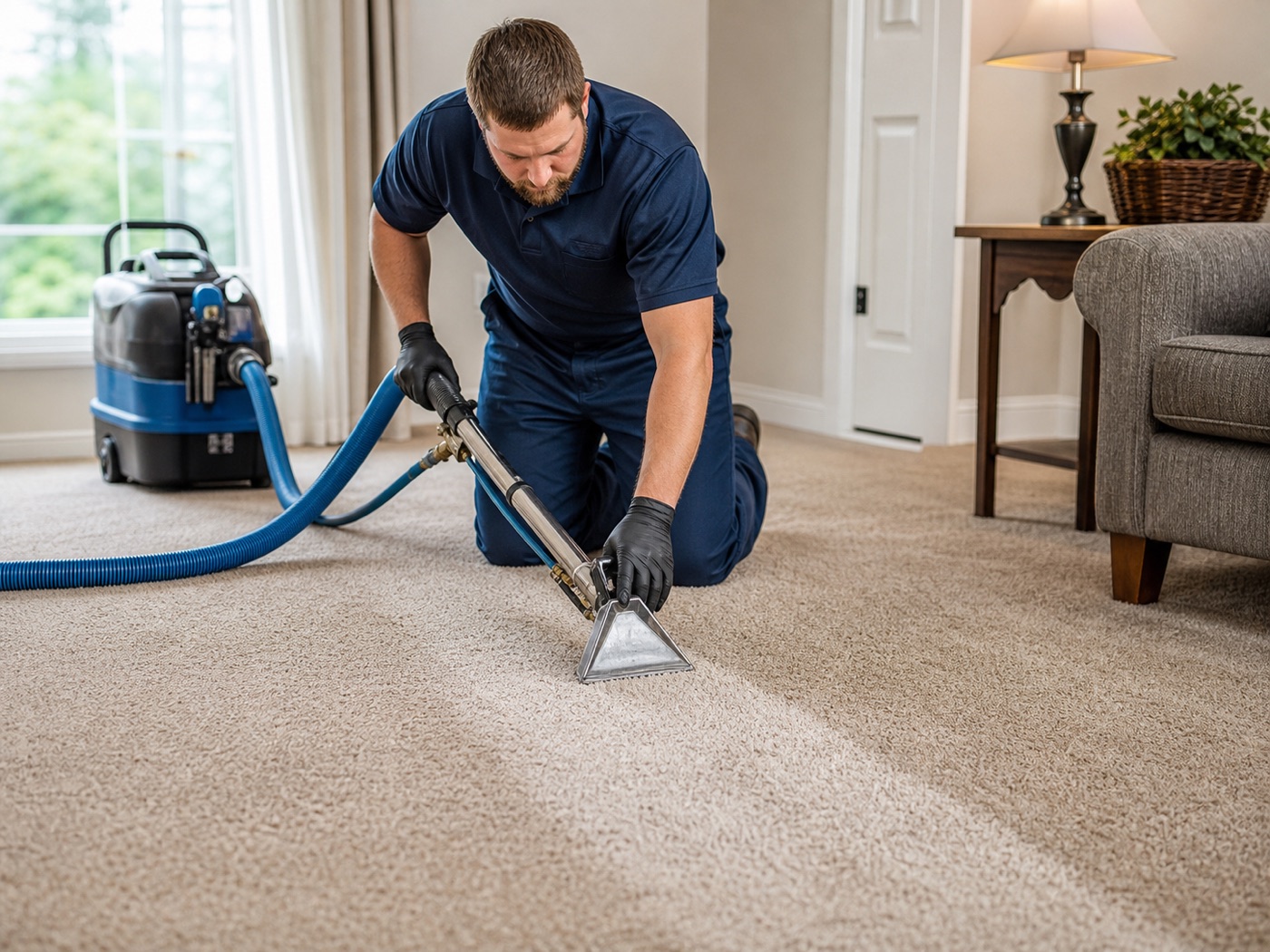
What the industry calls steam cleaning is hot water extraction: heated cleaning solution injected under pressure and vacuumed straight back out. Actual steam would be counterproductive — it sets protein stains permanently, risks the backing and the adhesive, and carries almost no water to rinse with.
Where this matters is the consumer steam mop, which does produce steam and which people use on spots and on hard flooring. On an untreated protein or grease stain it bonds the material to the fiber permanently. On luxury vinyl plank it drives heat and moisture into the seams and voids most manufacturer warranties.
A Few Smaller Ones
Several more come up often enough to deserve a short answer each.
- Carpet powders freshen carpet. They add fragrance and leave a fine residue at the base of the pile that most vacuums only partly recover. Several manufacturers advise against them.
- Stain-resistant carpet does not need cleaning. Stain resistance affects dye-based staining and does nothing about abrasive grit or oily film, which is what actually ages carpet.
- Hot water damages carpet. Heat is a normal part of extraction on synthetic fiber. Where heat genuinely causes harm is on an untreated protein or grease stain, where it sets the material permanently.
- Professional cleaning makes carpet get dirty faster. Poorly rinsed cleaning does exactly that. Properly rinsed cleaning does the opposite, and the difference is the rinse.
- New carpet does not need cleaning for years. Factory protector wears out of the traffic lanes within a couple of years, and the grit arrives from day one.
- You can tell a good job by how it looks that afternoon. Any method looks good while the carpet is damp. The real measure is how it looks in three weeks.
The through-line in all of these is that carpet problems are usually deeper than the surface, and advice that only addresses what you can see tends to be advice that does not work.
Myth Seven: All Cleaners Do the Same Thing
If that were true, price would be the only sensible basis for choosing, which is exactly the assumption that produces bad outcomes.
Methods differ enormously. A bonnet pass polishes the top of the pile and leaves the grit at the base. Encapsulation maintains appearance without removing the deep soil load. Truck-mounted hot water extraction removes the most and leaves the carpet damp for a few hours. These are not interchangeable, and a whole house quoted at an implausible number and finished in forty minutes was not extracted.
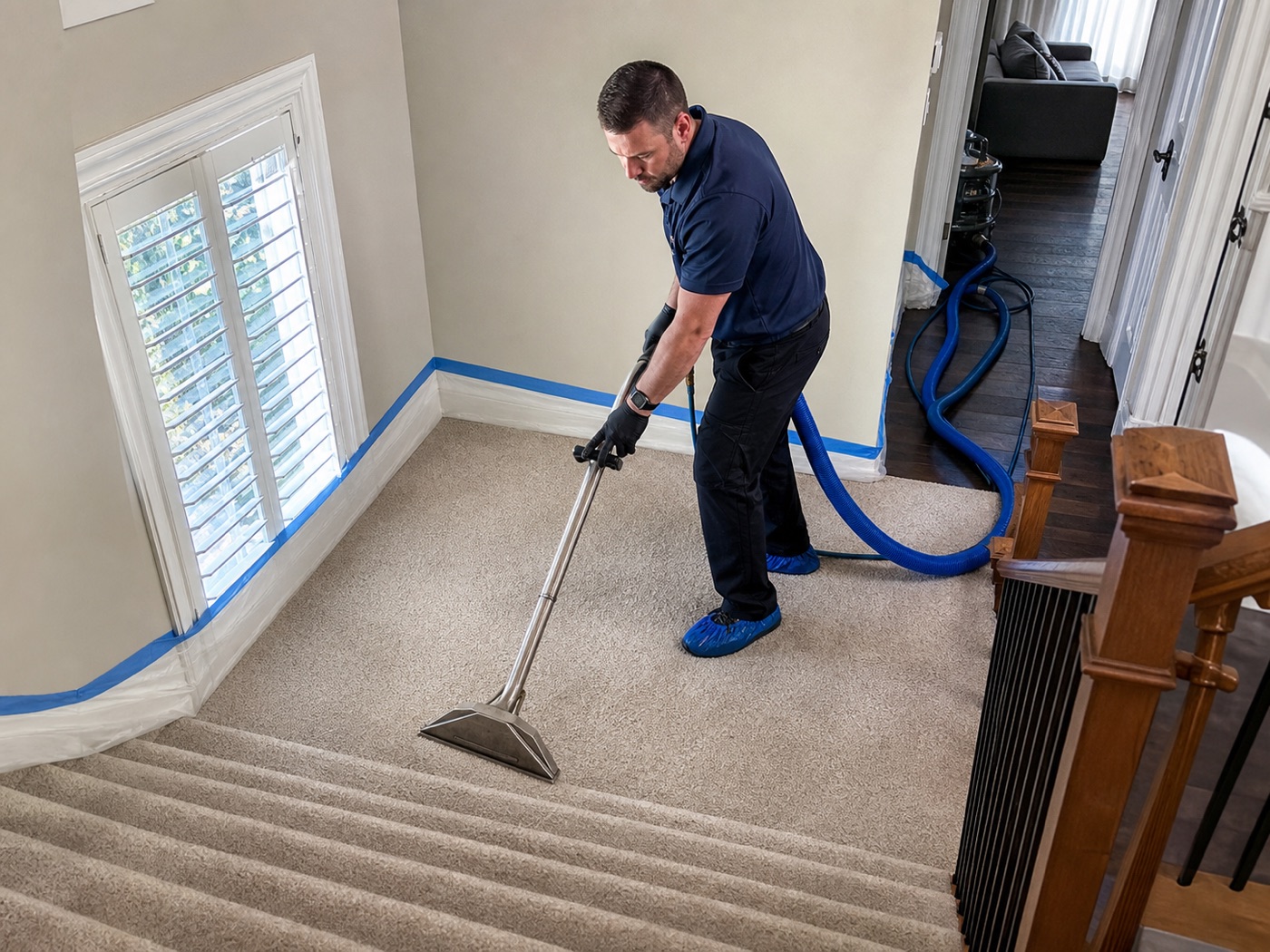
Technique differs as much as equipment. Pre-vacuuming, dwell time on the pre-spray, spot-specific chemistry, thorough extraction, and post-grooming are all invisible at the time and entirely visible three weeks later. Two crews with identical machines can produce very different floors.
Two questions sort most of it out: what method do you use, and how long will the carpet be damp. Companies doing the work properly answer both without hesitation and are usually glad to explain the rest.
All City Carpet Cleaning And Building Solutions has been answering those questions in Virginia Beach, Norfolk, Chesapeake, Suffolk, Hampton, Portsmouth, and Smithfield for seventeen years, with area pricing published rather than quoted on the doorstep.