Urine Removal
in Virginia Beach + Hampton Roads
A deeper assessment for urine contamination, recurring odor, and carpet areas that need more than a surface deodorizer.
A focused plan for the surface in front of us.
Urine can travel beyond the visible spot, especially when it has had time to dry or when repeated incidents occur. All City uses a discreet inspection and treatment approach, with honest communication if the contamination appears to involve the pad or subfloor.
All City works with residential and commercial customers. The right method, products, and timing depend on material, condition, access, and what the space needs to be ready for afterward.
Start with the condition—not a shortcut.
- Strong or recurring urine odor
- Discolored or stiff carpet areas
- Odor that returns after ordinary shampooing
- Multiple incidents around one room, hallway, or pet area
Results depend on the material, age of the problem, previous products, and whether the source is accessible. We explain limits before work begins.
A useful scope,
in writing.
Exact inclusions depend on the estimate and the actual space. These are the steps commonly considered for urine removal.
Discuss your projectPrivate discussion of affected areas
Moisture and surface inspection
Targeted treatment on accessible contamination
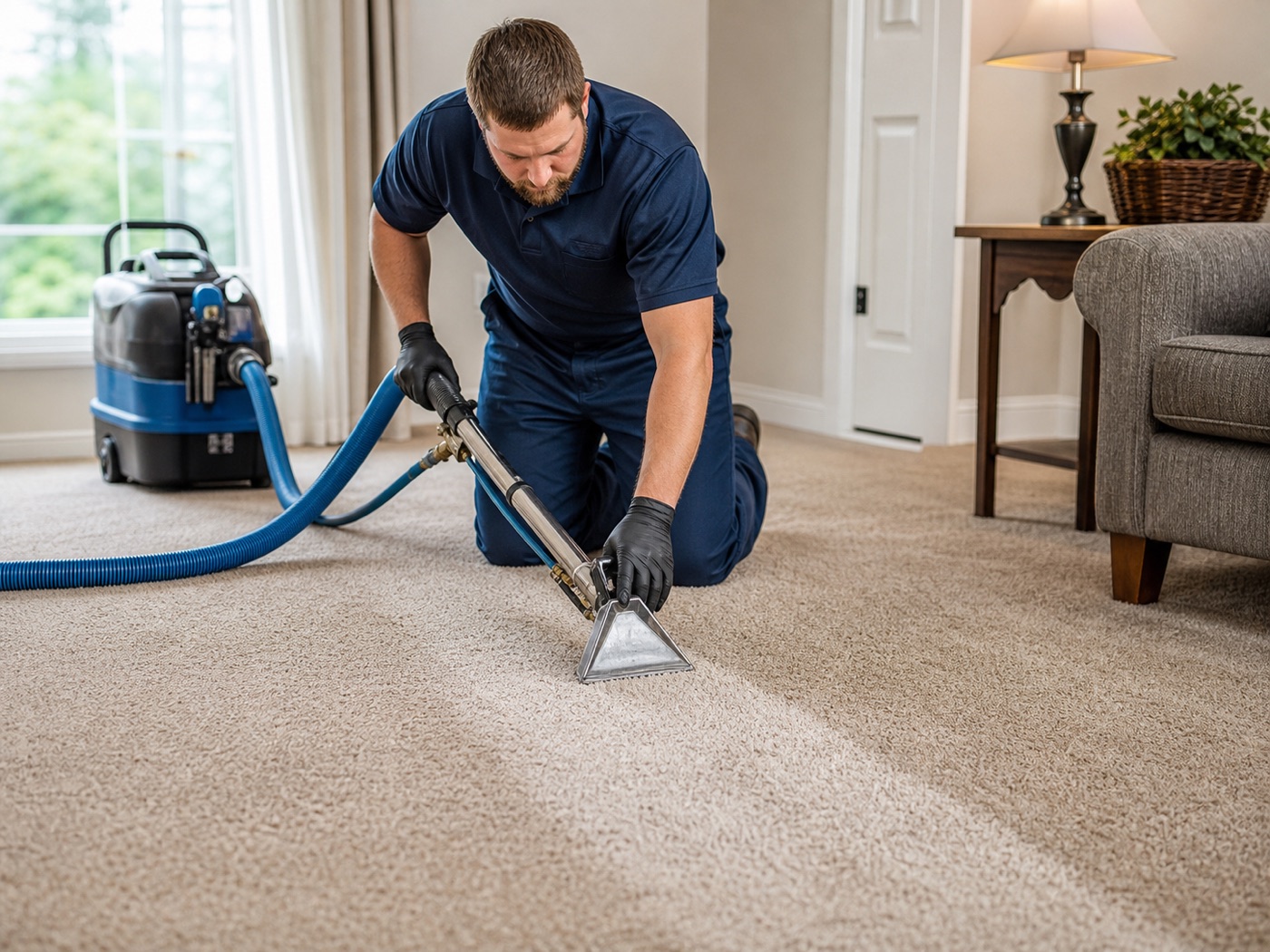
Extraction or controlled rinse
Odor evaluation after cleaning
Guidance about pad, subfloor, or replacement options
Thoughtful steps
make better handoffs.
The team’s approach is adjusted to the surface, but the communication stays simple: inspect, prepare, clean, review.
- 01
Understand the history
We note the location, age, frequency, previous cleaners, and any access limitations without making assumptions.
- 02
Check depth and spread
Moisture, edge conditions, and the carpet’s construction help determine whether surface treatment is appropriate.
- 03
Treat the accessible source
A targeted product is applied and extracted according to the carpet and contamination conditions.
- 04
Explain next options
If odor is likely below the carpet, we describe the next practical step instead of promising a surface-only fix.
Selected for the material.
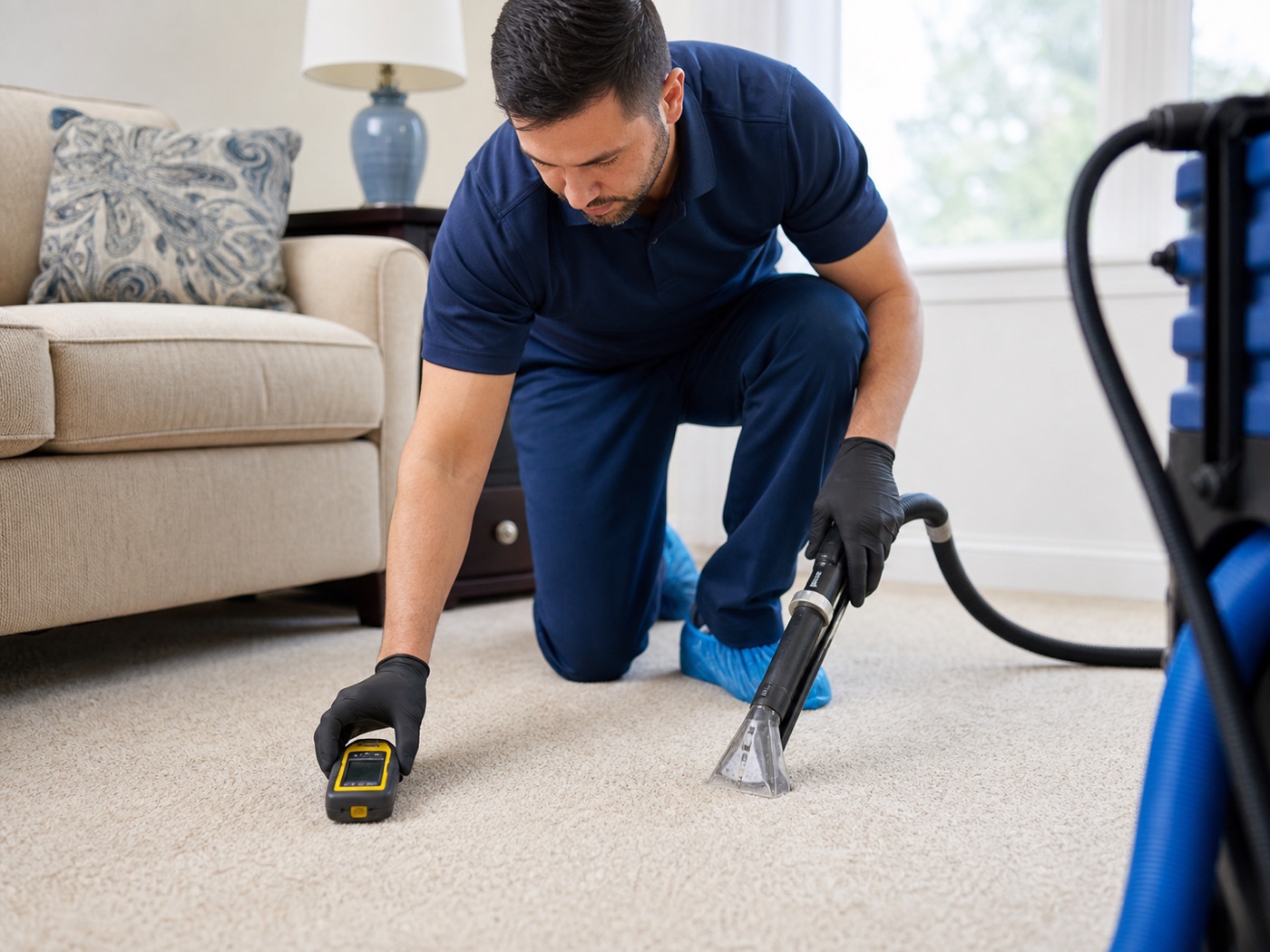
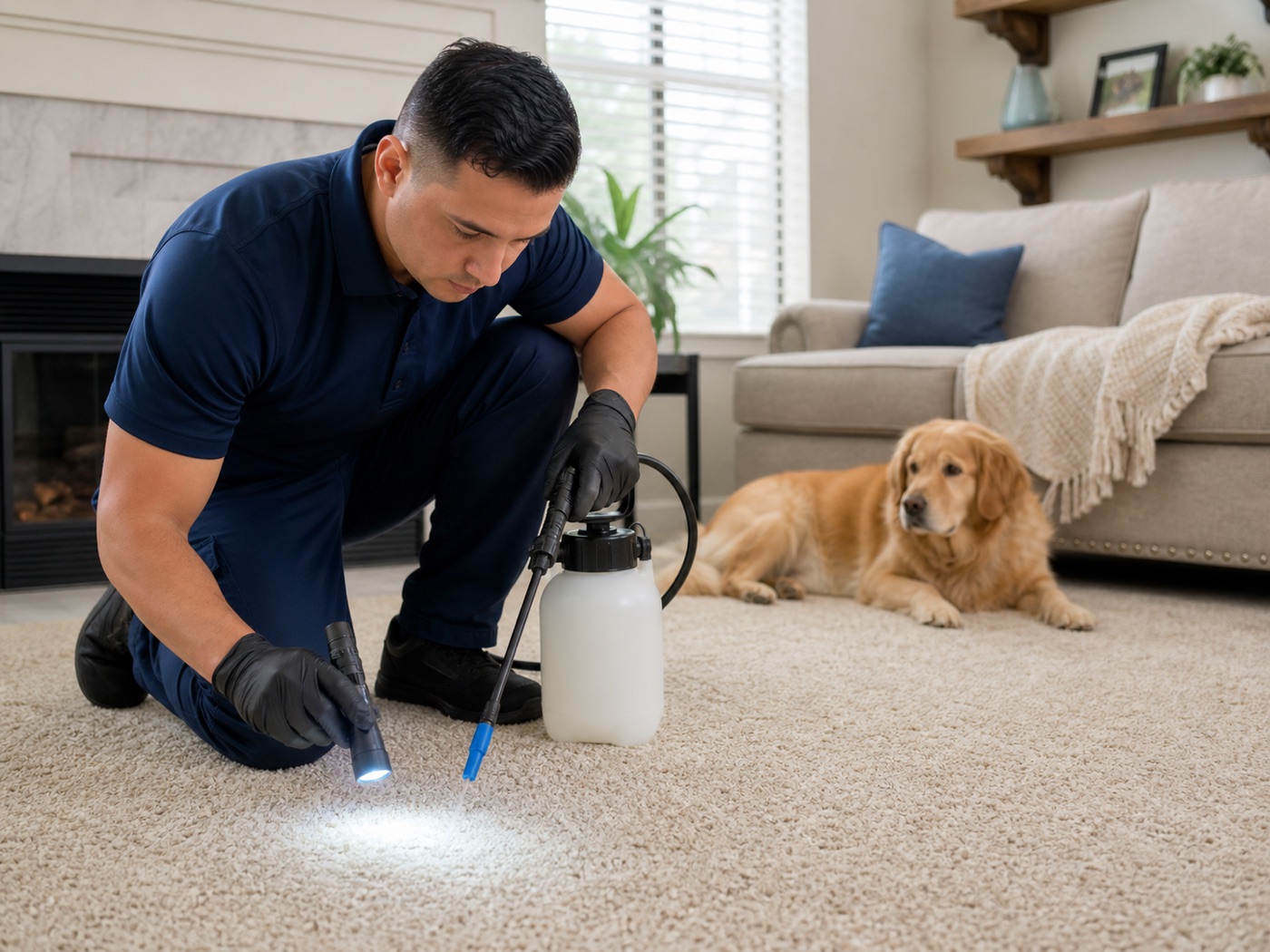
The job may use a moisture meter, inspection light, enzyme or oxygen-based treatment, fiber-safe rinse, extraction equipment, and protective materials. Products are selected based on the carpet and the condition found.
- Pet accident areas
- Move-out odor concerns
- Nurseries and family rooms
- Small affected sections that need assessment
Humidity can make a urine odor more noticeable and can influence dry time. We will talk through ventilation, access, and whether the space can remain unused while drying.
Before the quote.
These answers are starting points. Site conditions and the written scope control the final recommendation.
Can urine be removed from carpet pad?
Sometimes the pad can be treated, but the answer depends on access, age, spread, and material condition. If the pad or subfloor is heavily affected, replacement or repair may be more reliable.
Why does odor come back after carpet cleaning?
A surface clean may not reach contamination below the carpet fibers. Heat, humidity, and moisture can also make residual odor more noticeable later.
Do you need to cut the carpet?
Not as a standard first step. We inspect and discuss the condition before recommending any invasive work; a separate flooring professional may be needed for repairs or replacement.
Keep the whole surface plan in view.
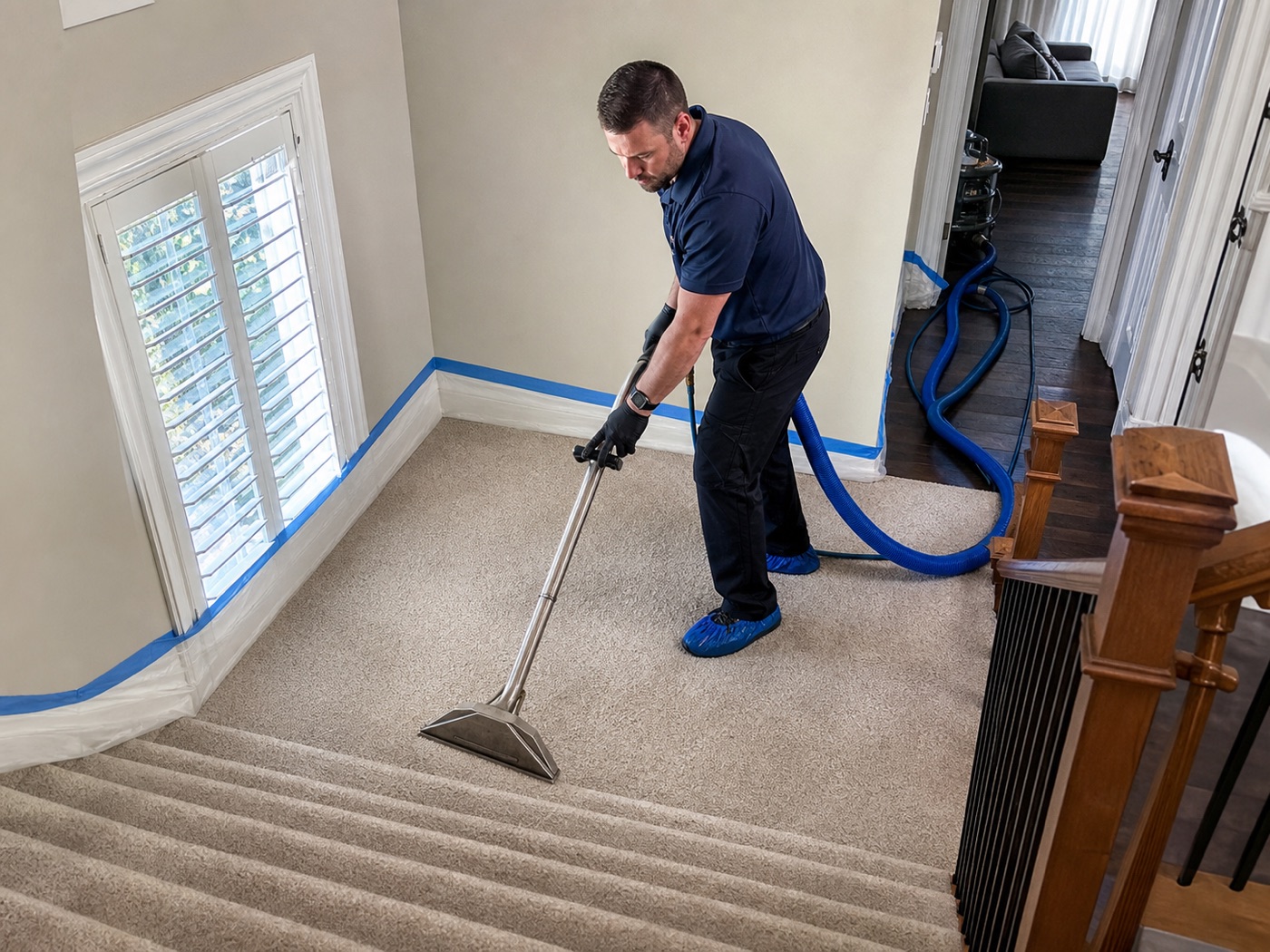
Need help with urine removal?
Tell us what needs attention. We’ll confirm the service area, talk through the scope, and help you choose the next step.