Most spill advice treats every stain as the same event: blot it, apply something, blot again. That works reasonably well for coffee and juice, and it works badly for anything oily, because oil obeys different rules.
Butter, salad dressing, pizza grease, bacon, chocolate, lipstick, crayon, and the ring left under a takeout container are all the same problem. Here is what actually happens with them and what to do in the order that matters.
Why Oil Is Different
Water-based spills dissolve in water, which is why blotting with a damp towel works — the spill goes into solution and transfers into the towel. Oil does not dissolve in water. Pour water on it and you get oil, water, and a larger wet area than you started with.
Worse, water carries oil sideways and downward without capturing it. A quarter-sized grease spot treated with a wet towel routinely becomes a hand-sized shadow, because the oil has been pushed outward through the pile in every direction.
Oil also migrates downward toward the backing over hours, which sets up the reappearing stain. You clean the top of the pile, the surface looks fine, and then the oil still sitting at the base wicks upward as the carpet dries and redeposits at the tips — the classic spot that comes back three days later, slightly larger than before.
And oil is sticky. Any residue left behind holds dry soil, so an old grease spot usually presents as a dark patch made mostly of ordinary dirt that stuck to a film nobody removed. That is why the same square foot gets dirty again and again.
The First Five Minutes
Order matters more than product here. Do these in sequence and do not skip ahead.
- Lift solids first with a spoon or dull knife, scraping toward the center of the spot. Do not press down — pressing drives food into the base of the pile.
- Blot the liquid with a white towel, standing on it for weight. Colored towels can transfer dye into damp carpet.
- Cover the spot generously with cornstarch, baking soda, or talc and leave it for at least fifteen minutes. Longer is better. The powder pulls liquid oil out of the fiber.
- Vacuum the powder away completely, then repeat the powder step if the spot still feels slick.
- Only now introduce liquid: a few drops of clear dish soap in a cup of cool water, applied to the towel rather than the carpet.
- Blot from the outside of the spot inward, turning to a clean section of towel each time.
- Rinse with plain cool water on a fresh towel, repeatedly, until no suds appear on the towel. This step decides whether the spot returns.
- Lay dry towels over the area, weight them down, and let the spot dry fully before judging the result.
The rinse is the step almost everyone shortchanges. Detergent left in a carpet is a soil magnet, and an inadequately rinsed spot will be visibly dirtier than the surrounding carpet within a month regardless of how well the original stain came out.
The Specific Offenders
Most kitchen and living room stains fall into a handful of categories, and knowing which one you are looking at shortens the job considerably.
| Stain | Type | Key point |
|---|---|---|
| Butter, oil, dressing | Pure oil | Powder first, then surfactant, then rinse hard |
| Pizza and takeout grease | Oil plus pigment | Two problems — treat oil first, color second |
| Chocolate | Oil, sugar, and pigment | Scrape cold, never warm it |
| Gravy and meat drippings | Oil plus protein | Cool water only; heat sets the protein |
| Cheese | Protein and fat | Chill and lift solids before anything wet |
| Crayon and lipstick | Wax and pigment | Solvent job; powder and water accomplish little |
| Candle wax | Wax | Freeze, crack, lift — never melt it deeper |
| Salad dressing with vinegar | Oil plus acid | Blot fast; acidic dyes can set within hours |
The two-problem stains are where home treatment usually stalls. Pizza grease leaves both an oily film and an orange pigment, and a treatment that removes one often sets the other. If a spot lightens but leaves a distinct color behind, that is the pigment, and it generally needs different chemistry rather than more effort.
What Makes It Permanent
Most stains that end up unrecoverable were recoverable at some point. Four mistakes account for the majority of them.
Rubbing is the first. It distorts and frays the fiber tips, and distorted fiber scatters light differently from the carpet around it, so even a perfectly clean spot reads as a mark forever. Blotting removes the stain without touching the fiber structure.
Heat is the second, and it is the one people are most likely to apply confidently. A steam cleaner run over an untreated grease spot bonds it in place. The same is true of anything with protein in it — gravy, milk, egg, meat juices.
Over-wetting is the third. Saturating a spot pushes the contaminant into the pad, where it sits in a reservoir you cannot reach and wicks back up for weeks. The spot that keeps returning is nearly always a pad problem by the time somebody calls.
And the fourth is product stacking — three different bottles applied in sequence, each leaving its own residue and some of them chemically at odds. By the time a spot has had bleach-based, acidic, and alkaline products on it, the fiber may have lost color as well.
What a Professional Does Differently
The main advantage is not effort. It is having the right solvent and a way to remove it.
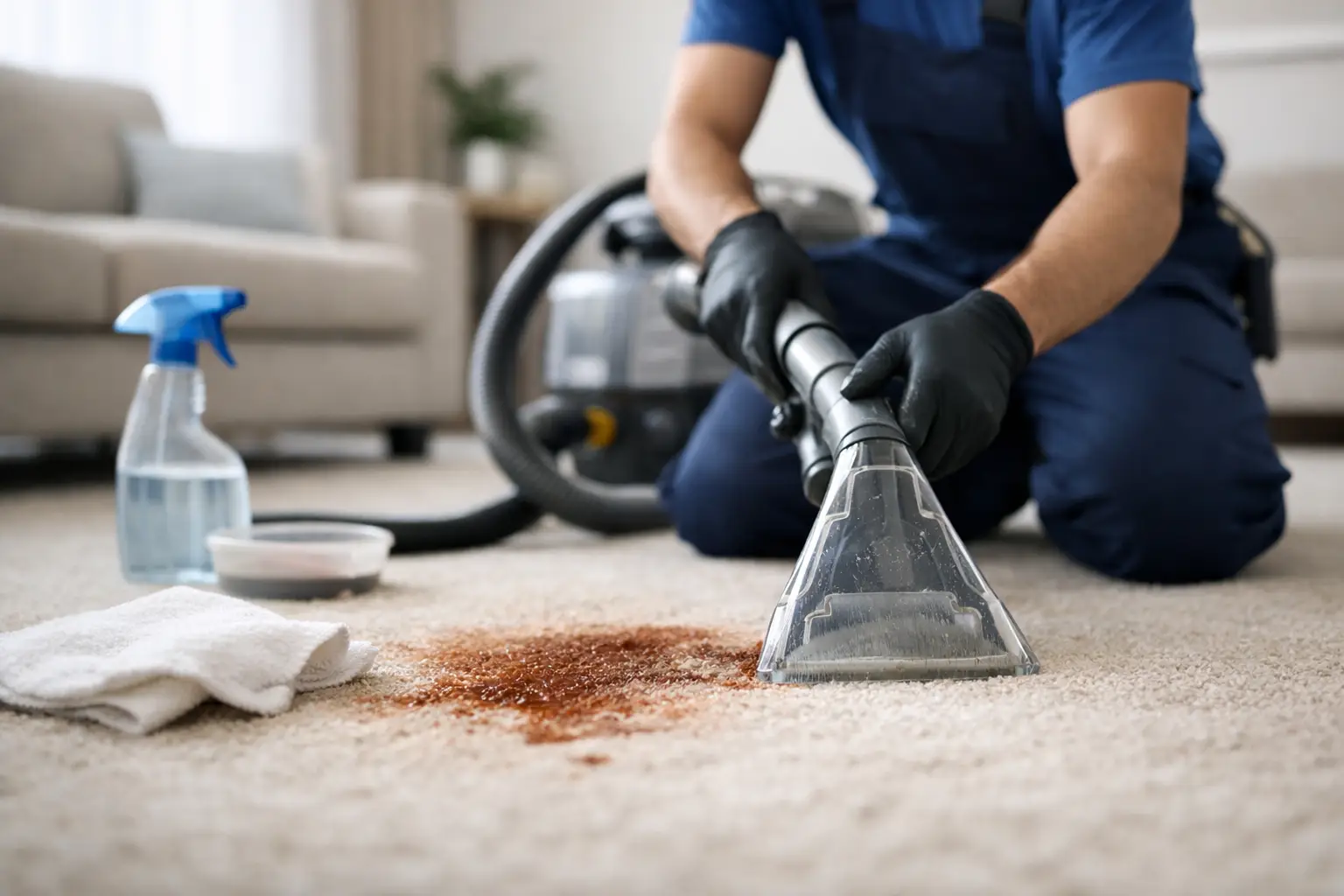
Oily soil responds to solvent chemistry rather than to detergent alone, and professional spotters include citrus and petroleum-derived solvents that dissolve grease directly instead of trying to emulsify it with water. Applied to a clean towel and worked from the outside in, they lift the oil off the fiber rather than pushing it around.
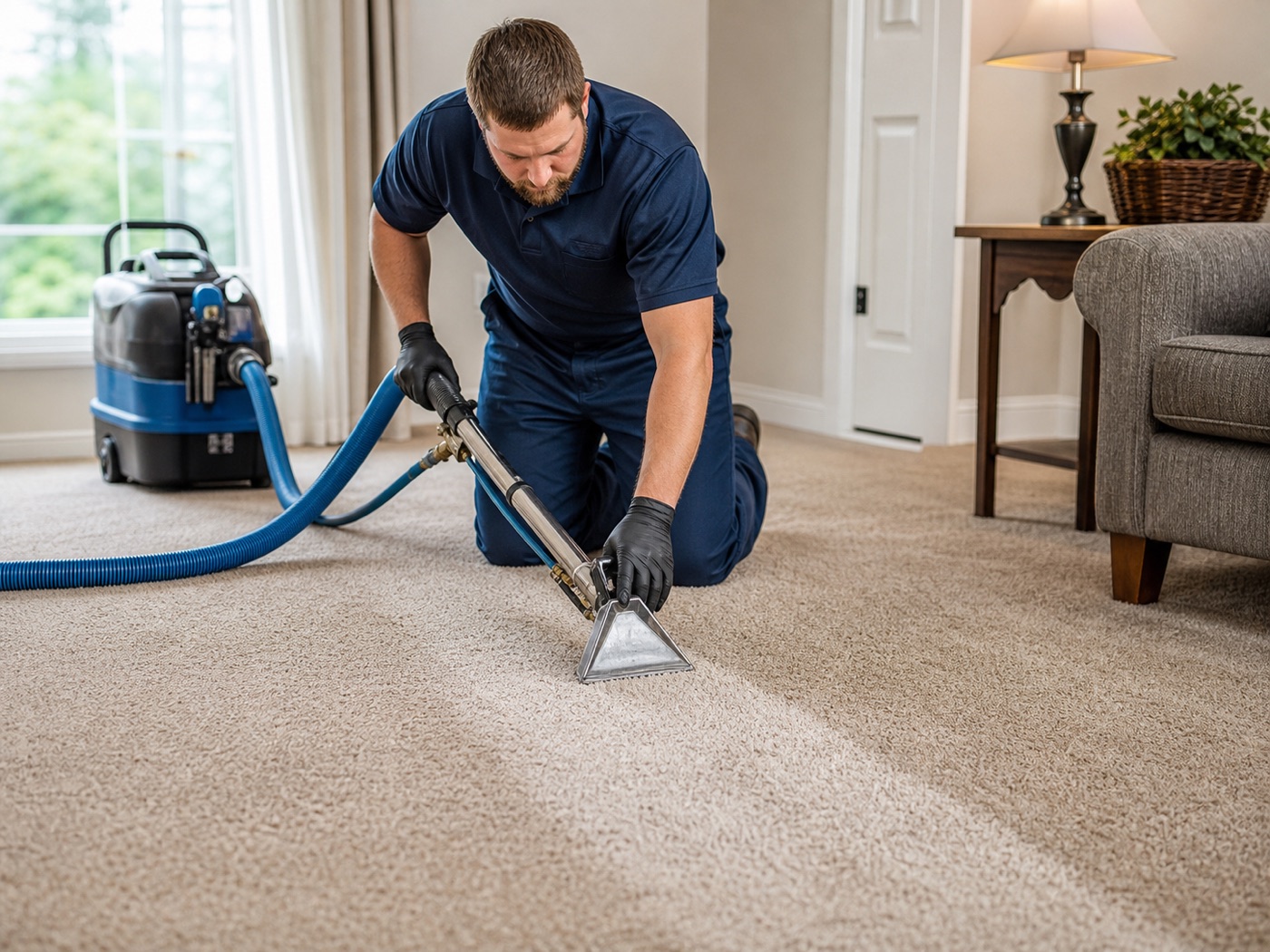
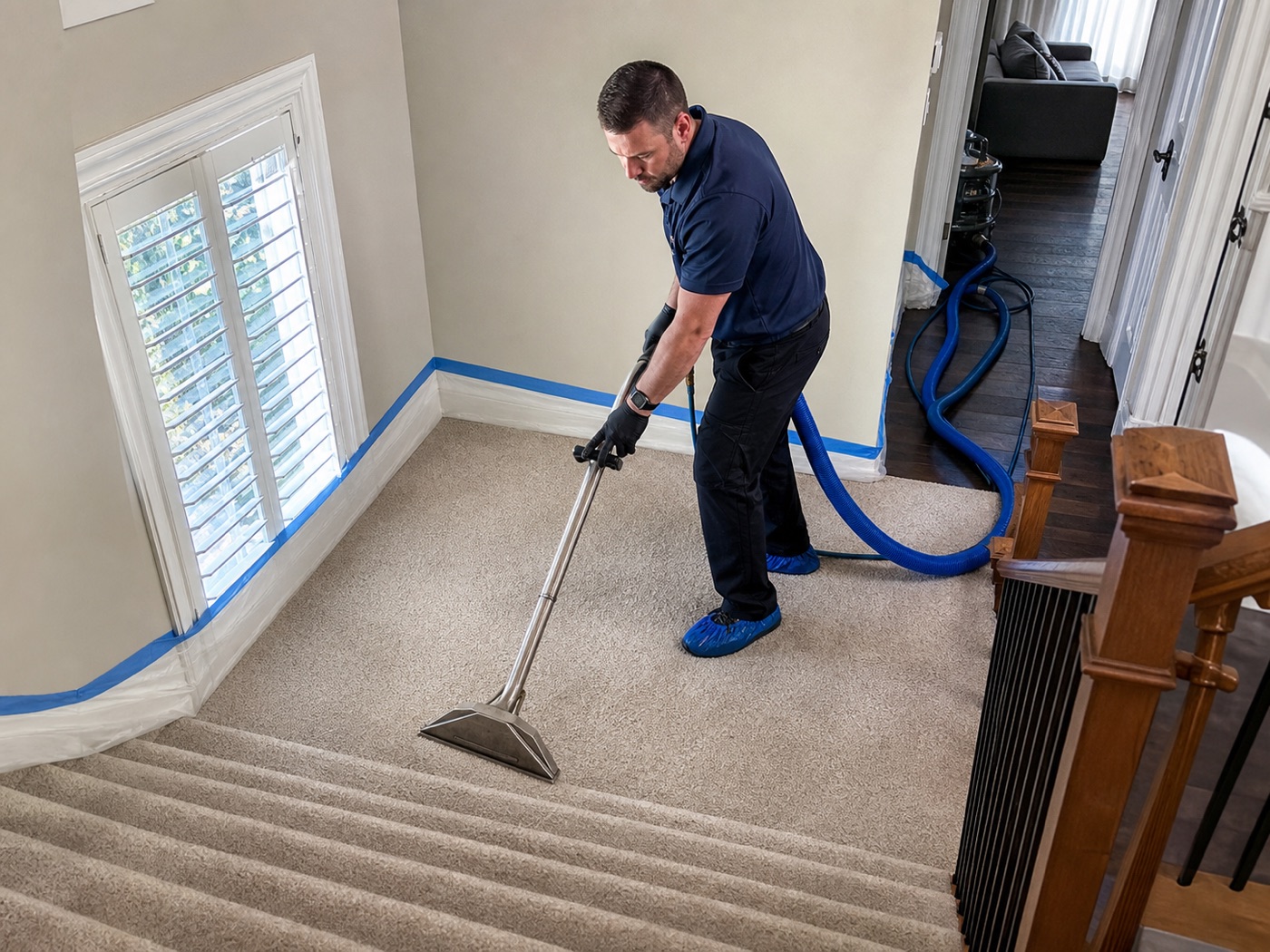
Then it gets rinsed and extracted under vacuum, which is the part no household method replicates. Everything dissolved comes out of the carpet rather than staying in it to dry. That single difference is why professionally treated spots do not come back and home-treated spots so often do.
For older stains the sequence is longer — solvent, dwell, agitate gently, rinse, repeat, sometimes a dedicated pigment step afterward. There is judgment in when to stop, because aggressive treatment past a certain point damages fiber and color in pursuit of a spot that is not coming out.
It also matters that the whole room gets cleaned afterward if the spot was large. A perfectly treated patch in the middle of an ordinary floor is visible for the opposite reason, and that is a poor outcome to pay for.
What About Upholstery and Car Interiors
The same food ends up on the sofa, and the rules change slightly because there is no pad underneath to absorb a mistake — there is cushion fill, which is worse.
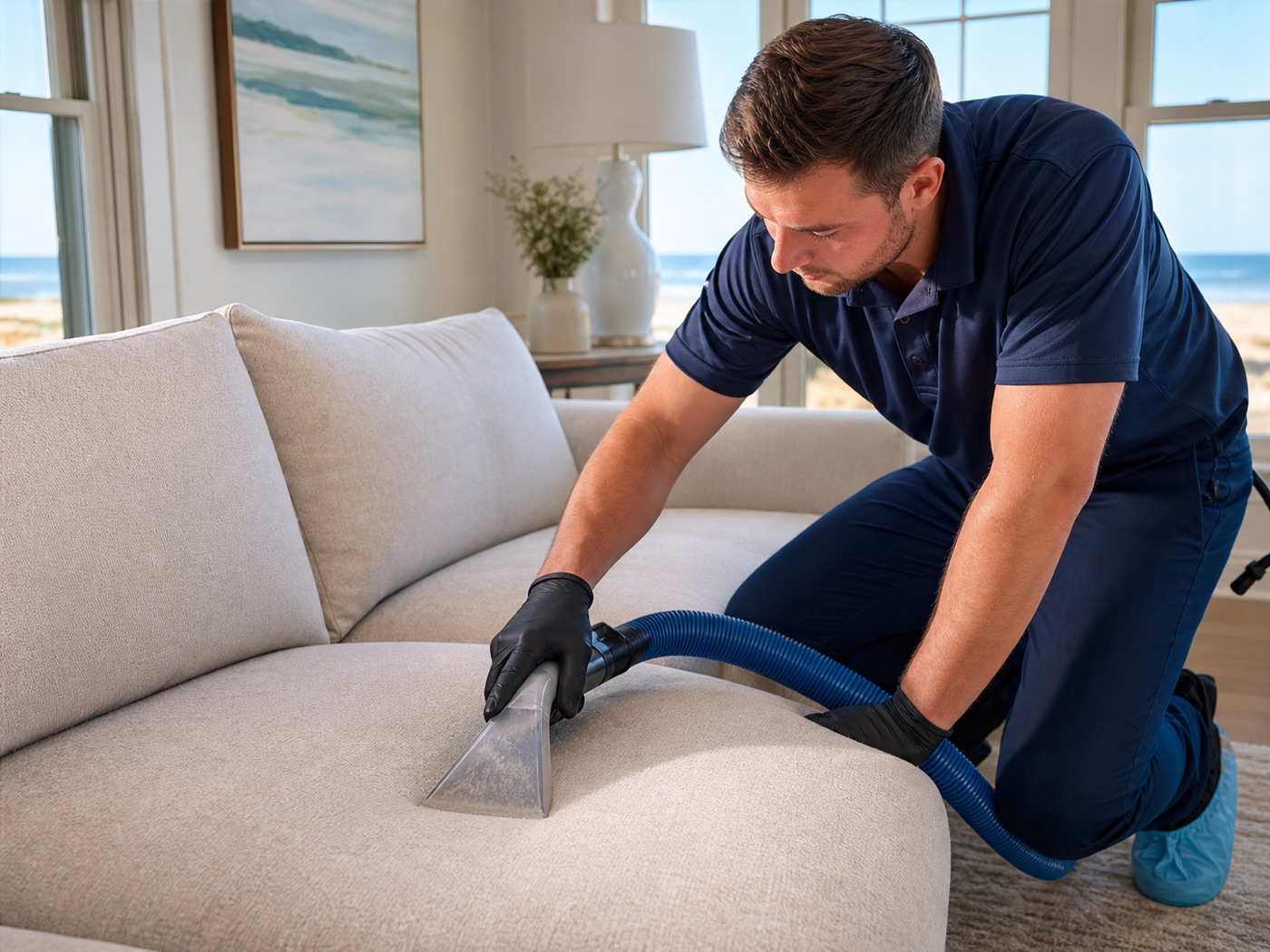
Check the fabric code before anything wet touches upholstery. An S-coded fabric cannot take the water-and-dish-soap approach at all, and applying it is how a sofa acquires a permanent ring around a spot that would have cleaned out with solvent. The powder step is safe on nearly everything and is the right first move regardless of code.
Even on a W-coded fabric, dry the entire panel rather than the spot. Upholstery shows water marks far more readily than carpet does, because the fabric is a single visible plane rather than a forest of fiber tips. A fan pointed at the cushion for an hour is what prevents the ring.
Car interiors follow the upholstery rules and add heat. A closed car in a Hampton Roads summer reaches temperatures that set an untreated grease stain permanently within a single afternoon, which is why a spill in a vehicle is genuinely more urgent than the same spill at home.
The Prevention That Works
Grease stains cluster where food and carpet meet: in front of the television, around a dining table on carpet, in the hallway between kitchen and living room, and anywhere children eat.
Carpet protector helps meaningfully with this specific category, because it slows oil absorption more effectively than it slows dye-based staining. In a family room where the sofa doubles as a dining table, it converts most spills into something you can blot rather than something you have to treat.
Beyond that: keep a clean white towel and a container of cornstarch somewhere accessible, and throw away the aerosol spot cleaner under the sink. It causes more repeat spots than any single food in this article.
All City Carpet Cleaning And Building Solutions handles stain work throughout Virginia Beach, Norfolk, Chesapeake, Suffolk, Hampton, Portsmouth, and Smithfield. Our area pricing is published, and spot treatment is usually cheapest as part of a room you were going to clean anyway.