Something goes over, and there is a moment of decision before anyone has thought about it. What happens in that moment determines most of the eventual outcome — more than the product used, more than what the spill was, and considerably more than what gets done the next day.
The good news is that the general approach is simple and it applies to nearly everything. The complication is that a handful of substances need a specific first move, and getting that wrong is how a spot becomes permanent.
The Rules That Apply to Everything
Before any product or any specific substance, five principles cover most of what matters.
- Act immediately. A fresh spill sits on the fiber. A dry one has bonded to it. Nothing else you do matters as much as speed.
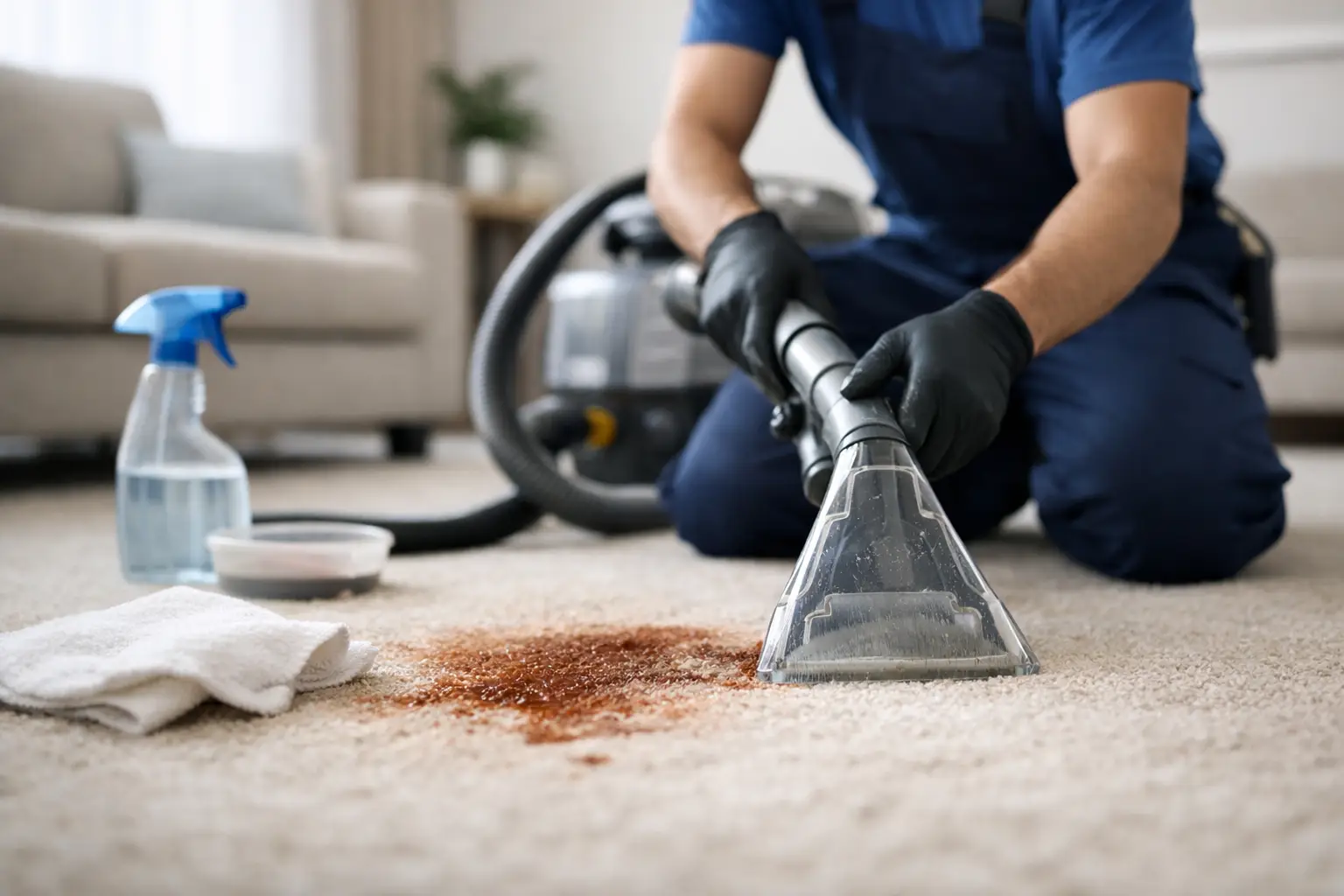
- Blot, do not rub. Press a clean white cloth straight down and lift. Rubbing drives the substance into the base of the pile and abrades the fiber, leaving a fuzzy distorted patch that stays visible after the stain is gone.
- Work from the outside inward. Starting at the edges keeps the spill from spreading into clean carpet.
- Use white cloths only. Colored towels and paper towels with print can transfer dye into wet carpet.
- Use as little liquid as will do the job. Over-wetting pushes the spill through the backing into the pad, which turns a surface problem into a recurring one.
The rubbing point deserves emphasis because it is the near-universal instinct and it causes the damage people later assume was the stain. Carpet yarn holds its appearance because of the twist in the fiber. Vigorous rubbing untwists it, and untwisted fiber scatters light differently — which is why some "stains" remain visible as a dull patch after the color is entirely gone. That is abrasion, not staining, and no cleaning removes it.
The Substance-by-Substance Version
| Spill | First move | Avoid |
|---|---|---|
| Red wine | Blot heavily, then apply cool water and keep blotting | Salt, which mostly just adds residue; hot water; scrubbing |
| Coffee or tea | Blot, then cool water; expect a tannin ring | Letting it dry; the ring sets and gets much harder |
| Grease or oil | Absorb with cornstarch or baking soda, vacuum, then treat | Water first — it spreads oil rather than lifting it |
| Ink | Blot only. Do not add water | Water and rubbing, both of which spread it dramatically |
| Blood | Cold water only, blot repeatedly | Any heat at all — it sets the protein permanently |
| Pet accident | Blot as much liquid out as possible, then cool water | Ammonia-based cleaners; the smell resembles urine to a pet |
| Mud and clay | Let it dry completely, then vacuum | Touching it wet — this is the one exception to acting fast |
| Candle wax | Let it harden, break it up, and lift what you can | A hot iron over synthetic carpet; it can melt the fiber |
| Vomit | Remove solids, blot, cool water | Hot water; it is protein-based |
Two rows are worth expanding. Ink is genuinely different from everything else — most inks are solvent-based and dissolve in the wrong direction when water is added, spreading a small dot into a large blue-grey area within seconds. Blot it and stop. Mud is the other exception: it is the only common spill where patience beats speed, because wet clay smears and dry clay vacuums.
The Wicking Problem
A frequent and demoralizing experience: the spot is gone, everyone is pleased, and three days later it is back in roughly the same place.
That is wicking. If the spill went below the face fiber into the backing or pad, some of it stayed there. As the area dries, moisture travels upward through the fibers and carries dissolved material with it, redepositing it at the surface — which is exactly where you can see it.
The counter is to intercept it while the area is still damp. Place a folded white towel over the spot with something heavy on top, and leave it for several hours. The towel wicks the moisture and the dissolved material out of the carpet instead of letting it come to the surface. Replace the towel if it saturates.
Recurring wicking is also a signal about depth. A spot that returns twice is telling you the spill reached the pad, and at that point a surface treatment is not going to resolve it. That is the same mechanism that makes pet urine so difficult, and it is why pet accidents are scoped differently from ordinary spills.
The Products That Cause More Harm Than Good
A significant share of the permanent damage we see was not caused by the spill. It was caused by what someone reached for afterward.
- Bleach or anything containing it. Bleached fiber is dye loss, not a stain. It is permanent and it usually means a patch or replacement.
- Dish soap. It is designed to stay sudsy and it is nearly impossible to rinse out of carpet, so the treated spot becomes a soil magnet and turns grey within months.
- General-purpose household sprays. Most are high-pH and leave residue; some contain optical brighteners that alter carpet color.
- Ammonia on pet accidents. Ammonia is a component of urine, so to a dog or cat the treated spot smells like an appropriate place to go again.
- Vinegar on anything but carpet. It is harmless on synthetic fiber and it etches marble and natural stone permanently, which matters if the spill crossed a tile entry.
- A steam iron on wax over synthetic carpet. Enough heat to melt wax is enough heat to melt olefin or polyester.
The residue point is the one that surprises people most. A spot treated with dish soap often looks perfect immediately and reappears as a dark circle two months later, because the surfactant left in the fiber has been collecting soil the entire time. The spot is not coming back — a new one is forming in the same place.
What to Actually Keep on Hand
A spill kit is more useful than a cabinet of products, and it works because everything is in one place when thirty seconds matter.
- A stack of plain white cotton cloths or white paper towels. No prints, no colors, no fabric softener residue.
- A spray bottle of plain cool water. This handles more spills correctly than anything you could buy.
- One neutral carpet-specific spotter, used sparingly and tested in a hidden spot first.
- A small container of cornstarch or baking soda for grease and oil.
- A dull butter knife or spoon for lifting solids without pushing them in.
- A few heavy books or a brick, for weighting a towel over a spot that keeps wicking back.
Keep it near where spills actually happen — the kitchen or the living room, not the garage. The single biggest predictor of a good outcome is how fast someone gets to the spill, and a kit two rooms away loses that race regularly.
Knowing When It Is Not a Cleaning Problem
Some marks are not stains at all. They are changes to the fiber itself, and no product reverses them.
Bleach spots, burns, and cuts fall in this category, as does the abrasion caused by vigorous rubbing. So do some dye transfers — a red juice drink or a strongly colored craft material can act as a dye on synthetic fiber, chemically bonding rather than sitting on the surface. Those may respond to specialized treatment, and they may not.
Recognizing the difference early saves a lot of wasted weekend effort and, more importantly, prevents the situation where three rounds of aggressive home treatment have distorted the fiber around a mark that was never going to come out anyway. Knowing which spots are worth a professional call is most of the skill.
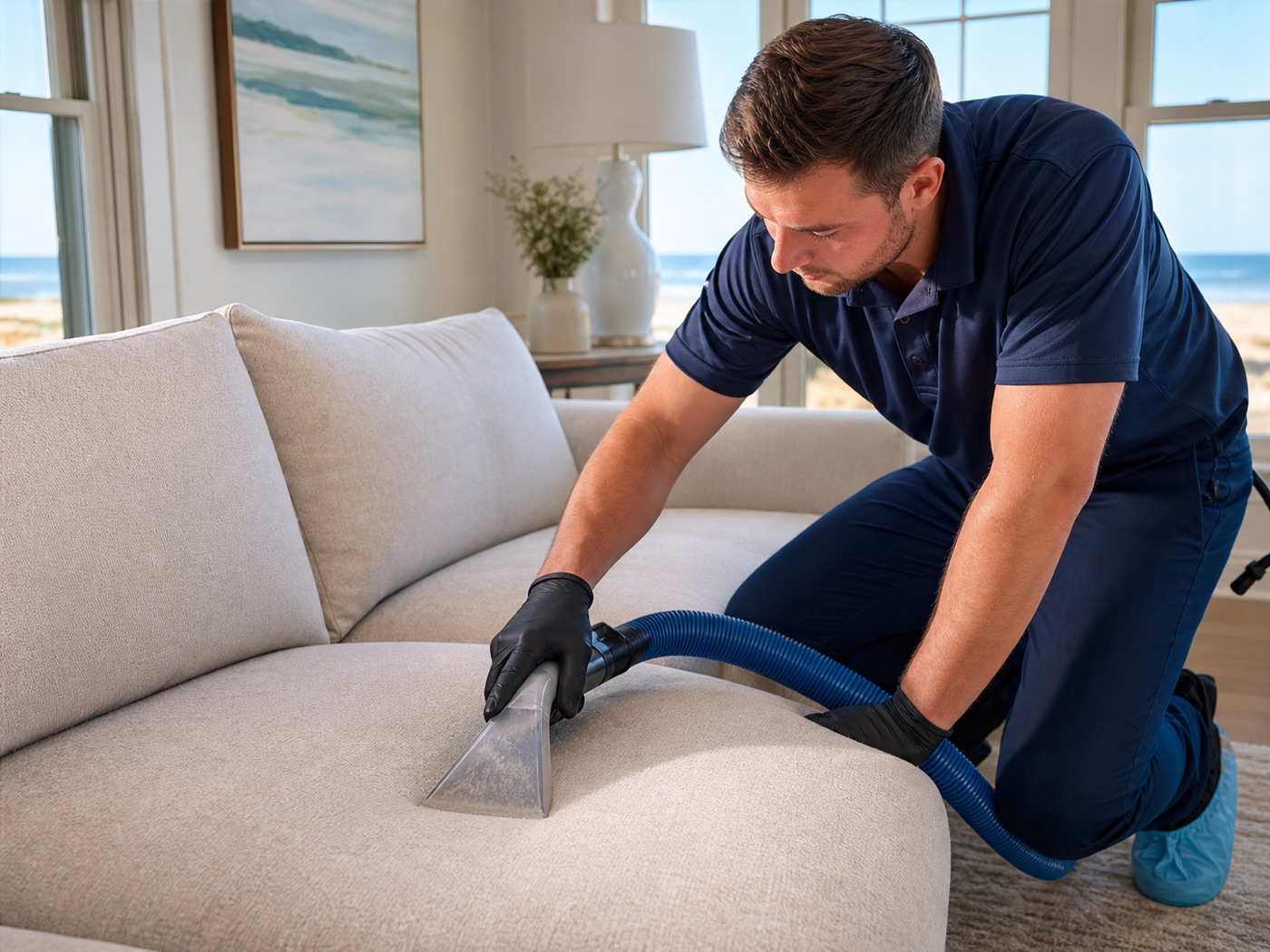
Upholstery follows the same principles with less margin for error. Cushion fabric is often more delicate than carpet, the fill underneath holds moisture for a long time, and dye stability varies enormously. Test any product in a hidden area first, use less liquid than feels sufficient, and stop earlier than you would on a floor.
The Short Version
Move fast, blot straight down, work inward from the edges, keep the liquid minimal, and use cold water when protein is involved. Skip the salt, the dish soap, and anything with bleach in it. Watch for the spot coming back as the area dries and put a weighted towel on it if it does. And stop while things are still improving.
All City Carpet Cleaning And Building Solutions serves Virginia Beach, Norfolk, Chesapeake, Suffolk, Hampton, and Portsmouth. If something happened and you are not sure what to do next, calling before the third attempt is usually the better move.