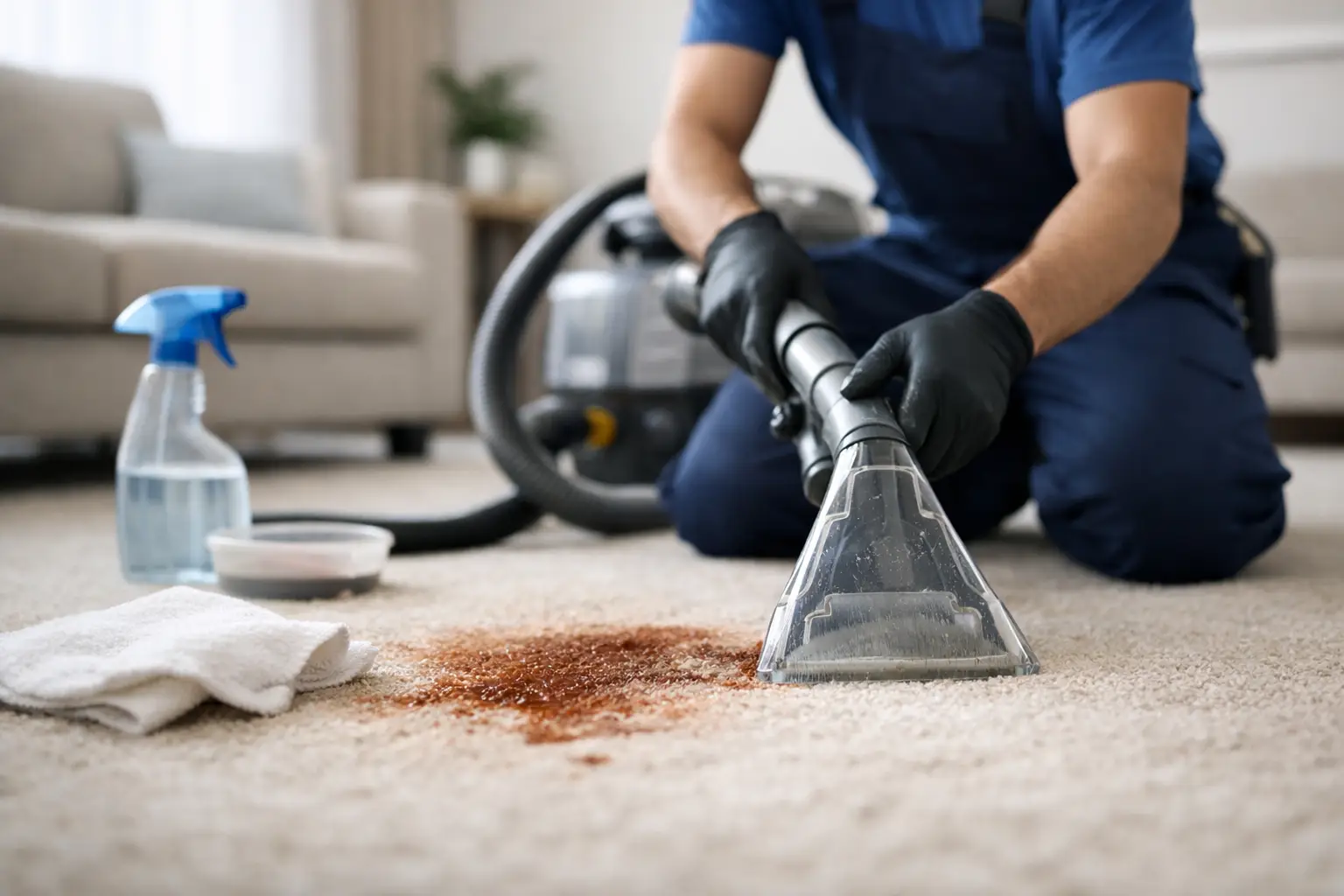

Chesapeake homes are built differently from the rest of Hampton Roads, and their carpet shows it. Great Bridge, Greenbrier, Western Branch, Hickory, and Deep Creek are full of four- and five-bedroom houses on real lots, with fenced yards, two or three kids, and at least one large dog. The square footage is generous and the traffic is constant.
That produces a wear pattern that looks nothing like a beachfront condo or a Ghent bungalow. The damage here is concentrated, seasonal, and heavily tied to whatever is happening in the backyard.
Clay, Mud, and What Comes In From the Yard
Chesapeake sits on a lot of clay and low, poorly draining ground. After a wet week, a fenced backyard becomes a mud yard, and a seventy-pound dog crosses it four times a day.
Clay behaves differently from the quartz sand that dominates the oceanfront cities. Sand is abrasive and cuts fiber. Clay is fine, sticky, and iron-rich — it does not grind the carpet down so much as it stains it, working into the yarn and leaving a dull orange-tan cast that is easy to mistake for general dinginess. On light carpet it can be stubborn, and on very light carpet, heavy repeated exposure sometimes does not come out completely.
The single most useful habit is counterintuitive: let mud dry before touching it. Wet clay smeared with a towel spreads over three times the area and drives pigment deeper into the fiber. Dried clay vacuums up in large part, and what remains is a much smaller problem for professional cleaning to solve.
Pet Odor and Why It Comes Back
The most common call we get from Chesapeake households is some version of "we had the carpet cleaned and the smell came back." It is a fair complaint, and there is a real explanation.
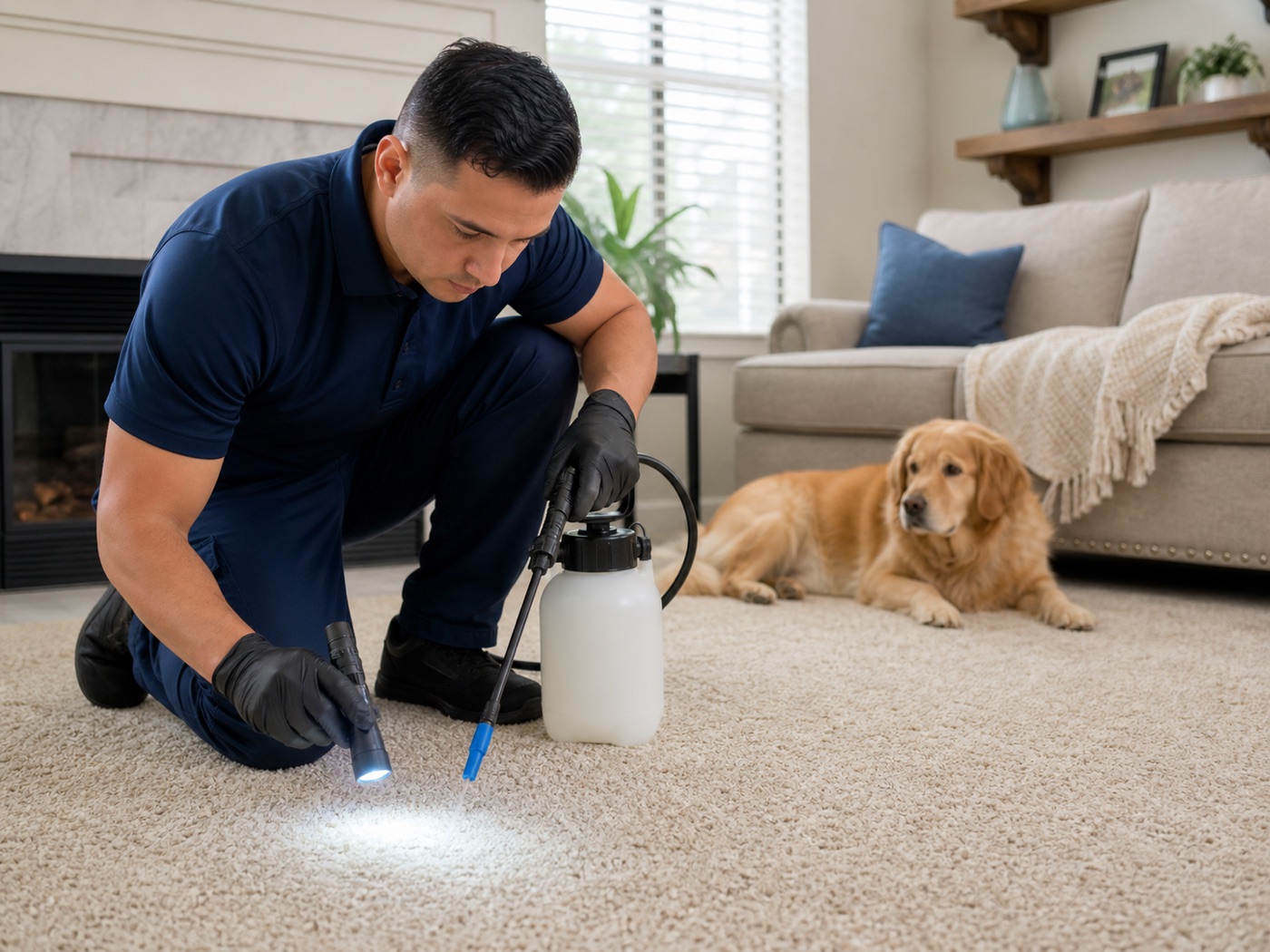
Carpet cleaning cleans carpet. Urine, however, does not stay in the carpet. Liquid passes through the face fiber, through the backing, into the pad, and — with enough volume or enough repetition — into the subfloor and sometimes down into the tack strip at the edges of the room. A surface cleaning removes what is in the pile and genuinely improves things, but if the reservoir underneath is untouched, warm weather will bring it back.
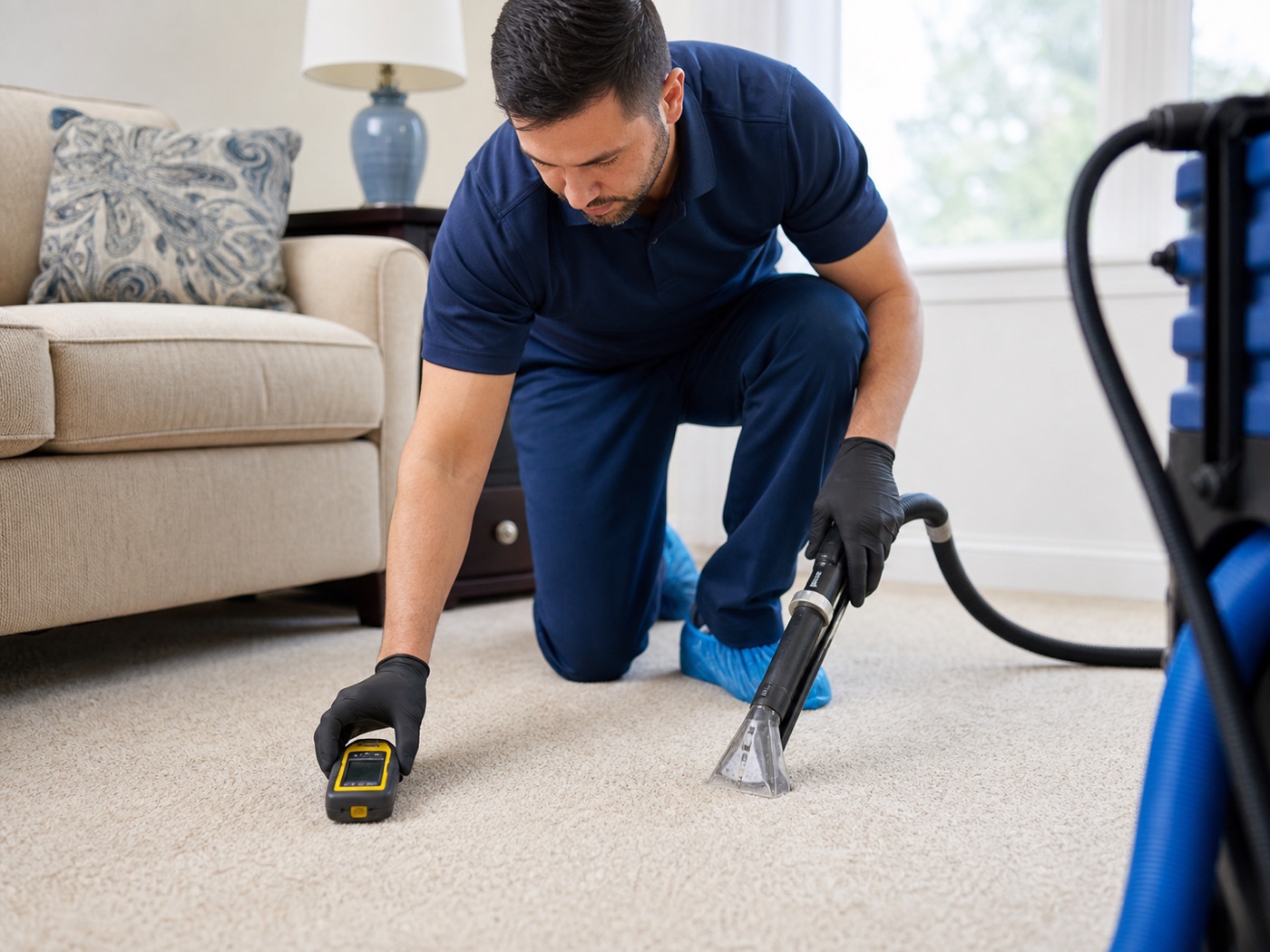
This is why an honest assessment matters more than an aggressive one. A moisture reading and an inspection tell you roughly how deep the problem goes, which determines whether this is a treatable contamination or a situation where pad replacement is the reliable answer. Urine removal is scoped as its own service precisely because it is not the same job as cleaning a floor.
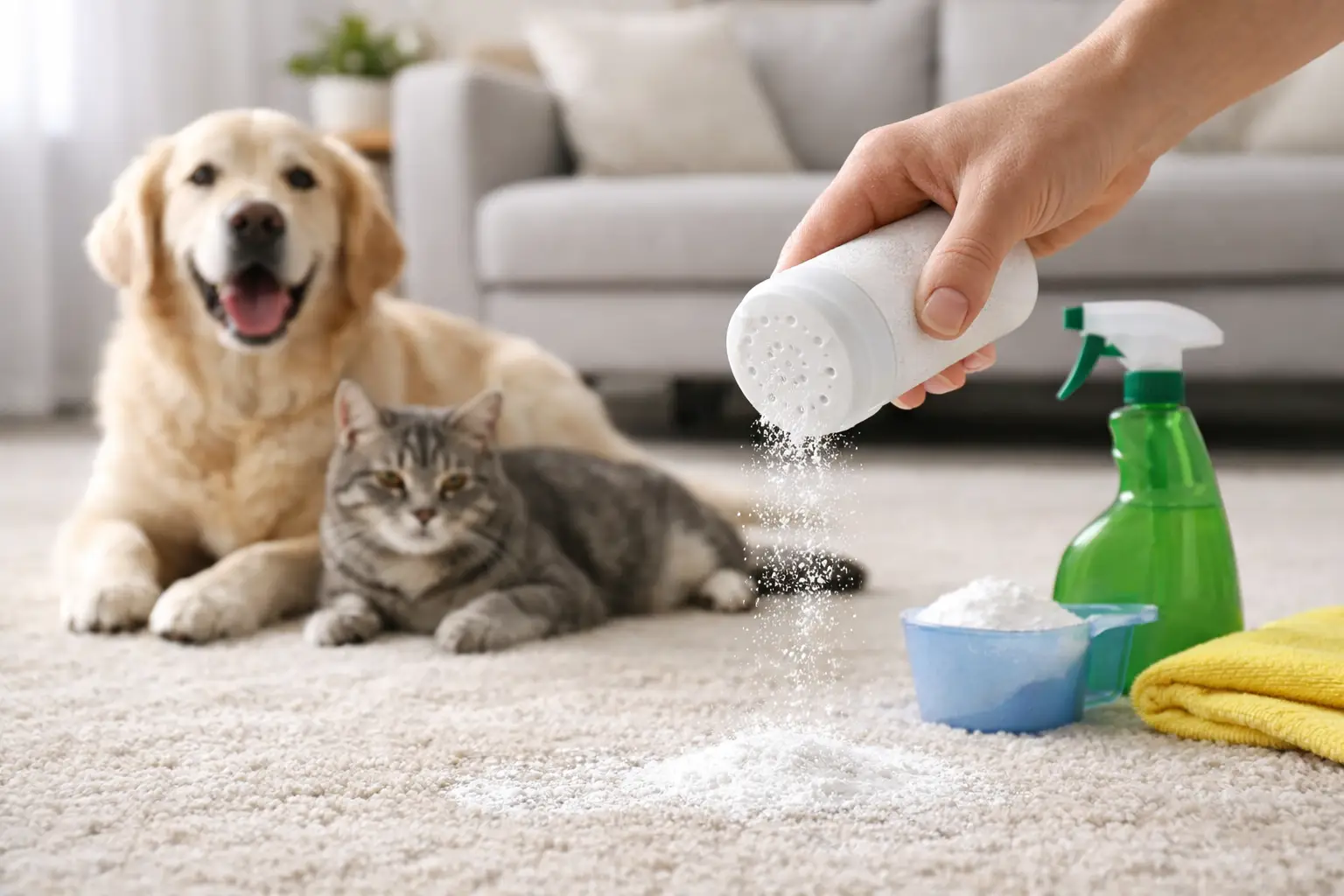
General household pet smell — dander, coat oils, the dog bed, the spot by the back door — is a different and much more tractable problem. That responds well to extraction and appropriate deodorizing treatment, and it is worth understanding how deodorizing actually works before assuming a product will solve a contamination issue.
Upholstery is the reservoir most households forget. A sofa that a large dog sleeps on holds far more coat oil and dander than the carpet around it, and cushion fill is slower to give it up. If a family room smells even after the floor has been cleaned, the seating is usually the reason. Cleaning the furniture and the floor in the same visit is both cheaper and more effective than discovering this two months later.
| What you notice | Likely depth | What it takes |
|---|---|---|
| Smell throughout the house, worse near the dog's bed | Surface — dander and coat oils | Routine extraction plus washing soft goods |
| One room smells, and only sometimes | Pile and possibly pad | Targeted treatment with extraction at the source |
| Smell returns within days of cleaning | Pad or backing | Source treatment; may need pad work |
| Smell strongest at the wall edges | Subfloor and tack strip | Inspection first; often beyond what cleaning alone resolves |
| Visible discoloration plus stiff carpet | Long-standing repeat incidents | Honest conversation about replacement versus treatment |
Zoning a Large House Instead of Cleaning All of It
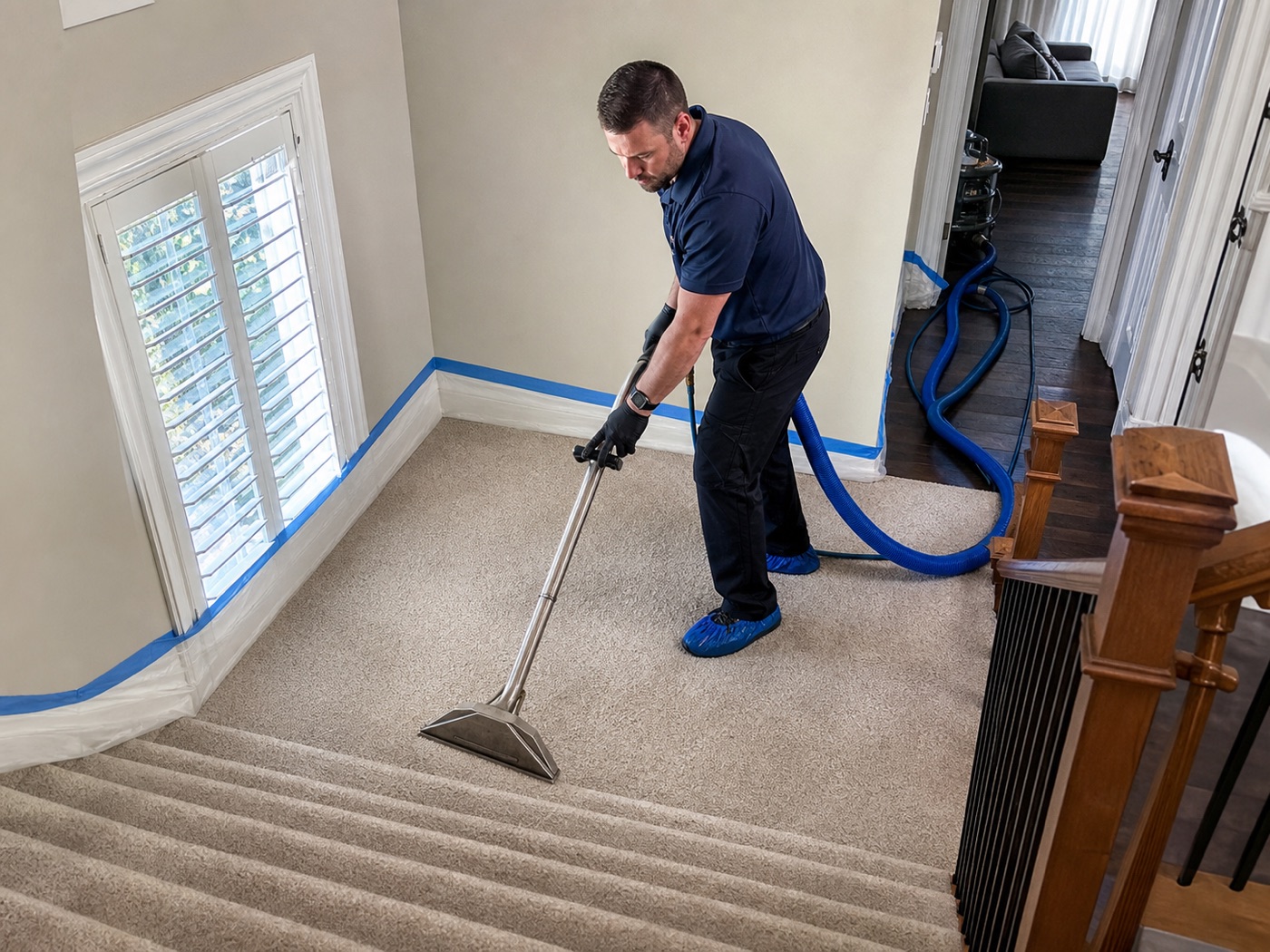
Here is where a lot of Chesapeake homeowners overspend. A 2,800 square foot house gets cleaned wall to wall once a year, including three bedrooms nobody has slept in since the last holiday. Meanwhile the family room and the stairs — which absorb ninety percent of the traffic — go a full year between cleanings and never fully recover.
Zoning inverts that. Clean the rooms that earn it, on the interval they earn, and leave the rest alone until they need attention.
- High-use zone — family room, main hallway, stairs, and the path from the back door: every 6 to 9 months.
- Medium-use zone — primary bedroom, home office, dining room: every 12 to 18 months.
- Low-use zone — guest bedrooms, bonus room, formal living room: as needed, often every 2 to 3 years.
- Event-driven — anything after a spill, an illness, a repeated pet incident, or a wet season that got away from you.
Because cleaning is priced by area rather than by visit, this usually costs less over three years than an annual whole-house service, and the rooms that matter look considerably better. Our pricing page lays out how areas are counted so you can plan a zone schedule against a real number.
Kids Add a Different Set of Problems
Pets get the blame, but children generate an entirely separate category of carpet work: juice, markers, slime, modeling compound, art supplies, and the occasional sports drink that turns out to be dyed a color no carpet fiber ever recovers from.
The general rule is speed and restraint. Blot, do not rub. Work from the outside of a spill toward the center so it does not spread. Use as little liquid as will do the job. And resist the urge to empty a bottle of household spot cleaner onto it — the residue left behind attracts soil, and a clean-looking spot often turns into a permanently dirty ring three months later.
Some substances are chemistry problems rather than effort problems. Dyed drinks, permanent markers, and certain craft materials can bond to or bleach synthetic fiber, and no amount of scrubbing changes that. Knowing which spots are worth calling about saves a lot of wasted weekend effort.
The Back Door Is the Whole Game
If there were one change worth making in a Chesapeake house, it would be at the back door rather than anywhere on the floor itself. Almost every soil problem in these homes traces back to a single doorway that opens from a fenced yard directly onto carpet.
A hard-surface landing area is the ideal fix — tile, luxury vinyl, or even a large low-pile commercial mat sized so that three or four full steps land on it before anyone reaches carpet. Most walk-off matting fails because it is too short. A two-foot mat catches almost nothing; a six-foot runner catches most of what would otherwise end up in the family room.
Add a towel on a hook for paws and an outdoor spigot within reach of the door, and the volume of clay entering the house drops sharply. None of that is expensive, and it changes the cleaning interval more than any product does. It is also the reason two identical houses on the same street can be on completely different maintenance schedules.
The Short Version
A busy Chesapeake house is not going to have pristine carpet, and chasing that is a losing game. What it can have is carpet that stays ahead of the yard, does not smell in August, and lasts the number of years it was supposed to last. That comes from controlling the back door, letting mud dry before you touch it, treating pet odor at its actual depth, and spending your cleaning budget on the rooms that are earning the wear.
All City Carpet Cleaning And Building Solutions serves Chesapeake and the surrounding Hampton Roads cities. Carlton has been doing this for seventeen years, and the first step is always looking at the floor rather than quoting a package over the phone.