A room can look clean and still announce that a pet lives there. The odor may be strongest when you first walk in, after a humid day, or when the carpet gets damp from routine cleaning. Effective carpet deodorizing for pet odors requires more than covering the smell with fragrance. It means finding where the odor is held and treating the materials that absorbed it.
Pets are part of the family, but accidents, shedding, damp paws, and everyday lounging can leave carpets holding onto more than visible soil. For homeowners, renters, and property managers, the goal is not simply a fresher scent for an afternoon. It is a clean, comfortable space that feels ready for family, guests, tenants, employees, or customers.
Why Pet Odors Keep Coming Back
Pet odor is often an issue below the carpet surface. When urine reaches carpet fibers, it can move through the backing and into the pad. In some cases, especially with repeated accidents, it may reach the subfloor. As the area dries, odor-causing residue can remain behind even if the stain is no longer visible.
Humidity can make the problem more noticeable. Moisture in the air can reactivate dried residue, which is why a carpet that seemed fine last week may suddenly smell again after rain or a steam-cleaning attempt. This is also why spraying a deodorizer over the carpet may provide only short-term improvement.
Not every odor comes from urine, either. Pet dander, body oils, saliva, outdoor debris, and pet bedding can contribute to a stale carpet smell over time. A good cleaning plan considers the full condition of the carpet rather than treating every odor as the same problem.
What Carpet Deodorizing for Pet Odors Should Address
True deodorizing is different from masking an odor. Air fresheners and heavily scented powders may temporarily make a room smell different, but they do not remove the soil or residue causing the issue. In some cases, strong fragrance can make it harder to tell whether the odor problem has actually been resolved.
A more dependable approach starts with identifying the affected areas. Pet accidents are not always obvious, particularly on patterned carpet or in corners, along walls, under furniture, and near pet beds. A professional can evaluate the carpet and determine whether odor treatment is needed at the fiber level, within the pad, or beyond the carpet itself.
Cleaning Must Come Before Deodorizing
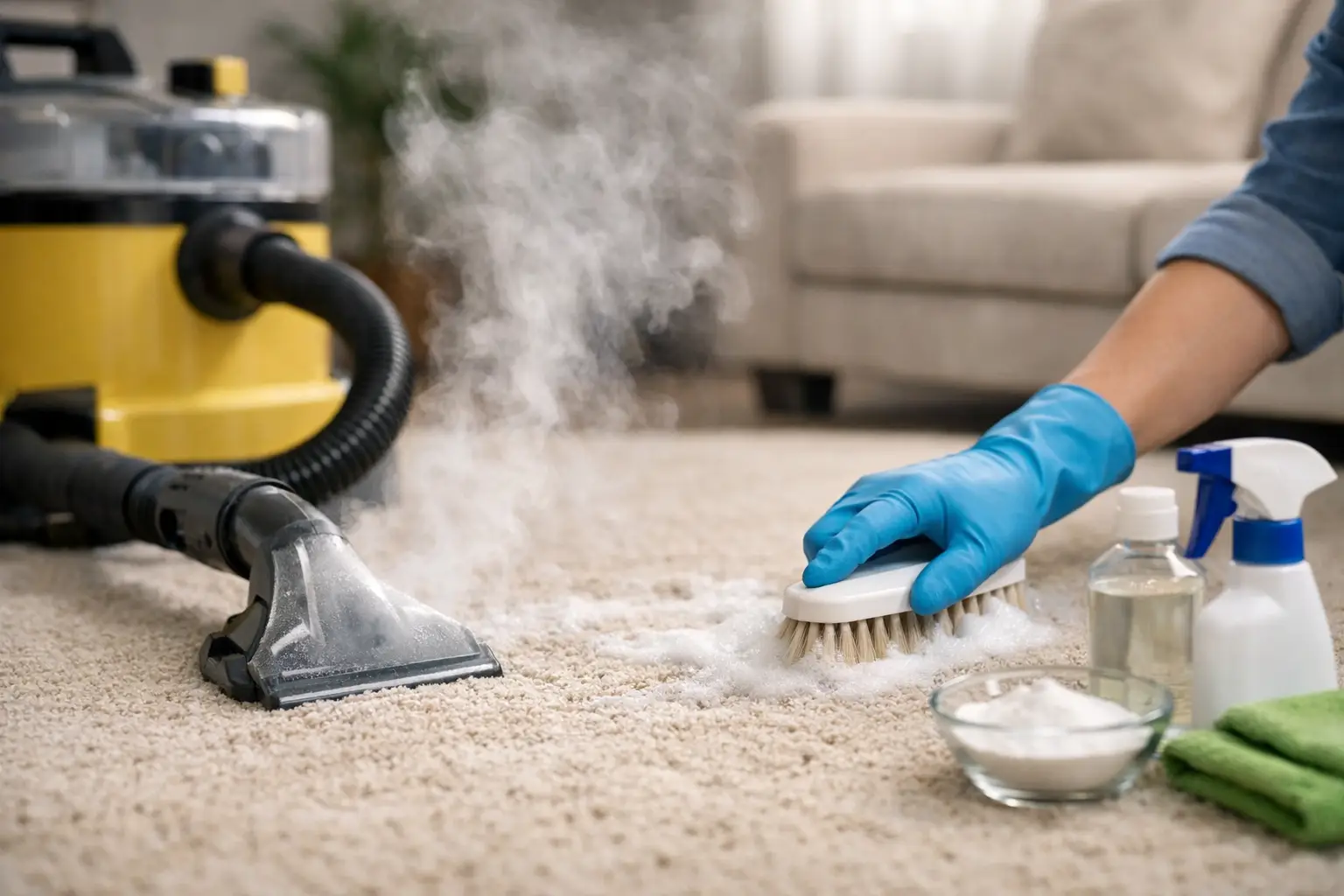
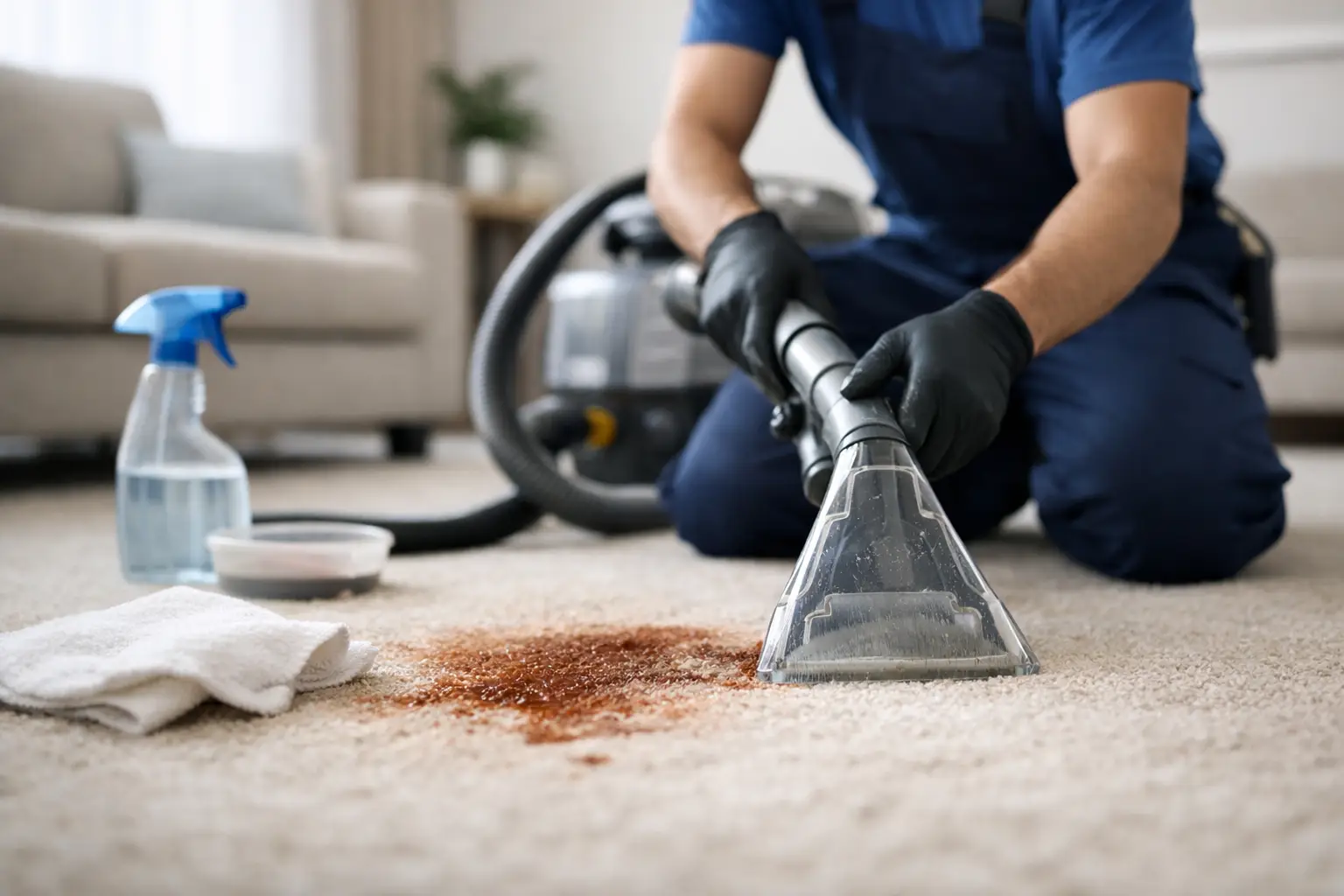
Odor treatment works best after the soil has been properly removed. Professional carpet steam cleaning uses hot-water extraction to lift embedded dirt, oils, and cleaning residue from carpet fibers. This process is valuable for the overall appearance and hygiene of the carpet, but the specific treatment should match the source of the odor.
For pet-related concerns, the right deodorizing solution is applied where it can contact the odor-causing material. The treatment needs enough time to work before extraction. If the odor has reached the pad or subfloor, surface cleaning alone may not be enough. That is not a failure of cleaning — it is a sign that the affected area needs a more targeted solution.
The Condition of the Carpet Matters
Age, fiber type, and prior cleaning attempts all affect results. Older carpet with years of repeated pet accidents may have a deeper odor issue than a newer carpet with one recent incident. Carpet that has been repeatedly saturated with household cleaners can also be more difficult to rinse thoroughly.
This is where honest assessment matters. Many pet odor problems improve significantly with professional cleaning and deodorizing. However, if contamination has reached the pad and subfloor over a large area, replacement of the pad or additional restoration work may sometimes be the practical choice. A reliable cleaning provider should explain that distinction clearly instead of promising a one-size-fits-all result.
What to Do When a Pet Accident Happens
Quick action gives you the best chance of preventing an odor from becoming permanent. Blot fresh moisture with clean, absorbent towels, pressing firmly without scrubbing. Scrubbing can push the material deeper into the carpet and spread it into a larger area.
Use a pet-safe product intended for the specific issue, and follow the label directions. Avoid combining cleaning chemicals or saturating the carpet with multiple products. Excess moisture can travel into the pad, and leftover cleaner can attract soil after the area dries.
Heat is another concern. Avoid using a household steam cleaner on a fresh urine spot before it has been properly treated. Heat can set certain stains and may make odor removal more difficult. If the odor remains after the area is dry, take note of the location and arrange professional service before the problem is repeated or spread.
When DIY Solutions Are Enough — and When They Are Not
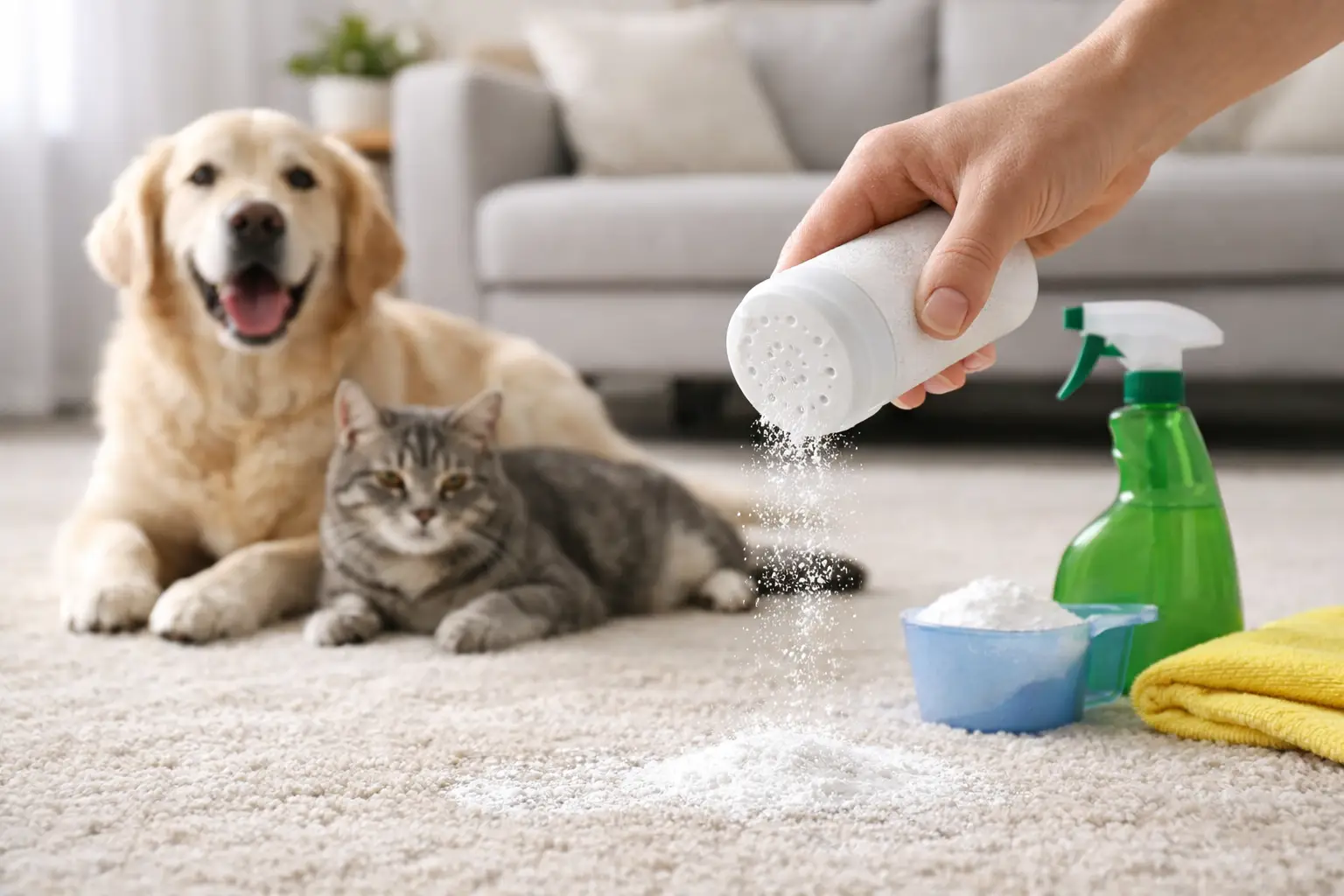
A single, small, recent accident may respond well to prompt blotting and a properly used pet-odor cleaner. Routine vacuuming, regular grooming, washing pet bedding, and cleaning entry areas can also reduce the everyday odors that settle into carpet.
Professional help is usually the better choice when the smell returns after cleaning, when there are multiple accident areas, or when you cannot identify the source. It is also a smart option before listing a home, welcoming a new tenant, hosting visitors, or reopening a workspace after a pet has been on the premises.
For renters and property managers, odor removal should be handled early. Waiting until move-out inspections can turn a manageable carpet service into a more involved turnover issue. For homeowners, addressing odors before they become familiar is equally valuable. People who live with a smell every day often stop noticing it, while guests notice it immediately.
Pet Odor Concerns in Homes and Commercial Properties
Residential carpet has to stand up to daily family life, pets, foot traffic, and changing weather. In a home, the priority may be restoring comfort in a favorite room or preparing the space for visitors. In a rental property, the focus may be protecting the condition of flooring and presenting a clean unit to prospective tenants.
Commercial and office settings can have different needs. A pet-friendly office, veterinary-related workspace, apartment common area, or property management office needs carpets that look professional and smell clean. Odors can affect how customers, residents, and employees perceive the entire property. Regular floor care helps protect that first impression while extending the useful life of carpet.
Preventing Pet Odors From Building Up
Prevention is less about perfection and more about consistency. Vacuuming regularly removes hair, dander, and dry soil before they are worked deeper into the fibers. Prompt spot care limits how far accidents travel. Keeping pet bedding clean and placing washable mats near doors can reduce the dirt and moisture that pets bring inside.
A regular professional carpet cleaning schedule is also useful for homes with pets. The right frequency depends on the number of pets, their habits, carpet color and type, and the amount of foot traffic in the home or business. A household with one older, house-trained cat may need less frequent service than a busy home with several dogs and children.
If a pet begins having accidents unexpectedly, consider the cause as well as the cleanup. Changes in behavior can be related to stress, routine changes, age, or health. Addressing the underlying issue protects both your carpet and your pet's well-being.
Professional Care for a Fresher Space
The best result comes from treating the source of the odor, not trying to cover it up. Experienced carpet cleaning professionals can assess the condition of the carpet, apply appropriate odor treatment, and provide clear expectations based on what they find.
All City Carpet Cleaning & Building Solutions brings professional care and local accountability to carpet cleaning projects throughout Hampton Roads. Whether you need help with a pet-affected room, a rental turnover, or ongoing floor care, the right service can help your home or property feel clean, presentable, and comfortable again.
A fresher carpet starts with an honest look at what is beneath the surface. When pet odors linger, timely professional attention can make the difference between a temporary scent and a space you are confident to welcome people into.