Carpet protector sits in an awkward place in this industry. It is a legitimate product with a real mechanism, and it is also the line item most often sold with vague promises by people who would rather not explain it. Customers can tell when they are being handled, so the offer gets a reflexive no, and sometimes that no costs them.
So here is the whole thing laid out: what it is, what it does, where it earns its cost, and the rooms where we tell people not to bother.
What It Actually Is
Modern carpet protectors are fluorochemical treatments — the category most people know by brand names like Scotchgard or Teflon. Applied properly, they form a molecular layer around each individual fiber rather than a film across the top of the carpet.
That distinction matters. A film would change how the carpet feels and would crack under foot traffic. A per-fiber treatment lowers the surface energy of the fiber itself, which is the property that determines whether a liquid spreads across a surface or beads up on it. Treated fiber repels both water-based and oil-based liquids, which is why a spill sits on top for a while instead of soaking straight into the yarn.
There is a second effect that gets less attention and may matter more day to day. Dry soil does not bond as readily to a treated fiber, so more of it comes out during vacuuming. In a coastal region where the soil load is largely abrasive quartz sand, anything that helps a vacuum remove more grit is doing real structural work rather than cosmetic work.
What It Does Not Do
The honest limits are as important as the benefits, and any cleaner who skips this part is selling rather than advising.
Protector does not make carpet stain-proof. A spill left to dry will still stain, because the treatment buys time rather than immunity. It does not stop dye-based staining — red drink mix, certain wines, some cleaning products — because dye chemistry binds to the fiber itself and a surface treatment does not prevent that. It does not repel everything indefinitely, and it does not clean carpet or replace cleaning.
It also cannot fix carpet that is already worn. Once traffic-lane fiber has been abraded by grit, the appearance loss is permanent, and no treatment restores it. Protector applied to an already-tired hallway keeps it from getting worse faster. It does not turn back the clock.
| Situation | Without protector | With protector |
|---|---|---|
| Water or soda spilled | Soaks in within seconds | Beads for a minute or more |
| Grease or oil spill | Wicks in and darkens | Sits on the surface longer |
| Red dye drink | Stains quickly | Stains slightly more slowly |
| Spill left overnight | Stains | Usually still stains |
| Dry soil and sand | Bonds to fiber | Releases more readily |
| Existing wear | Permanent | Still permanent |
Where It Earns Its Money
The value depends entirely on the room, and the calculation is not complicated.
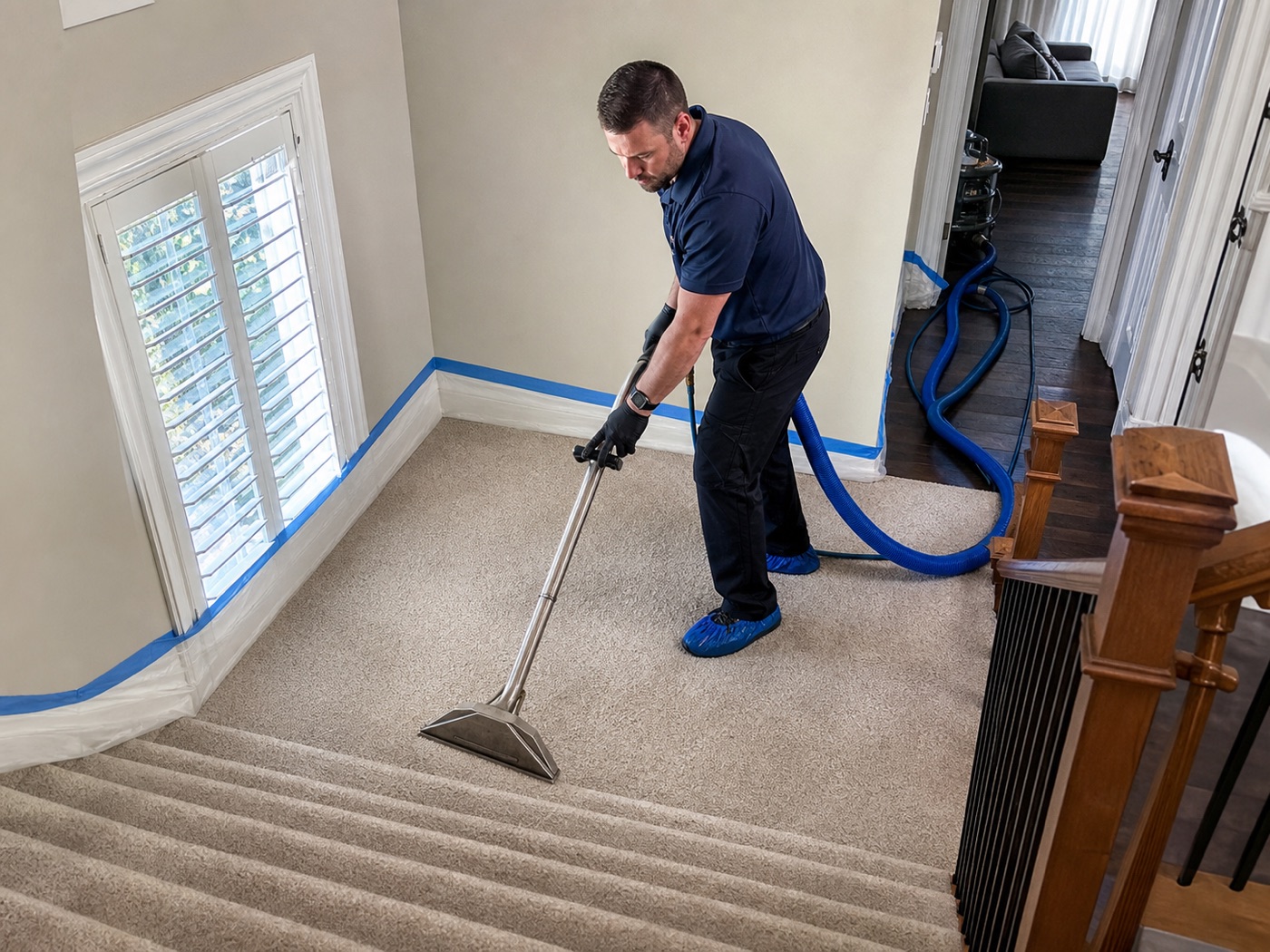
It is clearly worth it in the rooms where spills and soil are likely: family rooms, playrooms, dining areas on carpet, hallways, stairs, and any room where people eat in front of a television. Households with young children, pets, or a high volume of guests get more out of it than anyone else, because the probability of a spill in a given month is what drives the whole equation.
It is also strongly worth it on light-colored carpet. Beige and cream carpet does not attract more soil than darker carpet; it just shows everything, so the practical difference between catching a spill in thirty seconds and catching it in five minutes is much larger.
It is not worth much in a guest bedroom, a formal living room nobody sits in, or an office where the only liquid in play is a lidded coffee cup. Those rooms are not failing from spills, and paying per area to protect them is money that would do more good elsewhere in the house. When customers ask us for protector everywhere, we usually talk them down to the rooms that need it.
Application Is Most of the Outcome
The variable that changes results most is not which product is used. It is how it goes on.
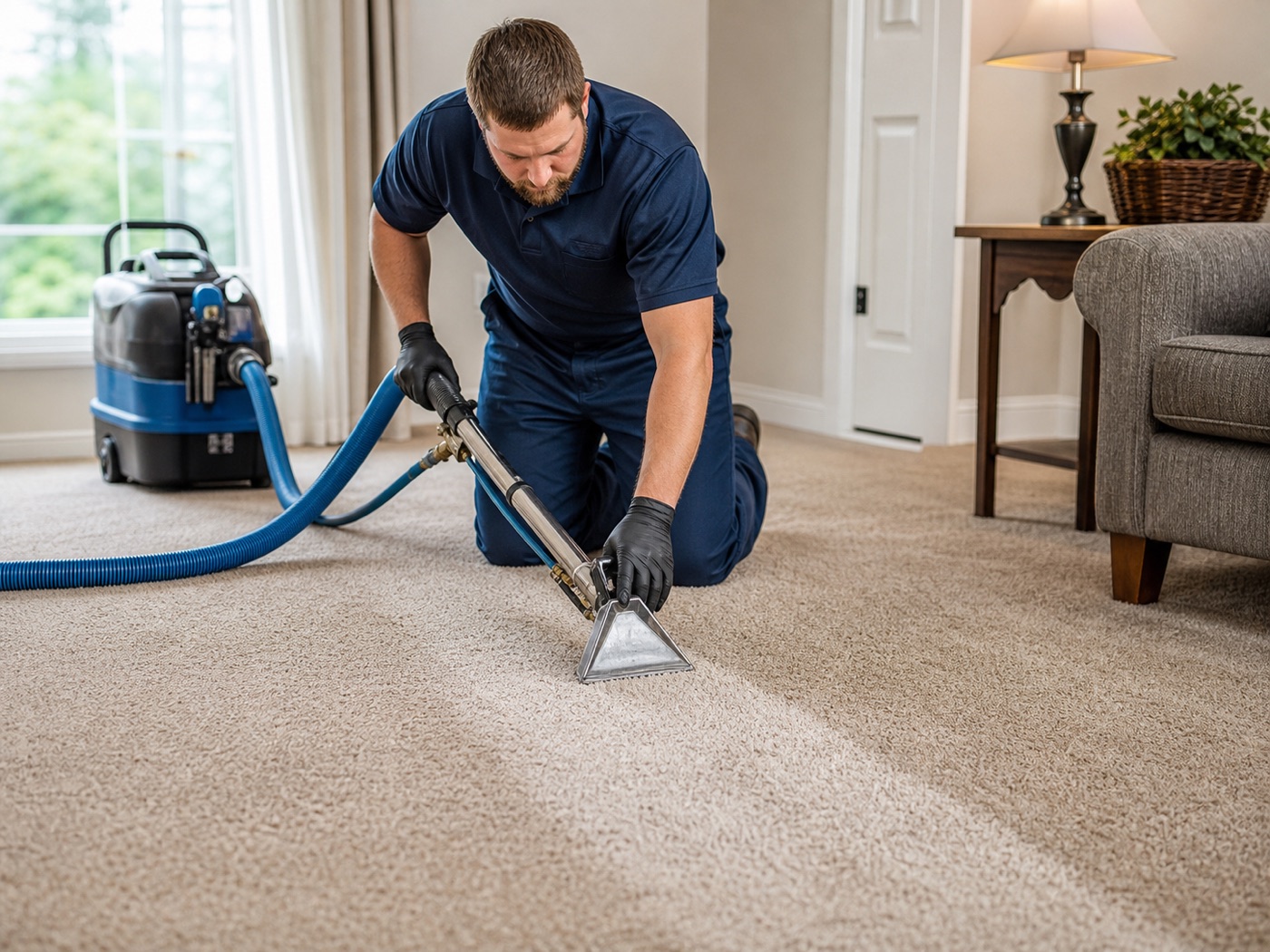
Protector has to be applied to clean carpet. Applying it over soil locks the soil in place under the treatment, which is worse than no treatment at all. It goes on while the carpet is still damp from cleaning, because damp fiber distributes the product evenly instead of letting it pool on the tips.
Coverage rate matters too. Under-applying to save product produces patchy protection that fails where it is needed most, and over-applying leaves residue that attracts soil — the exact opposite of the intended effect. And it should be groomed in with a carpet rake so the product reaches the sides and base of each fiber rather than sitting on the crown where it wears off first.
Every one of those steps is invisible to the customer, which is precisely why protector has a mixed reputation. Done properly it performs. Done as a quick spray on the way out the door it mostly does not.
How to Tell Whether Yours Is Still Working
There is a simple test, and it takes about thirty seconds on a floor you are curious about.
Put a few drops of water on the carpet in a traffic lane and watch. On protected fiber the drops hold their shape and sit on the surface for a minute or more. On unprotected fiber they flatten and disappear into the pile almost immediately. Do the same thing in a low-traffic corner of the same room and compare — the difference between the two spots tells you how much of the original treatment the traffic has taken off.
That comparison is usually the most persuasive thing anyone can show a homeowner, because it demonstrates the wear pattern directly. The guest room still beads. The hallway does not. Those two rooms were treated identically at the factory, and one of them has been walked on ten thousand times more than the other.
It is also why reapplication belongs with cleaning rather than as a standalone visit. The carpet has to be clean and damp for the product to distribute properly, and those conditions exist for about an hour a year — right after the extraction pass. Booking protector separately means either applying it over soil or applying it to dry fiber, and neither performs.
The Commercial Case Is Different
In commercial buildings the arithmetic changes, and it usually favors protector more strongly than in homes.
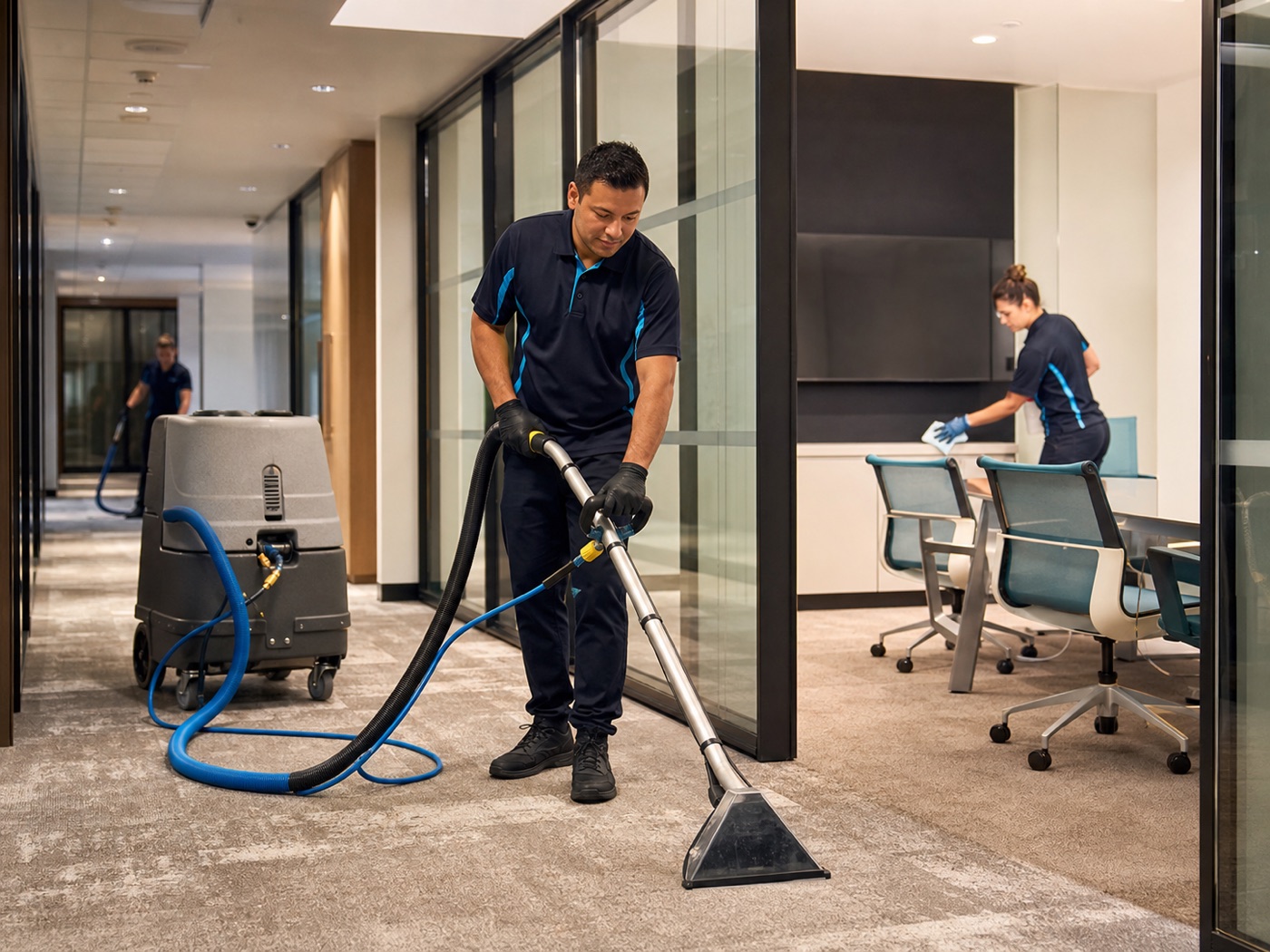
Commercial carpet takes far more traffic, gets replaced on a capital schedule rather than when someone tires of it, and is almost always in an environment where appearance affects how the business is perceived. Extending the appearance life of a lobby or a corridor by even a year is a meaningful number against a replacement budget, and protector is a small fraction of the cost of interim cleaning.
Restaurants, medical suites, and any space where food or fluids are handled get a further benefit, because response time on a spill during business hours is genuinely constrained. So do buildings near the water, where the soil load arriving on shoes is abrasive year-round and matting can only capture so much of it.
For property managers turning units, the case is narrower. Protector on a rental carpet helps the next tenancy rather than the current one, and whether that is worth it depends on how long you intend to keep the carpet. On a floor with three years left, it usually is not.
What It Costs and What to Do Instead
We charge protector by the area rather than bundling it into a package, and the number is published alongside everything else, so you can decide room by room without a sales conversation.
If the budget only stretches so far, here is the order we would spend it in. Clean the high-traffic zones first — that removes the grit that causes permanent wear, and nothing else competes with it. Put real walk-off matting at every exterior door next, because prevention beats treatment. Then protector on the rooms where spills actually happen. Then, and only then, the rest of the house.
It also helps to know what to do in the minutes after a spill, because protector's entire benefit is the extra time it buys you, and that time is wasted if the response is wrong. Blotting with water and a white towel handles more than most people think, and the aerosol spot cleaner under the sink causes more return visits than any spill does.
All City Carpet Cleaning And Building Solutions serves Virginia Beach, Norfolk, Chesapeake, Suffolk, Hampton, Portsmouth, and Smithfield. We will tell you which rooms are worth protecting and which are not.