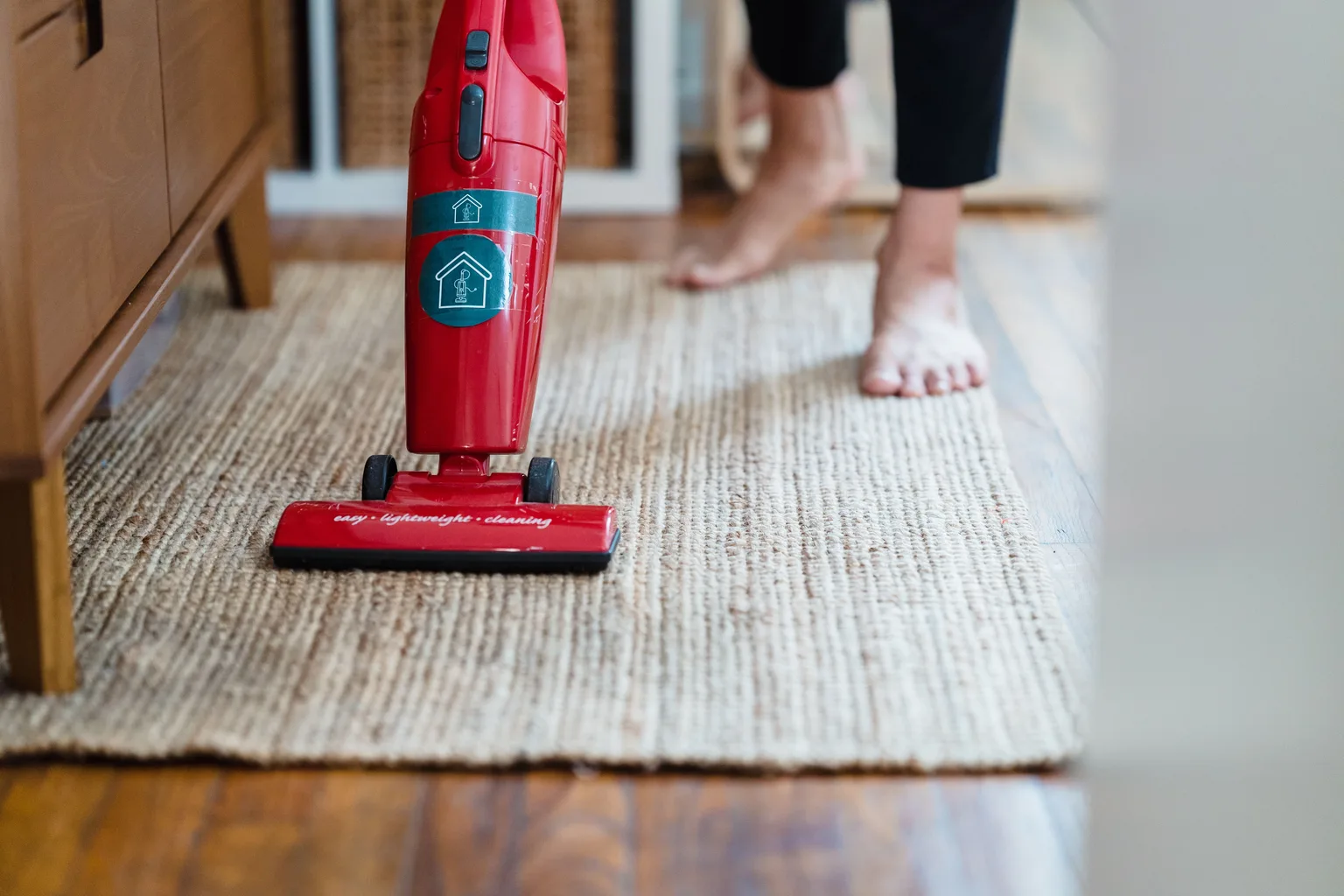
There is a particular kind of frustration that comes with vacuuming a carpet thoroughly, standing back, and seeing that it looks exactly the same as before. It is a common experience in this region, and it usually means the vacuum is doing the easy half of the job and skipping the half that matters.
In Hampton Roads, that half is grit. Quartz sand from the beaches, fine mineral soil from yards, and construction fines from newer neighborhoods all end up in the same place: at the base of the carpet pile, below where a casual pass ever reaches.
Why Grit Is Different From Dirt
Ordinary household soil is soft. It dulls a carpet, it holds odor, and it lifts out with reasonable effort. Mineral grit does something else entirely: it cuts.
Quartz is harder than nylon, polyester, olefin, and wool — every fiber residential carpet is made from. A grain of sand that has settled to the base of the pile does not compress when someone steps on it. The fiber wrapped around it does, and the sharp edge of that grain shears microscopic material off the yarn. Repeat that a few thousand times in a hallway and the fiber ends are frayed, which scatters light differently and reads to the eye as a permanent gray shadow.
This is the important part: that damage is not reversible. Soil comes out. Cut fiber does not grow back. Every day a carpet spends with grit in it is a day of irreversible wear, which reframes vacuuming from a housekeeping chore into the primary thing protecting the floor's remaining life.
The Technique Almost Everyone Gets Wrong
A vacuum removes material by moving air through the carpet. Air has to travel down through the pile, pick up particles, and come back up into the machine, and that takes time — more time than most people give it.
At the speed most people push an upright, the head is over any given square inch for a fraction of a second. That is enough to lift what is sitting on top of the fibers. It is not enough to develop airflow through the full depth of the pile to where the grit has settled. Which is why a room can be vacuumed weekly for years while the material actually damaging it never leaves.
- Slow down to roughly one pass per second, or slower on dense carpet. This single change does more than any equipment upgrade.
- Make the return stroke count. The pull stroke is generally more effective than the push, because the brush roll and airflow work with the pile direction rather than against it.
- Overlap each pass by about half the head width so no strip gets a single treatment.
- Cross-hatch high-traffic areas — go north-south, then east-west. Fibers lean, and one direction alone leaves material behind.
- Set the height correctly. A head sitting too high loses the seal that creates airflow; too low and the brush roll stalls and scuffs the fiber.
- Empty the bag or bin before it is full. Suction falls off well before a bin looks full.
Vacuum the Right Rooms
The second common mistake is uniform effort. Most households vacuum the whole house on the same schedule, which means the guest bedroom gets the same attention as the hallway that everyone in the family crosses forty times a day.
| Area | Grit load | Practical frequency |
|---|---|---|
| Entry, foyer, garage door landing | Highest — everything starts here | Two or three times a week |
| Main hallways and stairs | Very high — traffic funnels through | Twice a week |
| Living and family rooms | Moderate, spread over a large area | Weekly |
| Primary bedroom | Low to moderate | Weekly |
| Guest rooms, formal rooms | Very low | Every few weeks |
Concentrating effort where the grit is does more for the whole house than spreading it evenly, because entries and hallways are the reservoirs that reload every other room. A carpet that is dulling in traffic lanes but fine elsewhere is telling you exactly where to spend the time, and it is the same signal that tells you when a deeper cleaning is worth scheduling.
What Your Vacuum Cannot Do
Even done correctly, vacuuming has a ceiling. Grit bound into the yarn by body oils, cooking residue, and old spot-cleaner residue is stuck there, and dry airflow will not release it. That bond is chemical rather than mechanical, and it needs heat, appropriate chemistry, and a flushing action to break.
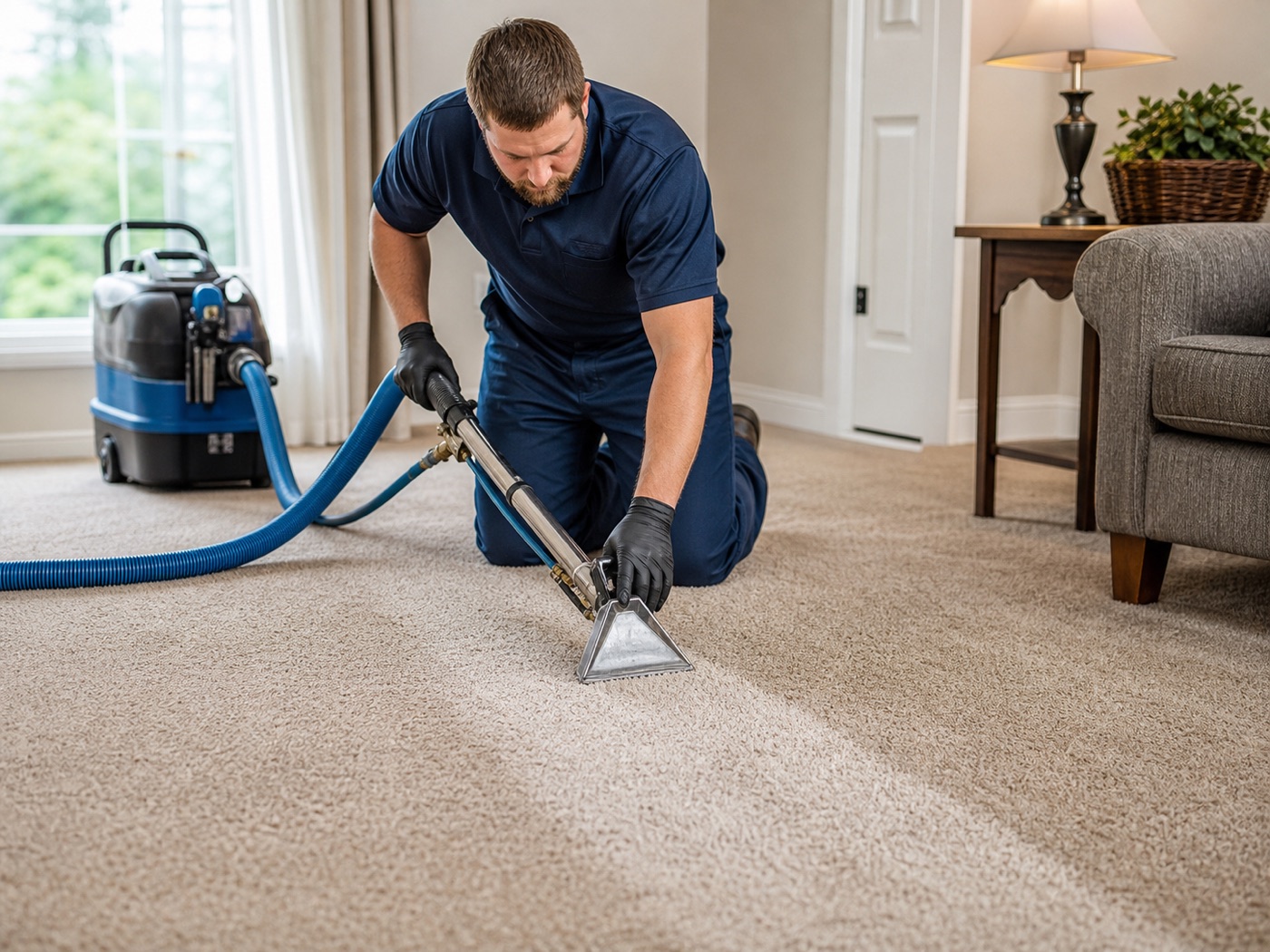
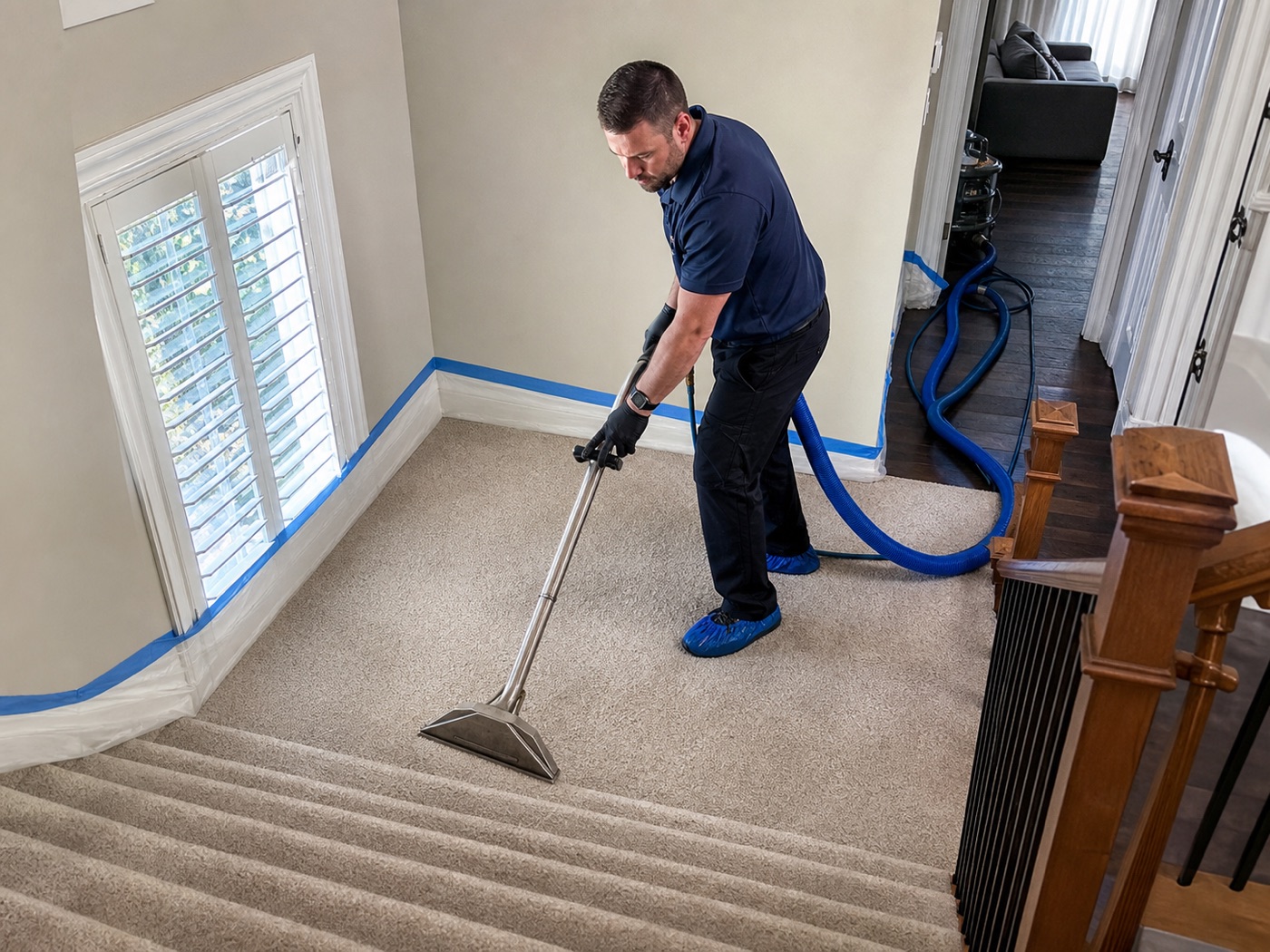
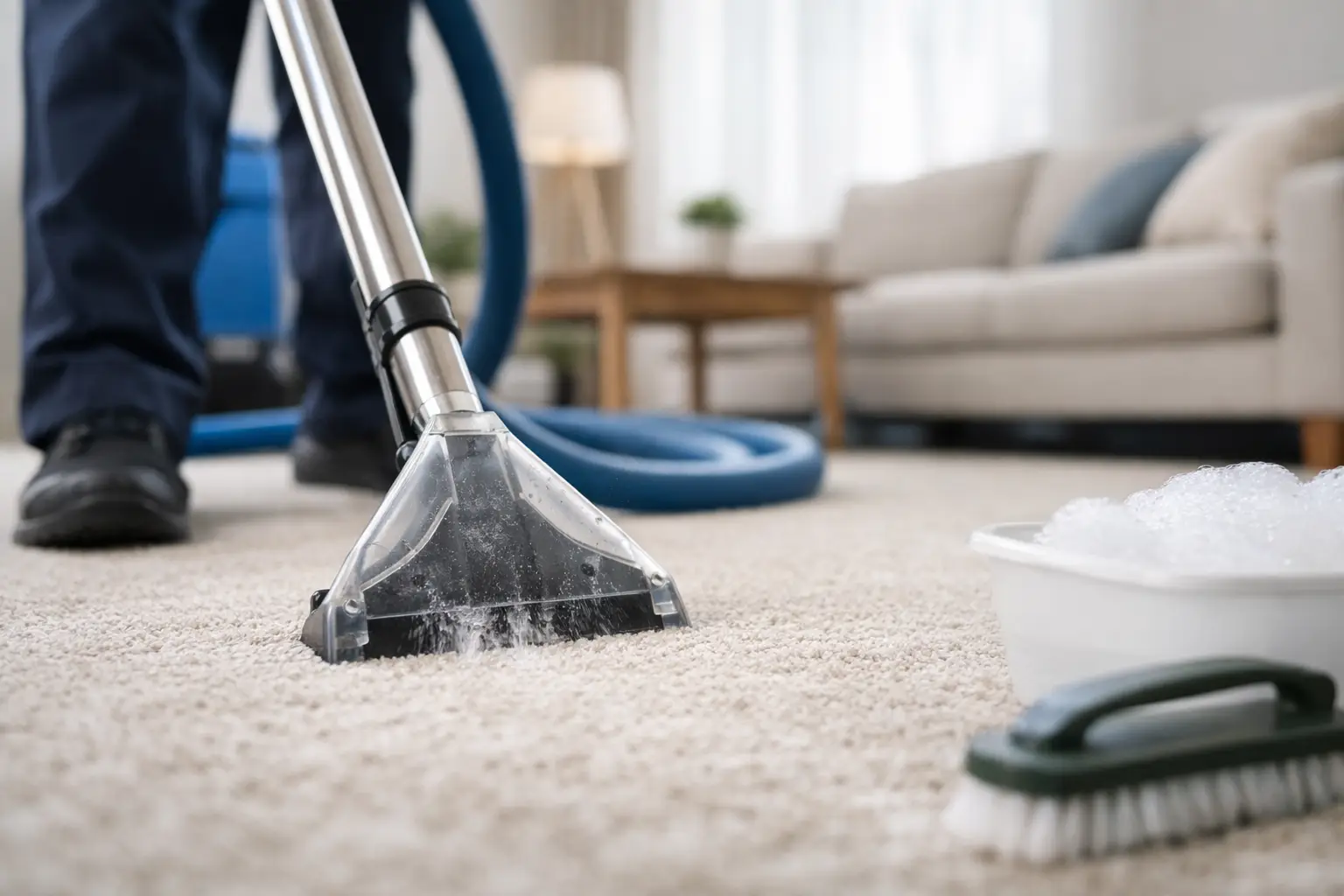
That is what hot water extraction actually does in this context. The visible result is a cleaner-looking carpet; the durable result is that abrasive material has been removed from the base of the pile where it was doing damage. For a home in a sandy market, that second effect is the whole reason to do it on a schedule rather than waiting until the floor looks bad.
There is one more thing worth naming. A vacuum with a poor filtration path — a torn bag, a cracked housing, a filter that has not been changed — takes fine material in at the floor and discharges it back into the room air, where it settles onto the carpet again within hours. The machine feels like it is working, and functionally it is relocating the problem.
Stop It at the Door Instead
Everything above is damage control. The higher-return move is reducing how much grit gets inside at all, and that comes down to matting and habits.
Commercial facility guidance suggests it takes something like fifteen feet of walk-off matting to capture the large majority of what a shoe carries. Nobody is putting fifteen feet of mat in a house, but the underlying point holds: most residential mats are far too short. A two-foot mat gets one step. Three or four full steps on matting removes dramatically more.
- A coarse scraper mat outside every exterior door, sized for at least two steps.
- An absorbent walk-off mat immediately inside, long enough for two or three more.
- A hard-surface landing area where possible — tile or vinyl inside the door beats carpet every time.
- A shoes-off habit in carpeted rooms, which is worth more than every product on the shelf combined.
- An outdoor rinse for feet, dog paws, and beach gear before anyone comes in.
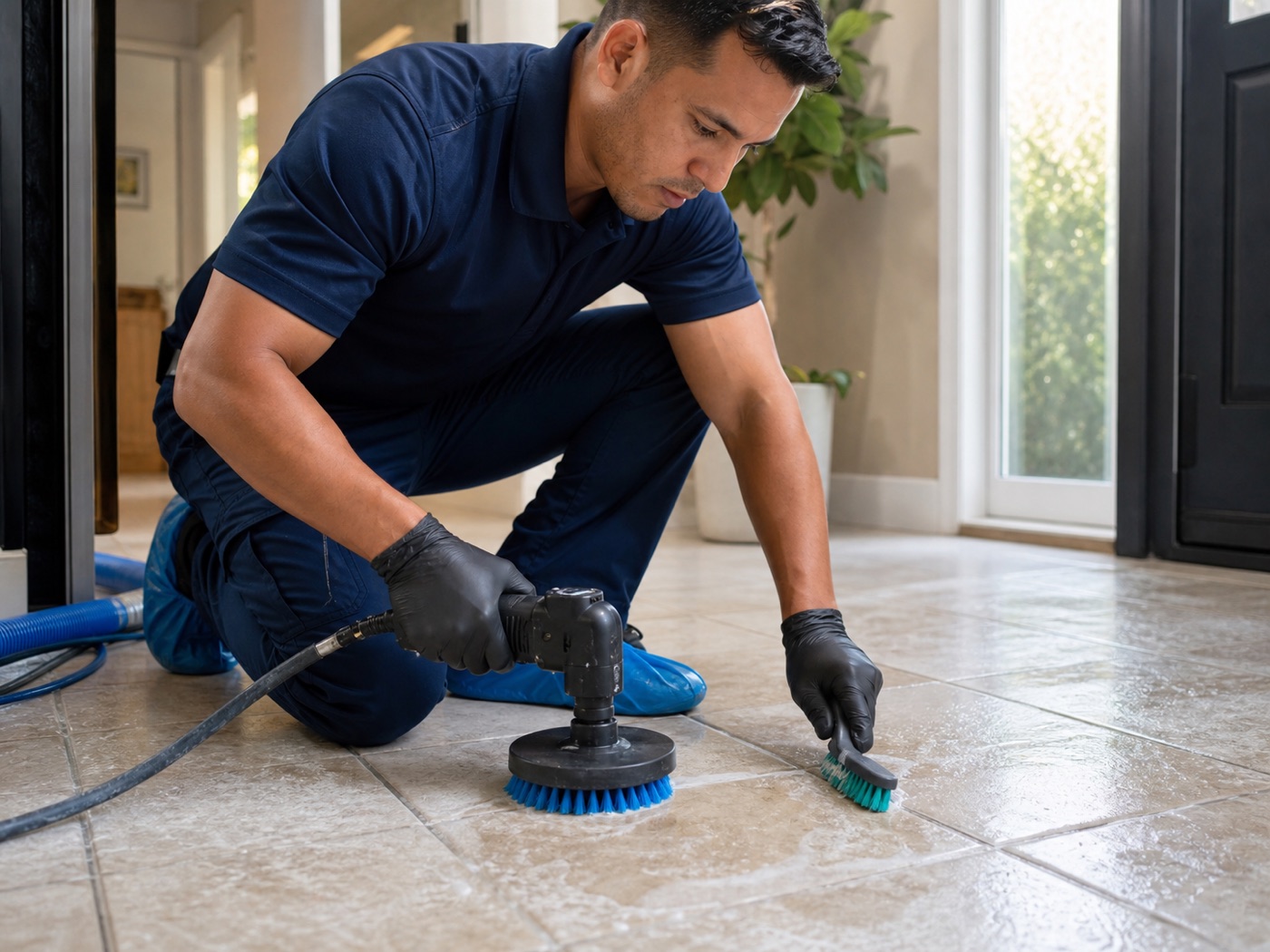
The hard-surface landing deserves emphasis. Tile at an entry catches grit where it can be swept and mopped rather than embedding it in fiber — but only if the grout is kept clean, because soiled grout becomes its own reservoir that reloads the carpet just past it.
Seasonal timing matters as well. Summer brings beach sand and the highest foot traffic of the year, while a wet winter brings clay from soft ground — a fine, iron-bearing soil that discolors carpet rather than abrading it, and that behaves completely differently when you try to clean it up. Knowing which one you are dealing with lets you aim the effort rather than doing the same thing all year.
There is also a limit worth naming. A carpet that has already lost its fiber to years of grit is not going to be rescued by better vacuuming habits, and it is worth knowing where your floor sits on that curve before investing in it. Run a flat hand across a protected area under a bed, then across the hallway. If the hallway feels coarser, that is abrasion and it is permanent. If it just looks darker, that is soil, and everything in this article applies.
The Short Version
The thing wearing out carpet in Hampton Roads is abrasive and it lives at the bottom of the pile. Vacuuming removes it, but only at a speed most people never use, and only in the rooms where it actually collects. Matting reduces how much arrives. Periodic extraction gets what the vacuum chemically cannot.
Do those three things and inexpensive carpet lasts most of the way to its rated life. Skip them and good carpet does not. All City Carpet Cleaning And Building Solutions works across Virginia Beach, Norfolk, Chesapeake, Hampton, and Portsmouth, and we are happy to tell you where your floor actually stands.