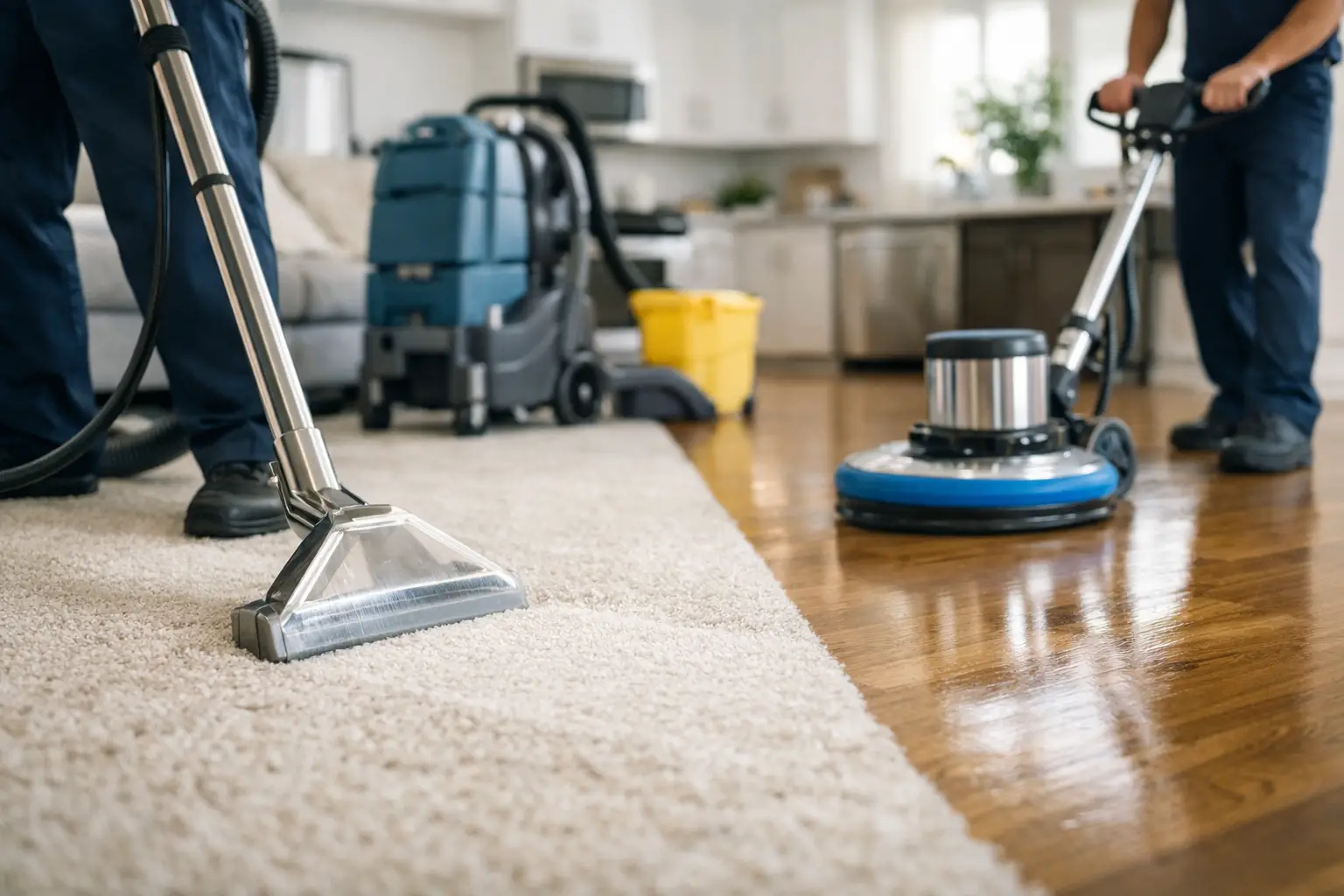
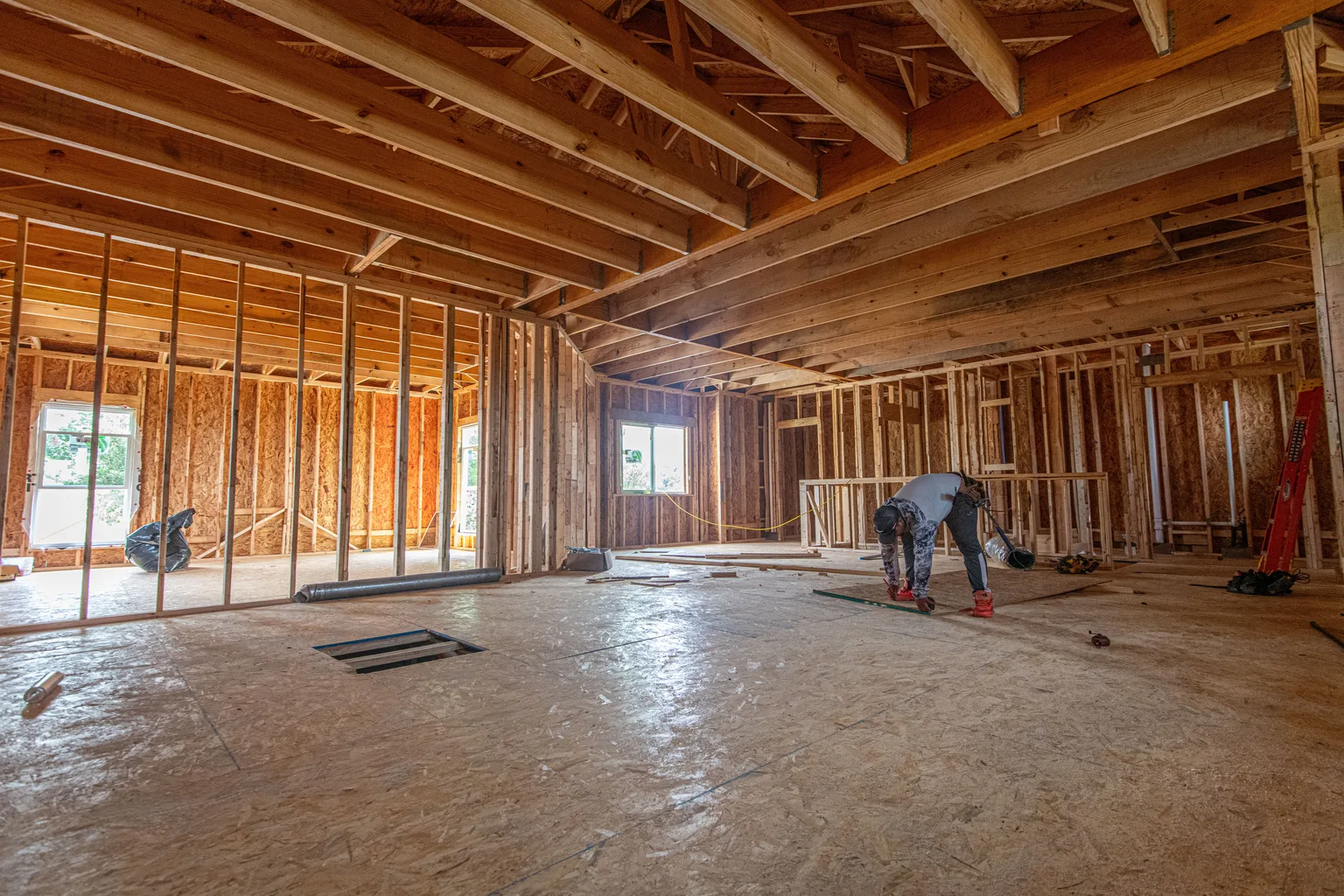
Suffolk has been building steadily, and Harbour View in particular has filled in with neighborhoods where nearly every house is under fifteen years old. That produces a housing stock with a very different set of floor-care questions than Norfolk's pre-war blocks or the oceanfront rentals in Virginia Beach.
The most common one, usually asked with some frustration about eighteen months after closing: why does brand-new carpet already look worn?
What Builder-Grade Carpet Actually Is
There is no dishonesty here, but there is a mismatch of expectations. Carpet is a line item in a build budget, and in most production homes it is specified to hit a price point. That typically means a low-twist cut pile in polyester or olefin over a thin pad.
Those fibers are not bad. Polyester resists water-based staining well and holds color nicely. Olefin is inexpensive and colorfast. What neither does well is resist crushing. The twist in a carpet yarn is what makes it stand back up after a foot lifts off it, and low-twist yarn over a thin pad loses that resilience relatively quickly in a traffic path.
So the hallway goes flat. It reads to the eye as dirt, because crushed fiber lies down and reflects light differently, and homeowners call for a cleaning expecting the color to come back. Cleaning genuinely helps — there is usually real soil in there too — but the crushing itself is a structural change. A good cleaner will tell you which part of what you are looking at is soil and which part is not, rather than promising both will lift.
The Construction Dust Nobody Warns You About
A finished house is not a clean house. Drywall compound dust, sawdust, and insulation fibers get into wall cavities, ductwork, trim gaps, and the carpet itself, and they keep migrating out for months after the builder's final clean.
Drywall dust is the persistent one. It is extremely fine, mildly alkaline, and it settles deep into carpet pile where a household vacuum struggles to reach it. Homeowners often describe a new house as feeling dusty no matter how often they clean, and this is usually why.
The practical implication is timing. Cleaning the carpet the week you move in feels satisfying and largely wastes the money, because the reservoir behind the walls has not finished emptying. Three to six months in, after the HVAC system has cycled through a season and the trim gaps have given up most of what they held, a first deep cleaning does considerably more good.
- Change HVAC filters more often than the schedule says for the first year — monthly is not excessive in a new build.
- Vacuum slowly and frequently through the first several weeks; new carpet sheds and it also holds construction fines.
- Wipe down trim, window sills, and the tops of door casings before vacuuming, so what falls gets picked up rather than ground in.
- Schedule the first professional cleaning around the three-to-six-month mark.
- Handle any punch-list work that generates dust before that cleaning, not after.
Protecting Inexpensive Carpet Is Mostly Geometry
Because crushing is the failure mode, the goal is to reduce how many footsteps land on the same square foot. That sounds abstract, and in practice it is very concrete.
| Location | What happens | What actually helps |
|---|---|---|
| Entry from the garage | Highest step count in the house, plus grit | A runner or hard-surface landing area |
| Main hallway | Every trip funnels through the same three-foot width | A runner, and vacuum this twice as often as bedrooms |
| Stair treads and nose | Concentrated load on a small area | Stair runners; avoid dragging items up the treads |
| In front of the sofa and TV | Constant pivot and shuffle traffic | An area rug, rotated occasionally |
| Pivot points at doorways | Turning motion twists and abrades fiber | Nothing structural — just accept and vacuum |
Runners and area rugs feel like they defeat the purpose of having carpet. They do not — they extend the life of the carpet underneath by years, and they are far cheaper to replace. In a house where the flooring was specified to a budget, this is the highest-return decision available.
The Hard Surfaces Came With Their Own Problems
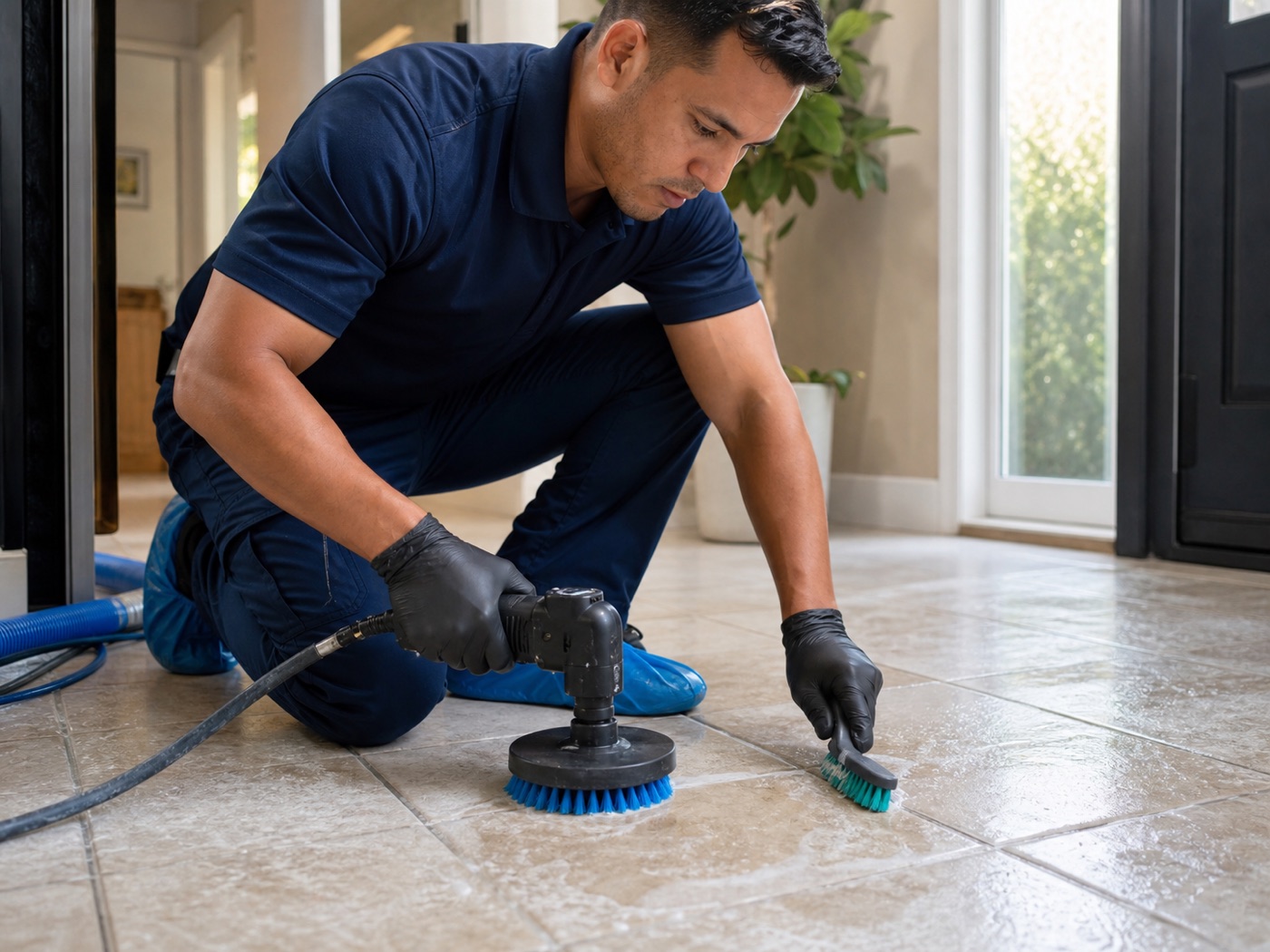
Most new Suffolk homes pair carpet in the bedrooms with tile or luxury vinyl in the entry, kitchen, and baths. New grout looks perfect and is often not sealed, or was sealed hastily during construction.
Unsealed grout is porous, and in a household's first year it absorbs whatever crosses it. By year three it reads as dingy in a way that mopping does not touch, because the soil is inside the grout rather than on it. Getting tile and grout properly cleaned and then making a sealing decision is much easier before that has happened than after.
The other overlooked surface is the transition strip where tile meets carpet. Grit collects there, and it is exactly where a vacuum tends to skip. It is worth a deliberate pass, because that grit is what gets carried onto the carpet and starts the abrasion cycle that shortens its life.
What Your Builder Warranty Does and Does Not Cover
New-home warranties typically cover flooring for a limited period — often one year for materials and workmanship — and homeowners are frequently unclear about which carpet complaints fall inside that.
Installation defects generally do. Seams that separate, carpet that ripples or buckles, tack strip showing at the edges, and pad that was not properly laid are workmanship issues worth reporting promptly, in writing, with photographs. These do not improve on their own and they get harder to argue as the warranty period closes.
Wear characteristics generally do not. Crushing, matting, shading, and traffic-lane flattening are how low-twist carpet behaves under use, and manufacturers explicitly exclude them from texture-retention warranties in most cases. That is frustrating but it is disclosed in the documentation that came with the house, and it is worth reading before you build a case.
The practical advice is to do a careful walk of the flooring in the first few months, while everything is still covered, rather than at month eleven. Look at seams, edges, transitions, and any area that feels loose underfoot. Those are the items a builder will fix. The hallway looking flat at month nine is not one of them, and knowing the difference saves an unproductive conversation.
When to Stop Maintaining and Start Replacing
Builder carpet in a busy household typically has a useful life measured in years rather than decades, and there is a point where continued cleaning is spending good money after bad. The signal is not appearance — it is texture. Carpet that feels rough or wiry underfoot has lost its twist, and no cleaning restores that.
A useful test is the palm test. Run a flat hand across a protected area under a bed or behind a door, then across the hallway. If the hallway feels noticeably coarser, that is lost twist rather than soil, and cleaning will not change the texture. If the two feel similar and the hallway just looks darker, that is soil, and a cleaning will do exactly what you are hoping for.
Until then, regular cleaning is genuinely worth it, both because it removes the grit that accelerates the damage and because the house is more pleasant to live in. The mistake is at the extremes: never cleaning until the carpet is finished, or cleaning a floor that has already reached the end of its life. Understanding what a deep clean can and cannot accomplish makes that call much clearer.
The Short Version
New carpet in a Suffolk build is a budget product doing an honest job, and it lasts considerably longer when it is treated as one. Wait a few months for construction dust to finish surfacing, vacuum slowly and often, put runners where the footsteps concentrate, deal with grout before it darkens, and clean on a real interval rather than waiting for the floor to look bad.
All City Carpet Cleaning And Building Solutions works throughout Suffolk and the surrounding Hampton Roads cities, and we would rather tell you a cleaning is not worth doing yet than take the appointment.