The static shocks that start showing up on doorknobs, light switches, and anyone you touch after walking across the living room are not a coincidence of the season — they follow a predictable pattern tied directly to what heating systems do to indoor air, and to what kind of carpet is underfoot when it happens.
For homes across Virginia Beach, Norfolk, Chesapeake, Suffolk, Hampton, Portsmouth, and Smithfield, October is typically when this shift becomes noticeable, as overnight temperatures drop enough that furnaces and heat pumps start running regularly for the first time since spring.
The Physics Behind It
Static electricity builds through a process called triboelectric charging, where friction between two materials — a shoe sole and carpet fiber, for instance — transfers electrons from one surface to the other, leaving one material with a slight positive charge and the other slightly negative. Walking across carpet generates this transfer with every step.
In humid air, that charge normally dissipates almost as fast as it builds, because water molecules in the air are good at conducting away small electrical charges before they accumulate to a noticeable level. Dry air lacks enough of those water molecules to do that job, so the charge builds up on your body as you walk, and it stays there — sometimes several thousand volts worth — until it finds a path to ground, which is the shock you feel touching a doorknob or another person.
This is why static shock is overwhelmingly a cold-weather, indoor-heating phenomenon rather than a carpet problem that exists year-round. The same carpet that produces no noticeable static in humid August conditions can produce shocks daily once a furnace has been drying the air for a few weeks.
Why Carpet Specifically Makes It Worse
Hard flooring generates some static from friction too, but carpet fiber has far more surface area in contact with a shoe sole per step, and synthetic fibers in particular are strong dielectric materials — meaning they hold a charge rather than letting it dissipate quickly through the material itself.
Nylon and polyester, the two most common residential carpet fibers, both fall into this category. Wool performs somewhat better because natural fiber tends to hold slightly more ambient moisture than synthetic fiber even in dry conditions, which helps a bit with charge dissipation, though wool carpet is far less common than synthetic in most homes.
Pile height and density matter too. Low, dense synthetic pile in a home office or hallway runner tends to produce more noticeable static than plush, higher-pile carpet, partly because of how the fiber contacts a shoe sole differently across those constructions.
What Actually Helps
Humidity control is the highest-leverage fix available, because it addresses the root cause rather than working around it. Keeping indoor relative humidity between thirty and fifty percent restores enough moisture to the air that static charge dissipates before it builds to a shock-producing level, for essentially the same reason humid summer air produces almost no static at all.
A whole-home humidifier installed on the furnace is the most consistent solution for a house that runs forced-air heat through the winter, since it adjusts automatically as the furnace cycles. A portable humidifier in a bedroom or living room is a reasonable lower-cost option for households not ready for a whole-home installation, and a simple hygrometer confirms whether a room is actually in the target range rather than guessing.
Anti-static carpet sprays and a carpet protector treatment both help by changing how the fiber surface holds charge, and footwear matters more than most people expect — rubber and leather soles generate more static through friction than soles with more natural fiber content. None of these secondary fixes matches what humidity control does on its own, but combined they meaningfully reduce the shocks in a dry-air home.
Static Affects More Than Just People
A shock to a person is annoying, but static buildup in a dry home carries a couple of secondary effects worth knowing about too. Sensitive electronics, particularly computers and home entertainment equipment set up on or near carpet, can be affected by static discharge in ways that are not always obvious until a component fails prematurely. It is a minor risk for most households, but it is one more reason humidity control pays off beyond simple comfort.
Pets notice static buildup as well, and dogs and cats walking across dry synthetic carpet can pick up a charge the same way people do, occasionally reacting with a startled jump when they touch a metal food bowl or a person's hand. Households with pets that seem unusually jumpy around carpet in the winter months are sometimes dealing with exactly this, and it tends to resolve once indoor humidity is brought back into a normal range.
Where Carpet Cleaning Fits Into the Static Picture
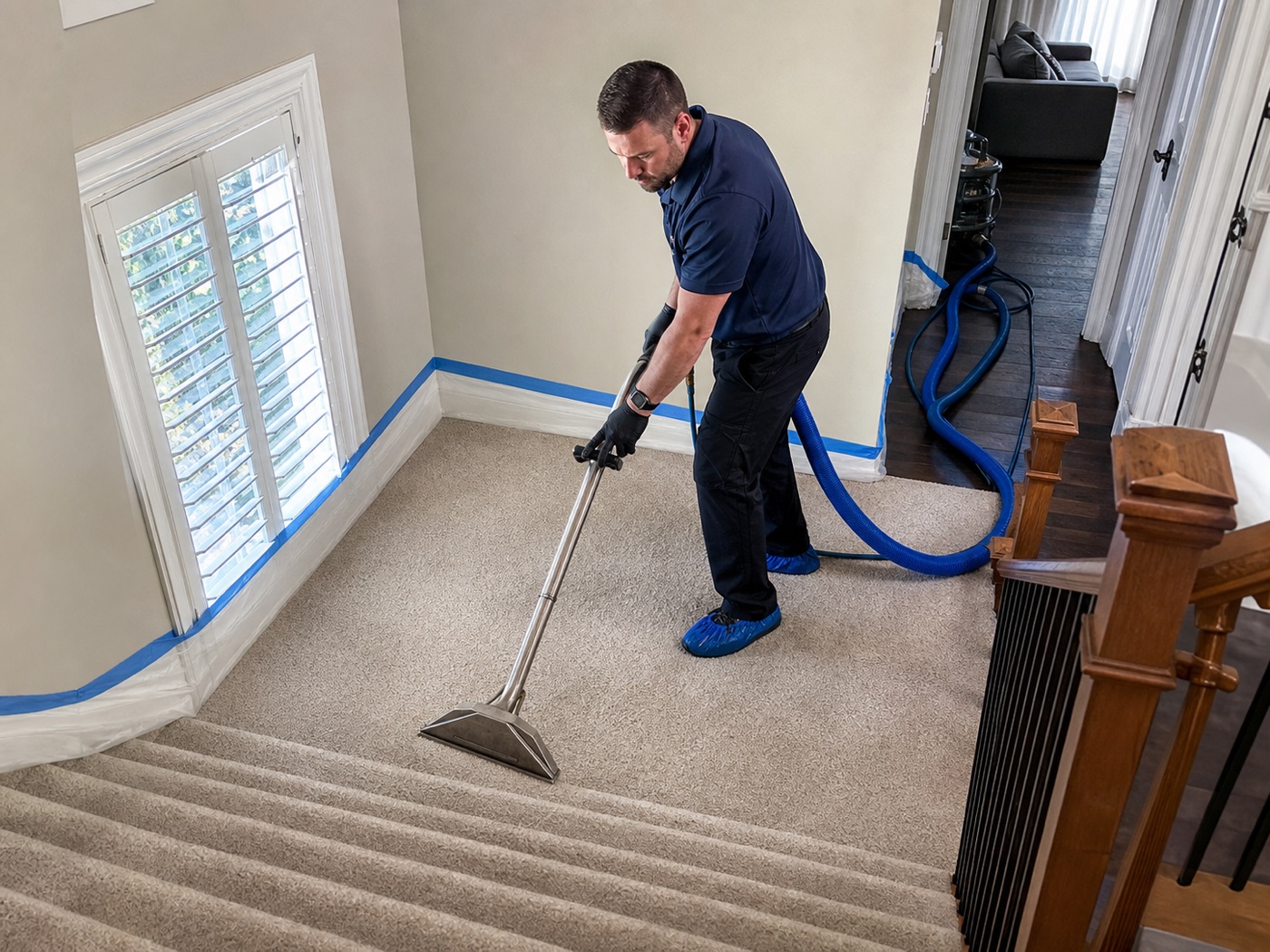
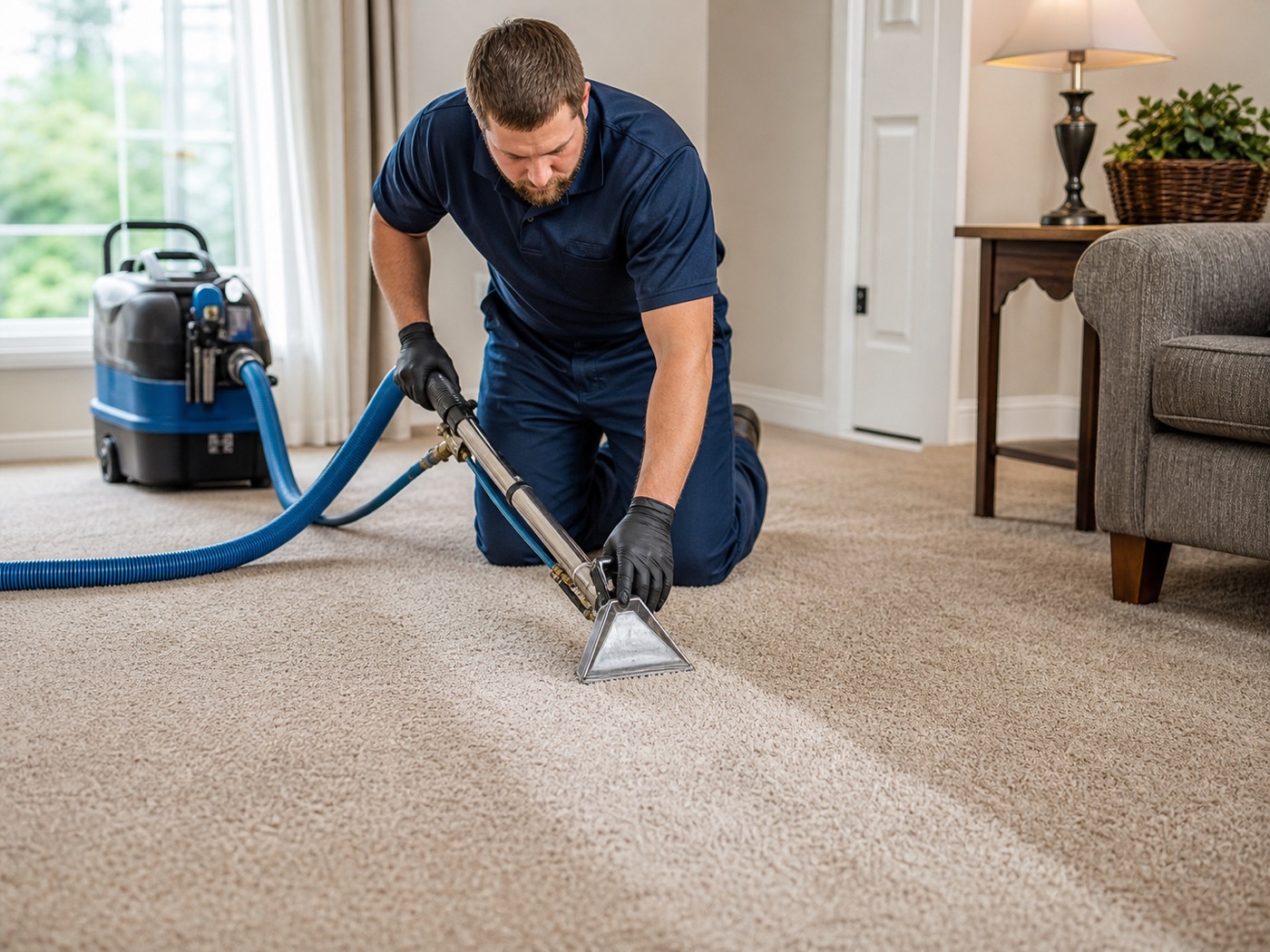
A professional carpet cleaning service does not fix static on its own the way a humidifier does, but it plays a real supporting role. Dust, dry soil, and residue from over-the-counter cleaning products or fabric softener sheets used on carpet in the past can all affect the fiber's surface properties, sometimes making static worse than it would be on genuinely clean fiber.
Getting carpet professionally cleaned before heating season starts strips away that residue and gives fresh fiber a clean baseline. Pairing that cleaning with a carpet protector application, available as part of residential carpet cleaning service, adds a layer that specifically helps with charge dissipation on synthetic fiber, which is the fiber type most prone to static buildup in the first place.
None of this replaces humidity control as the primary fix, but for a household already scheduling a fall cleaning ahead of the holidays, adding a protector treatment at the same visit is a small additional step that compounds with the humidity fix rather than competing with it.
Why Some Homes Have It Worse Than Others
Newer construction with tighter building envelopes tends to run drier indoor air during heating season than older, leakier homes, simply because less humid outdoor air infiltrates to offset what the furnace dries out. That means a newer home with efficient windows and insulation can actually have a worse static problem than an older home with more natural air exchange, which surprises a lot of homeowners.
Forced-air heating dries air more than radiant or hydronic heat, since it moves large volumes of air repeatedly across a heat exchanger without adding moisture back. A household that runs the furnace hard — a larger home, a colder location within Hampton Roads, or occupants who prefer warmer indoor temperatures — sees more cumulative drying over the season than one that heats more modestly.
Carpet age and condition play a role as well. Older carpet that has accumulated years of dust, dry soil, and residue from fabric softener sheets or previous cleaning products can behave differently with static than fresh, clean fiber, which is one more reason a fall cleaning ahead of heating season is worth timing intentionally rather than leaving until spring.
Household size and activity level factor in too, somewhat counterintuitively. A busier household with more people moving across carpet more often generates more static events simply through repetition, even if no single factor about that home is unusual. A quieter household with the same dry air and the same carpet may notice static less often purely because there are fewer footsteps generating the charge in the first place, which is worth keeping in mind before assuming a static problem points to something wrong with the carpet or the HVAC system specifically.
All City Carpet Cleaning And Building Solutions serves Virginia Beach, Norfolk, Chesapeake, Suffolk, Hampton, Portsmouth, and Smithfield, and offers protector treatments alongside standard cleaning for households looking to get ahead of a dry, static-prone winter. Straightforward pricing is available for both.
Call (757) 748-0654 to get on the schedule before the coldest, driest stretch of the season arrives.