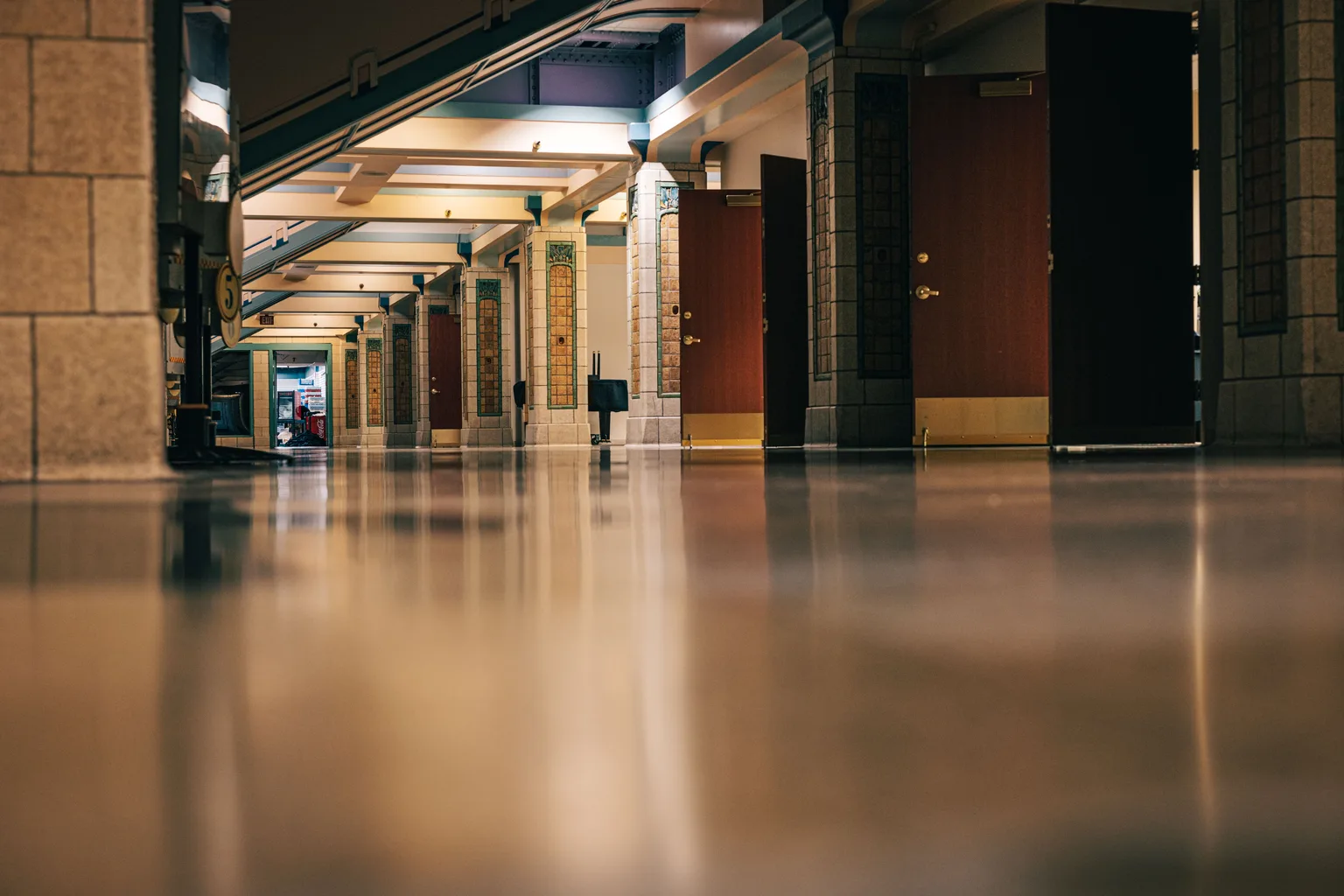
Stripping and waxing has a reputation for being expensive and disruptive, and buildings that do it frequently find that reputation deserved. What most of those buildings are actually experiencing is the cost of skipping the maintenance step that would have made stripping rare.
The system is genuinely good when it is run correctly. It goes wrong in two specific ways: applied to floors that should never have finish on them, and run without the intermediate maintenance that keeps the finish alive.
First: Does Your Floor Even Take Finish?
This is not a rhetorical question. Buildings accumulate flooring across decades of renovations, and a great many facility managers inherited a floor nobody can identify with confidence.
| Surface | Finish? | What it needs instead |
|---|---|---|
| Vinyl composition tile (VCT) | Yes | Scrub and recoat, periodic full strip |
| Sheet vinyl and linoleum | Usually — check the manufacturer | Similar system, gentler chemistry on linoleum |
| Luxury vinyl plank (LVP) | No | Neutral cleaner and periodic deep cleaning |
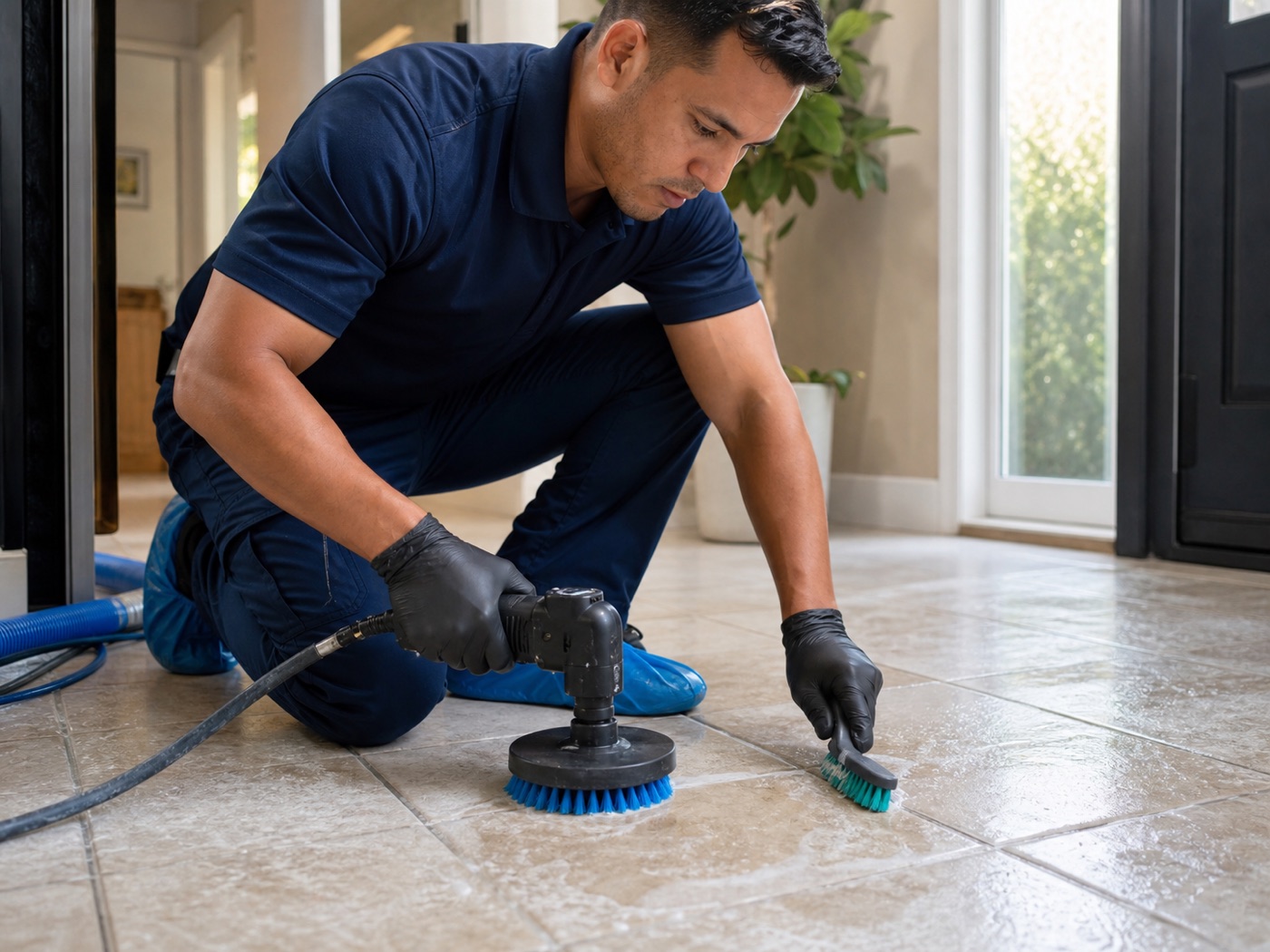
| Ceramic and porcelain tile | No | Grout-focused mechanical cleaning |
| Natural stone | No — and no acids either | Stone-appropriate cleaning; honing by a specialist |
| Polished concrete | No | Neutral cleaner; re-polish when dull |
| Hardwood | No | Wood-appropriate cleaning; refinishing by a wood specialist |
| Rubber flooring | No | Manufacturer-specified cleaner only |
The consequences of getting this wrong are not subtle. Finish on luxury vinyl plank peels and scuffs and holds soil, and removing it means aggressive stripping chemistry on a surface that was never meant to see it. Acidic products on natural stone etch it permanently — that is missing material, not a stain, and correcting it means honing and polishing by a stone contractor.
If nobody is certain what a floor is, resolve that before anyone quotes on it. It takes a few minutes during a walkthrough and prevents the one category of mistake that cleaning cannot undo.
The Four-Level System
Resilient floor care is a hierarchy, and each level exists to reduce how often the next one is needed.
- Daily: dust mopping and spot cleaning. Removes the abrasive grit that grinds the finish away under traffic. This is the whole foundation and it is free.
- Weekly to monthly: damp mopping with a neutral cleaner. Neutral matters — high-pH cleaners degrade finish over time.
- Quarterly to semiannually: burnishing or high-speed polishing where the finish supports it. Restores gloss without removing material.
- Annually or as needed: scrub and recoat. Removes the worn top layer, applies fresh coats over sound finish underneath.
- Every three to five years: full strip and refinish. A complete reset, and it should be rare rather than routine.
Buildings that run levels one through four end up stripping infrequently and their floors look consistently good. Buildings that only run level one and then jump to level five strip every year, spend more, and have floors that look worse in between because the finish spends most of its life degraded.
The daily step deserves emphasis because it is the cheapest and most skipped. Finish does not wear out on its own — it is abraded away by grit walked across it. Dust mopping is the difference between finish that lasts eighteen months and finish that lasts eight.
Cure Time Decides the Schedule
The most common scheduling mistake is planning around how long the work takes rather than how long the floor needs afterward.
Finish has to dry between coats and cure before it takes traffic. Walking on undercured finish scuffs it, marks it, and pulls it up at the edges — which means the job has to be redone. Furniture placed back too early leaves permanent impressions.
Humidity extends all of it. In a Hampton Roads July with the HVAC set back overnight, coats take substantially longer to dry than the product label suggests, and a job that would comfortably fit an overnight window in a dry climate does not fit one here. Keeping the air conditioning running through the job rather than setting it back is not optional — it is part of the method.
Practically, that means agreeing the re-entry time before the work starts, in writing, and building in margin. A three-day weekend or a scheduled closure is worth far more than a Saturday night, and for schools and similar facilities summer is the obvious window.
Planning a Building, Not a Floor
Most commercial buildings have several surfaces, and a coherent plan handles them together rather than as separate purchases.
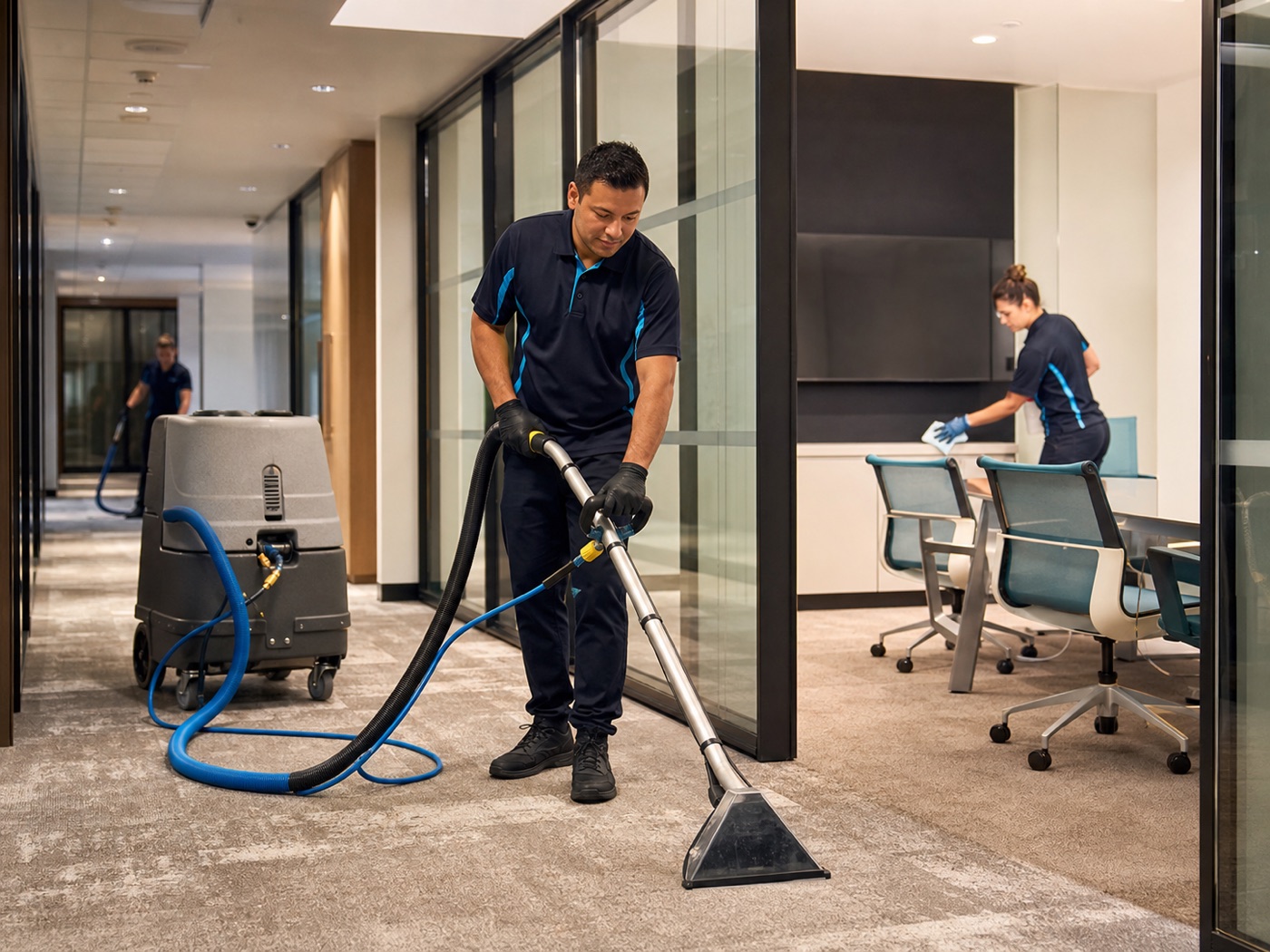
Corridors and back-of-house are often VCT and take the finish system. Offices and conference rooms are usually carpet, which needs traffic-lane attention on a shorter cycle than full extraction. Restrooms and kitchens are tile, and the grout there needs mechanical work that mopping never accomplishes. Lobbies are frequently stone or polished concrete and take neither finish nor acid.
Scheduling those together rather than one at a time reduces mobilization costs and means the building looks consistent rather than having one freshly done area next to three tired ones. It also lets you sequence sensibly — hard surfaces before carpet, so soil does not migrate onto freshly cleaned fiber.
There is a budgeting benefit too. A building handled as one plan produces one schedule and one set of numbers for the year, which is far easier to defend in a capital request than a series of reactive invoices. It also surfaces the areas that are genuinely past maintenance — floors where continued cleaning is spending money against a surface that needs replacing — early enough to put them in next year's plan rather than discovering them as an emergency.
What a Strip Actually Involves
It helps to know what you are buying, because a full strip is more invasive than the phrase suggests and understanding the sequence explains why it takes as long as it does.
- Clear the area completely. Furniture, fixtures, and anything on the floor has to move, and putting it back too early is a common way to ruin fresh finish.
- Apply stripper and let it dwell. This is chemistry doing the work; rushing the dwell time means more mechanical effort and a poorer result.
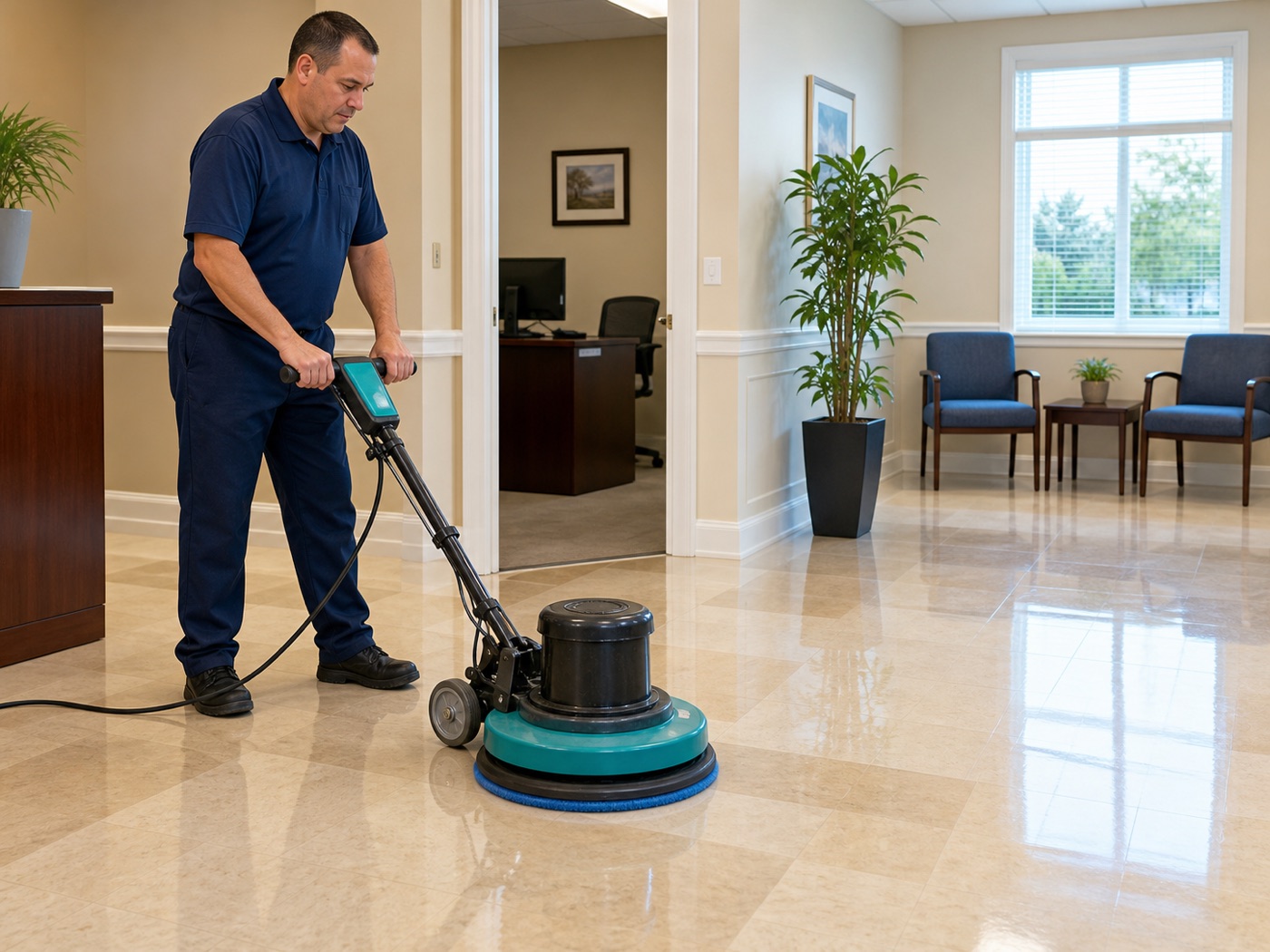
- Agitate with a low-speed machine and appropriate pads, including edges and corners by hand — which is where most of the labor actually is.
- Recover the slurry. Every trace has to come up; residue left behind prevents the new finish from bonding.
- Rinse and neutralize, then let the floor reach the right condition for coating.
- Apply finish in thin, even coats with drying time between each, typically several coats depending on the specification.
- Cure before traffic. This is the step that gets shortened and the step that determines whether the job lasts.
Steps four and seven are where jobs go wrong. Inadequate slurry recovery produces finish that peels within months, and putting furniture or traffic on undercured finish leaves marks that require redoing the area. Both are pressures created by an unrealistic schedule rather than by a lack of skill, which is why agreeing the window honestly at the start matters more than almost anything else.
The Cheapest Improvement Is at the Door
Everything above manages the consequences of grit. Reducing how much grit enters the building is the intervention with the best return, and it is consistently underfunded because matting looks like decor rather than equipment.
The commercial guideline is roughly fifteen feet of walk-off matting to capture the large majority of what shoes carry. Most buildings have a fraction of that. In a coastal market where the fine material includes abrasive quartz sand, extending matting at every entrance does more to preserve floor finish than any product applied to the floor itself.
The loading dock and service entrances are usually forgotten entirely, and they deliver concentrated soil from a parking area straight into the building's circulation. Matting there is cheap and nobody ever objects to it on aesthetic grounds.
The Short Version
Confirm what your floors actually are before anything goes on them. Run the full maintenance hierarchy rather than jumping from daily mopping to a full strip. Schedule around cure time rather than cleaning time, and account for humidity when you do. Handle the whole building on one plan. And put real matting at every entrance, including the ones customers never see.
All City Carpet Cleaning And Building Solutions works with commercial properties across Hampton Roads on floor stripping and waxing, carpet, and hard-surface programs, with scope built around your operating hours.