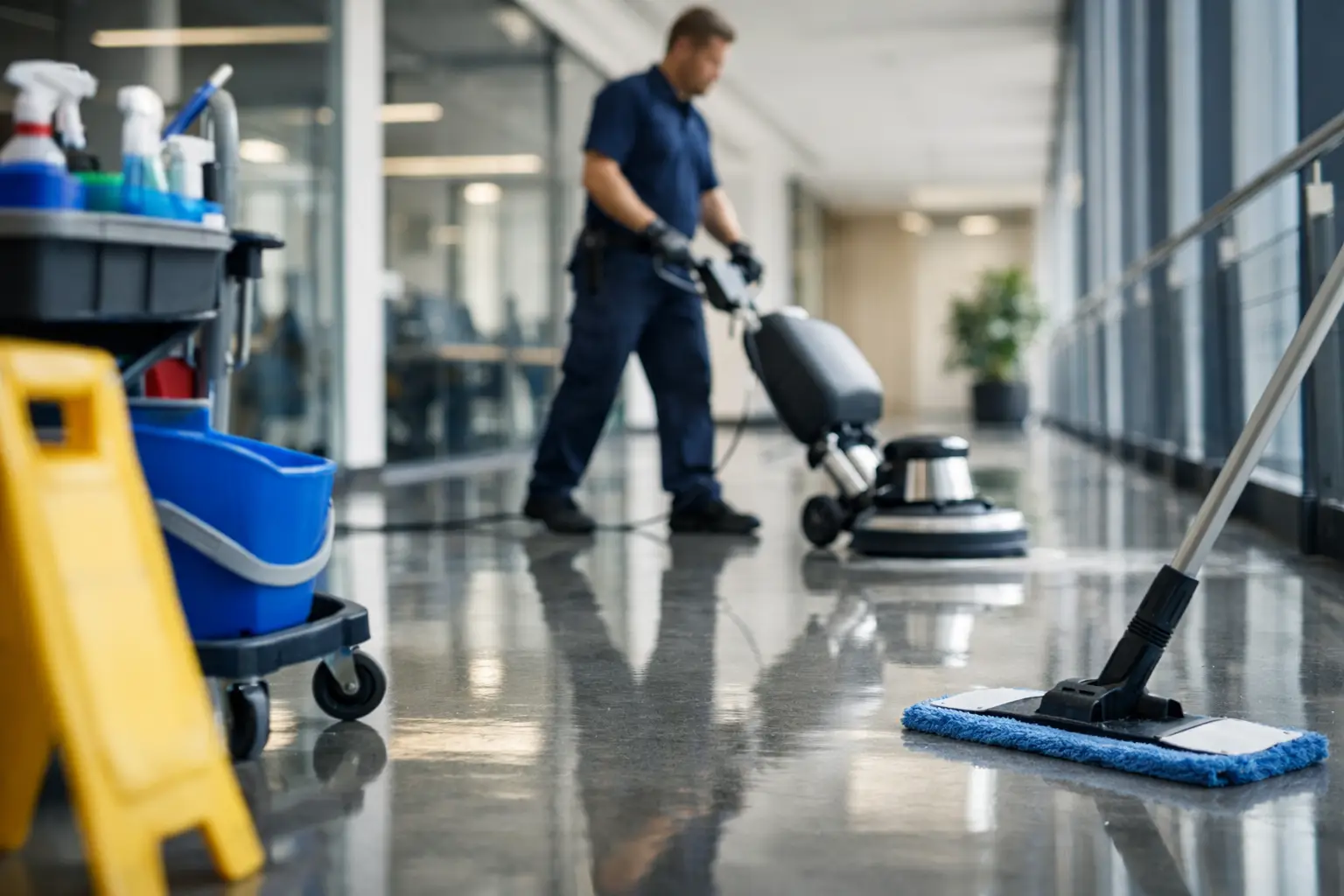
A lobby floor can shape a visitor's impression before anyone says hello. Scuffed vinyl, dull tile, stained carpet, or tracked-in debris can make an otherwise well-managed workplace feel neglected. Professional floor cleaning for office buildings helps property managers and business owners maintain a clean, polished environment while protecting the flooring investment beneath every footstep.
Office floors work hard. Employees move between desks and break rooms, guests enter from parking areas, deliveries pass through hallways, and chairs roll across workstations throughout the day. The right cleaning plan is not simply about making floors look better after a problem appears. It is about using the proper care at the proper interval so surfaces stay presentable, sanitary, and durable.
Why Office Floors Need a Planned Cleaning Schedule
Daily vacuuming and mopping have a place, but routine upkeep alone cannot remove every layer of soil. Fine grit settles into carpet fibers, spills leave residue on resilient floors, and foot traffic gradually wears down protective finishes. Over time, this buildup can make floors harder to clean and more expensive to restore.
A planned schedule gives each surface the attention it needs without disrupting the workday. Entryways and lobbies may need frequent service because they receive the most outside soil. Private offices may require less frequent deep cleaning, while break rooms and restrooms often need closer attention due to spills, moisture, and heavier sanitation demands.
The best frequency depends on the size of the building, the number of occupants, weather conditions, business type, and the floor materials in place. A small professional office with limited public traffic has different needs than a multi-tenant building, medical office, retail-adjacent workspace, or busy corporate location. A reliable cleaning provider can assess those patterns and recommend a practical service plan rather than applying a one-size-fits-all schedule.
Floor Cleaning for Office Buildings Starts With the Surface
Using the wrong product or method can cause avoidable damage. Floors may look similar from a distance, but carpet, luxury vinyl tile, ceramic tile, natural stone, hardwood, and concrete each respond differently to moisture, chemistry, agitation, and drying time.
Carpeted Offices and Common Areas
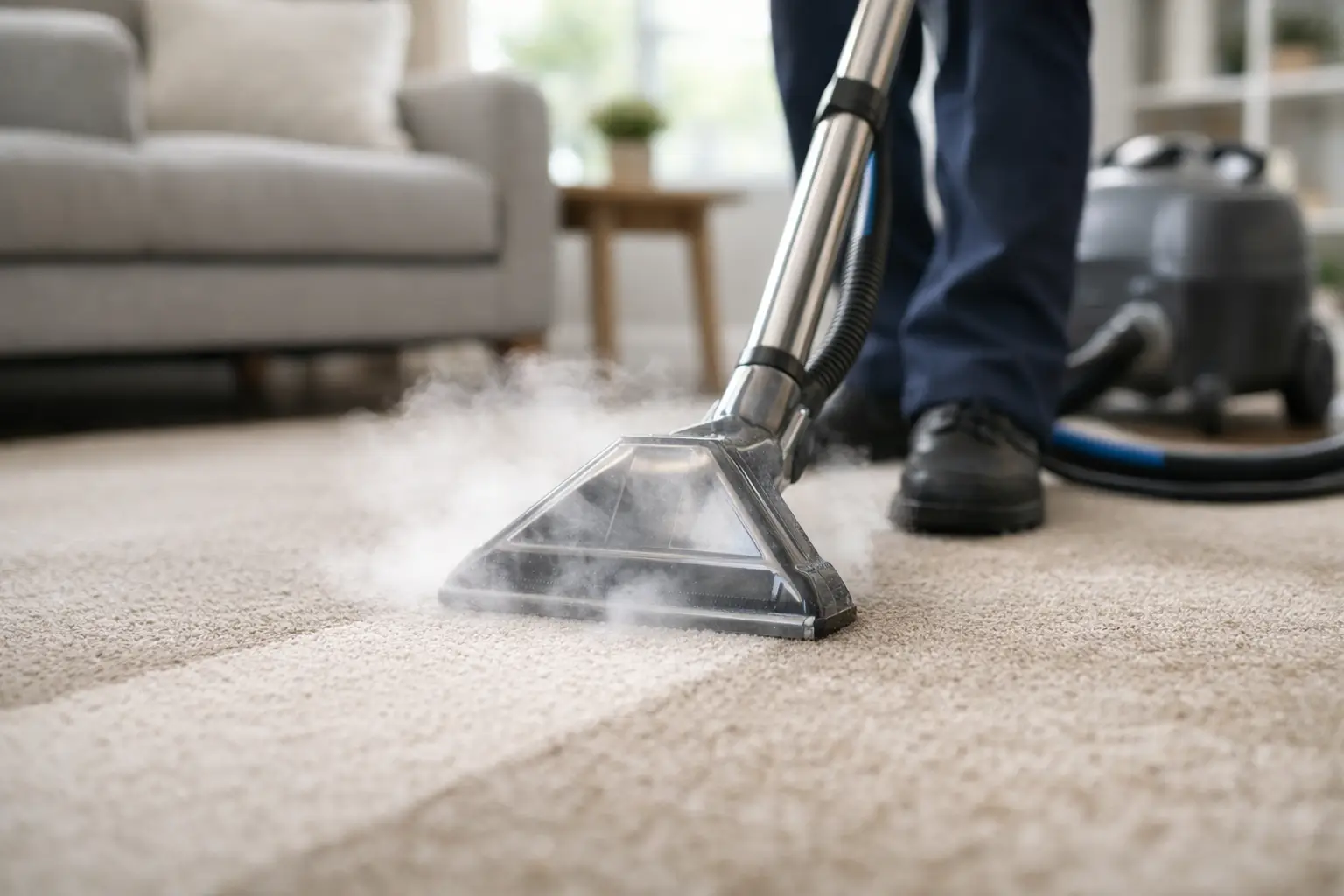
Commercial carpet collects dry soil that ordinary vacuuming cannot fully remove. That soil acts like fine sand under foot traffic, wearing fibers down and causing high-traffic lanes to appear dark or flat. Professional carpet steam cleaning reaches embedded soil and helps refresh the appearance of offices, corridors, conference rooms, and reception areas.
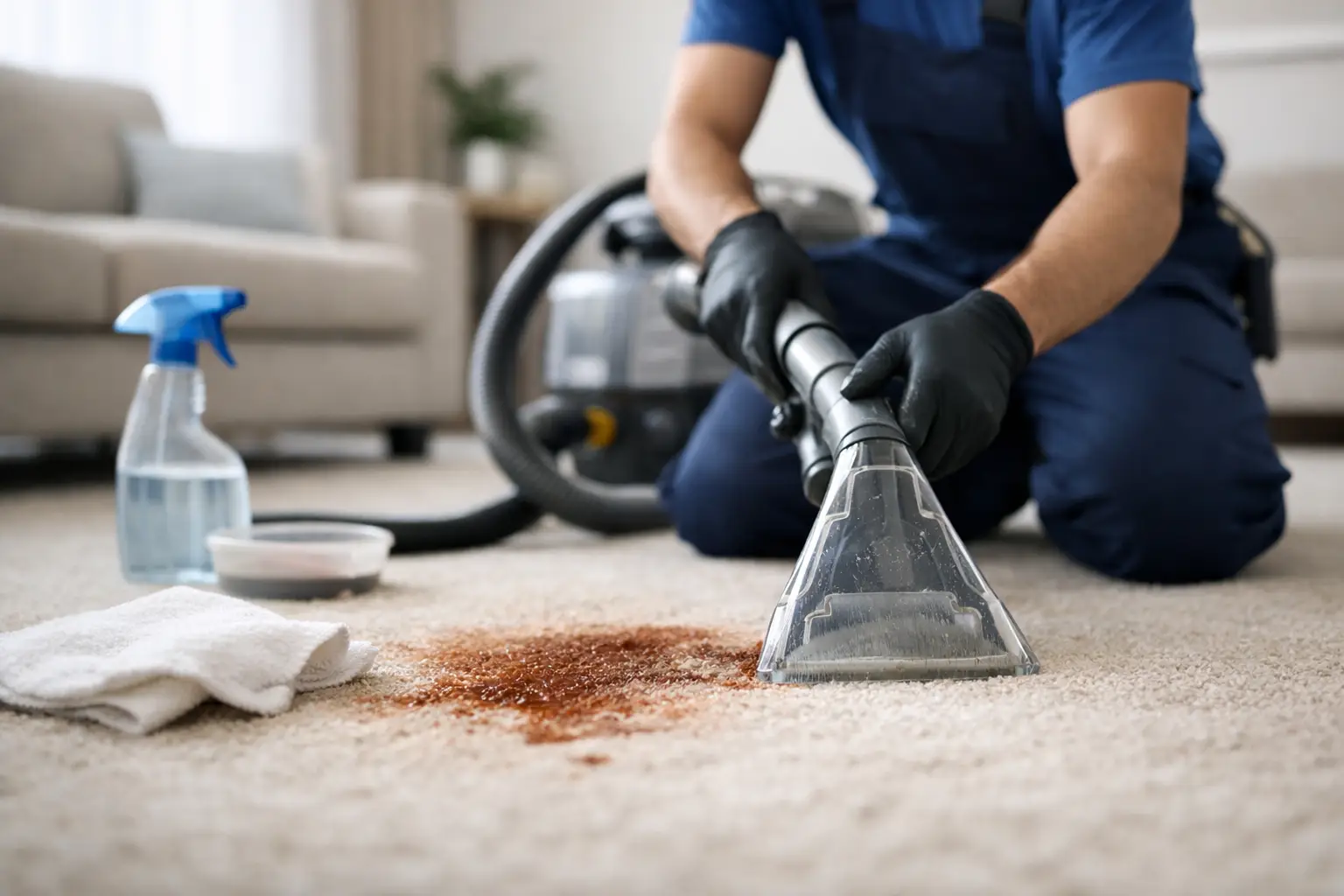
Spot treatment also matters. Coffee, food, ink, and tracked-in moisture should be addressed promptly because stains become more difficult to remove as they set. Deodorizing can be useful when odors from spills, pets in tenant spaces, or heavy use affect the workplace environment. Results depend on the source of the odor and the carpet's condition, but professional treatment can make a meaningful difference when the underlying cause is properly identified.
Vinyl, VCT, and LVT Flooring
Resilient flooring is popular in offices because it is durable and easy to maintain, but it still needs professional care. Dirt can settle into texture, leaving the surface dull even after regular mopping. VCT may require periodic stripping and waxing to restore a clean, even finish and help protect the tile from wear.
Luxury vinyl flooring generally should not receive aggressive stripping procedures designed for VCT. It often benefits from careful neutral cleaning, soil removal, and manufacturer-appropriate maintenance. Knowing the difference protects the finish and helps avoid costly replacement.
Tile, Grout, and Stone
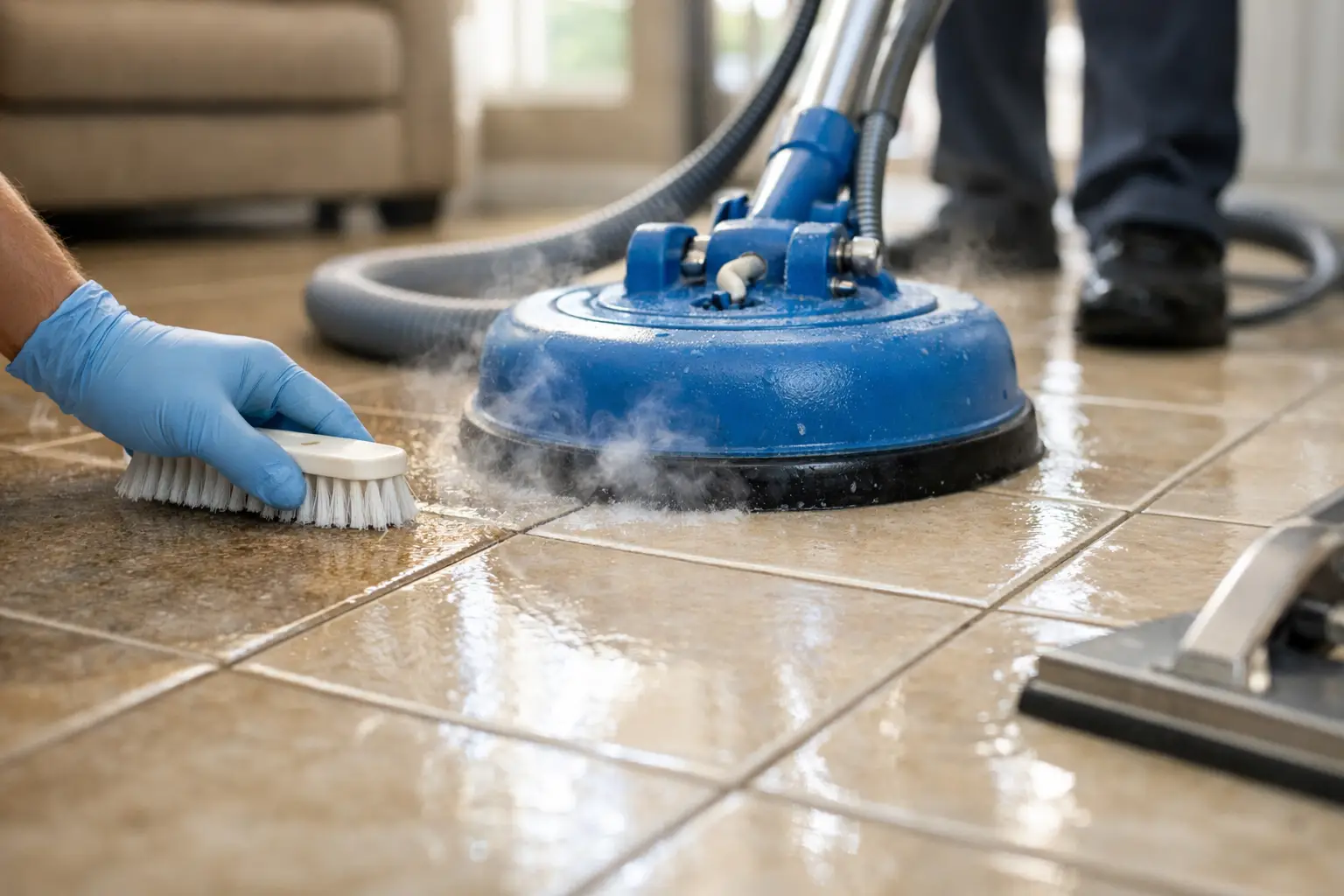
Tile floors can hide soil until grout lines become visibly dark or discolored. Restroom floors, kitchenettes, entrances, and high-use hallways may need specialized scrubbing to remove buildup from textured surfaces and grout. Professional cleaning helps restore a brighter appearance while addressing the residue that ordinary mopping can leave behind.
Natural stone requires extra caution. Acidic cleaners, harsh chemicals, or excessive pressure may etch or damage certain materials. Before treatment begins, the floor type should be confirmed so the cleaning process supports the surface instead of shortening its life.
A Clean Floor Supports Safety and Professionalism
Cleanliness is part of workplace presentation, but it also supports safer daily operations. Wet entrances, spills near break rooms, loose debris, and excessive buildup can increase slip-and-fall concerns. Regular attention to entry mats, hard-floor cleaning, spill response, and dry walkways helps reduce those risks.
Floor care also affects indoor comfort. Carpets can hold dust and allergens, while neglected hard surfaces may retain fine debris that moves through the building. A well-maintained floor does not replace a complete cleaning program, but it contributes to a fresher environment for employees, clients, tenants, and visitors.
For property managers, consistent floor conditions can also reduce complaints and protect the building's reputation. Tenants notice when common areas are clean. Employees notice when restrooms and break rooms are maintained. Clients notice whether a reception area looks ready for business. These details are often quiet, but they are rarely invisible.
What a Professional Service Plan Should Include
A dependable office floor-care program begins with a walkthrough. The provider should identify flooring types, traffic patterns, problem areas, access requirements, and the best times to work. Cleaning after business hours may be appropriate for a busy office, while lower-impact daytime service may work for smaller spaces.
A strong plan balances regular maintenance with periodic deep cleaning. Daily or recurring janitorial service can handle vacuuming, dust mopping, spot cleaning, and restroom floors. Scheduled specialty service can then address carpet extraction, machine scrubbing, grout cleaning, floor finish care, and other tasks that require commercial equipment and trained attention.
Communication is equally important. Building managers need to know what will be cleaned, when service will occur, how long floors may need to dry, and whether areas should be temporarily cleared. Clear expectations help prevent interruptions and allow the cleaning team to work efficiently.
When evaluating a provider, look beyond the lowest quote. Ask whether the company has experience with your floor types, whether it can work around your schedule, and how it handles concerns if results do not meet expectations. Dependability, proper equipment, and responsive service often provide better long-term value than a low initial price followed by inconsistent work.
Simple Habits That Help Floors Stay Cleaner
Professional service delivers the deeper results, but everyday habits help extend those results between visits. Entry mats should be kept clean and positioned to capture dirt before it reaches interior flooring. Spills should be reported and addressed quickly. Office chairs should have suitable casters or protective mats where needed, especially on carpet.
It also helps to avoid using random household cleaners on commercial surfaces. A product that leaves a shiny appearance may also leave residue, create a slippery film, or interfere with an existing floor finish. When in doubt, confirm the recommended method for the floor material before applying a new cleaner.
Managers can make a major difference by watching traffic patterns. If one hallway, entrance, or coffee station consistently looks worse than the rest of the building, that area may need more frequent attention instead of waiting for the entire floor to reach the same condition.
Choosing Local, Accountable Floor Care
Office cleaning is easier to manage when the provider understands that access, timing, and consistency matter as much as visible results. For businesses across Hampton Roads, All City Carpet Cleaning & Building Solutions brings experienced professional care to carpets, hard floors, janitorial needs, and building-cleaning projects.
The goal is not to overclean a surface or create unnecessary disruption. It is to keep your building looking cared for, protect the materials you have invested in, and give employees and visitors a cleaner place to work. A thoughtful floor-care schedule is one of the most practical ways to keep that standard in place every day.