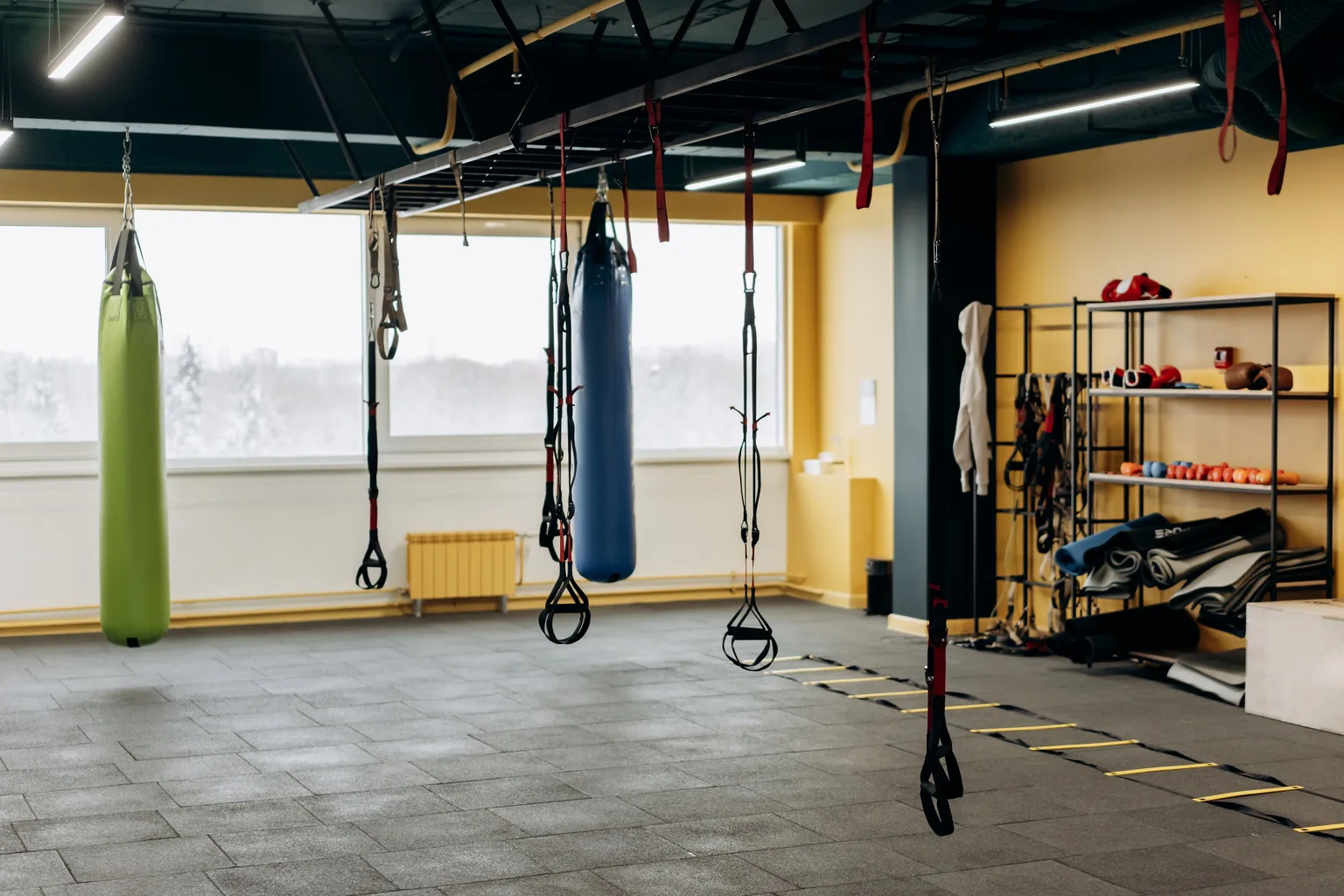
Fitness facilities have a floor care problem that no other commercial category quite matches. A restaurant deals with grease. An office deals with foot soil. A gym deals with sweat, chalk, rubber dust, and body oil deposited directly onto the floor by people lying on it, and it does that every hour it is open.
The consequence shows up as odor, and odor is what members talk about. Equipment gets a pass if the building smells clean. A building that smells stale gets reviewed poorly no matter how new the racks are.
Why Gyms Smell
Sweat itself is nearly odorless. What produces the smell is bacteria metabolizing the oils and proteins in sweat, and those oils are what stay behind on the floor after the water evaporates.
Rubber flooring — the interlocking tile or rolled goods in nearly every weight area — is slightly porous and mildly oleophilic. It holds body oil. A neutral floor cleaner and a mop will lift the water-soluble portion and leave the oil, which is why a gym can be mopped every single night and still develop a smell over a year that nobody can locate.
The same thing happens in grout, in studio carpet, and in turf infill. Each of these is a reservoir, and the problem compounds because bacteria populations grow in the reservoir rather than being removed nightly. In a coastal climate the compounding is faster, because the humidity that keeps everything slightly damp is also what keeps the bacterial activity going.
Surface by Surface
A fitness facility is really four or five different flooring problems sharing an address, and each needs its own approach.
| Surface | What it collects | Treatment |
|---|---|---|
| Rubber weight flooring | Body oil, rubber dust, chalk | Alkaline degreaser, agitation, rinse and extract |
| Turf lanes | Sweat in infill, sand, debris | Agitation and extraction, infill groom |
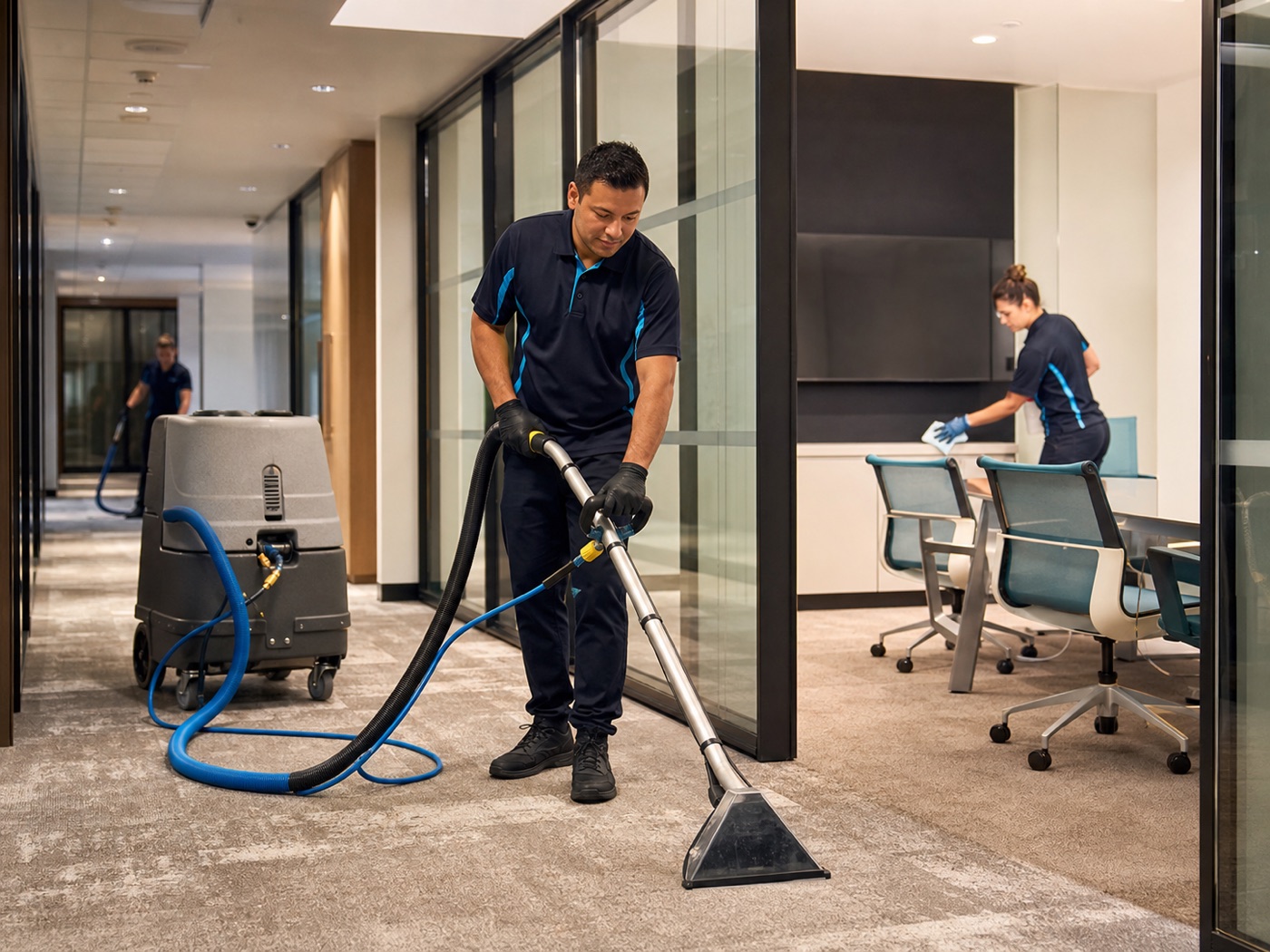
| Studio and cardio carpet | Sweat, oil, abrasive grit | Hot water extraction, quarterly minimum |
| Locker room tile and grout | Body oil, soap scum, moisture | Degrease, agitate, extract, seal grout |
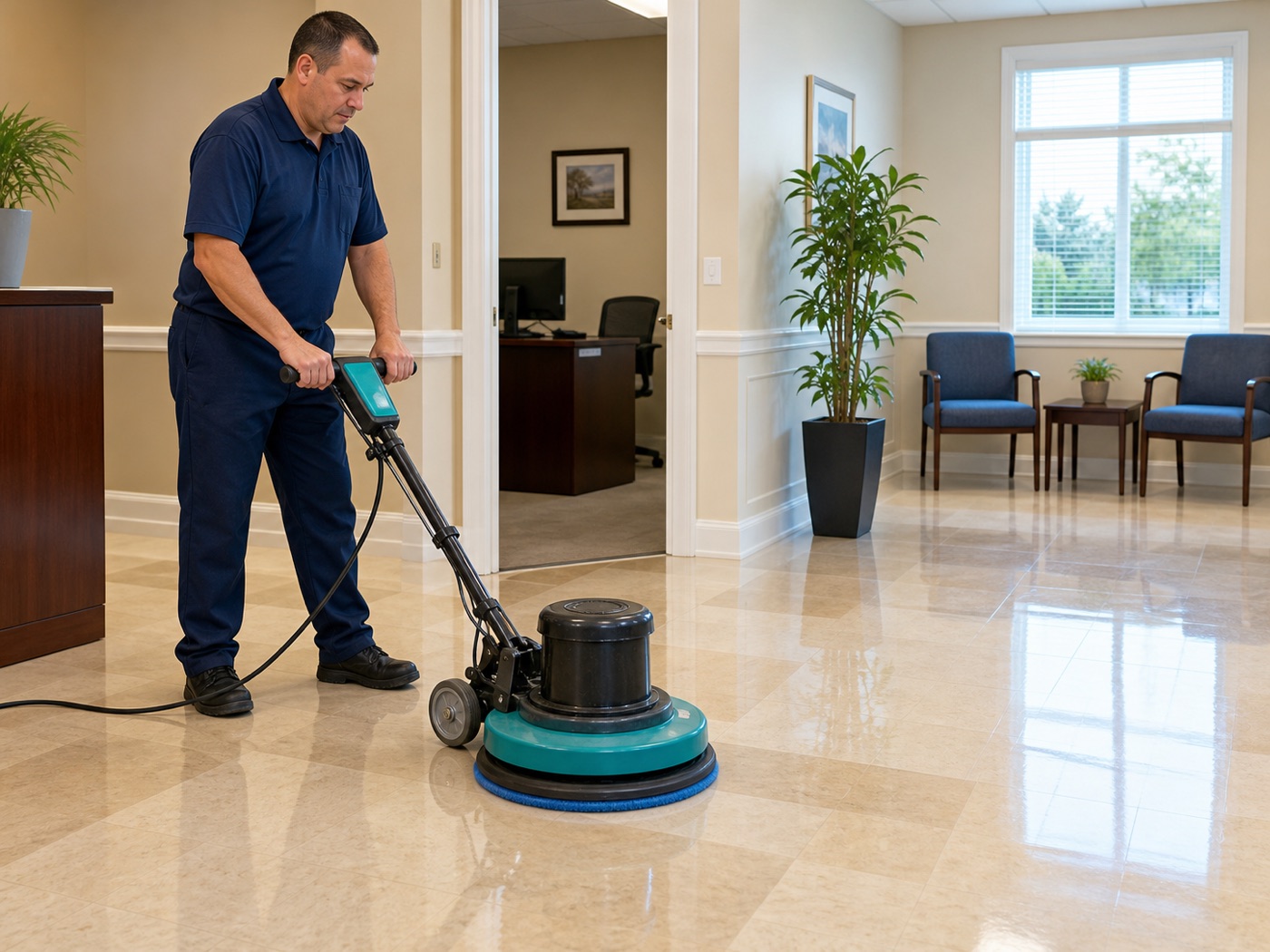
| Lobby and corridor hard floor | Tracked soil, sand | Scrub and recoat on a schedule |
| Loose mats | Moisture underneath | Lift, clean both sides, dry fully |
Studio carpet is the one most often neglected, because it does not look dirty in the way a tile floor does. What happens instead is that it goes flat and dull, because sweat leaves a residue that dulls the fiber and rubber dust and sand grind into the base of the pile. By the time it reads as dirty it has usually lost appearance permanently.
Locker rooms are the highest-risk surface in the building and deserve the tightest schedule. Warm, wet, and constantly in use is the ideal condition for everything nobody wants in a locker room, and unsealed grout is porous enough to hold it all.
The Locker Room Problem
Grout is cementitious and porous unless it has been sealed, and sealer is a consumable rather than a permanent condition. In a locker room it breaks down within a year or two under constant moisture and cleaning chemistry.
Once the sealer is gone, the grout starts absorbing soap scum, body oil, and moisture. It darkens, it holds odor, and no amount of surface mopping changes it — mopping simply moves dirty water into the grout lines and leaves it there to dry. This is the single most common reason a locker room looks dingy despite daily cleaning.
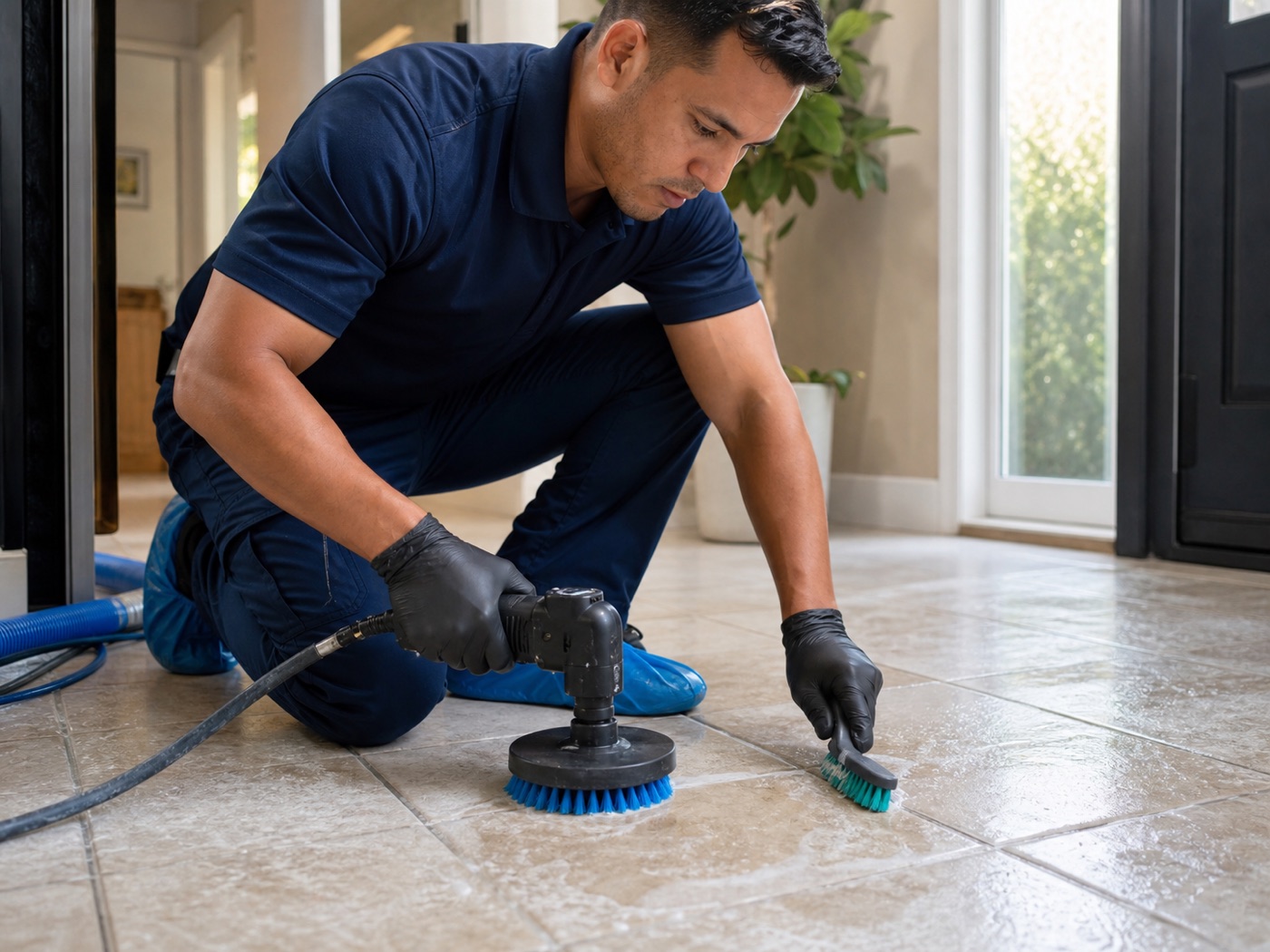
The fix is mechanical: an alkaline degreaser given real dwell time, agitation with a brush or rotary tool, then a pressure rinse with immediate extraction so the suspended soil leaves the building instead of settling back into the lines. Then reseal. Done properly, that resets a locker room completely, and the difference is dramatic enough that members comment on it.
Shower floors need the same treatment plus attention to the drain area and the corner joints, where biofilm establishes first and where a mop has never reached in the history of mops.
Scheduling Around a Gym
The hard constraint in fitness is that many facilities never fully close, and the ones that do close at hours nobody wants to work.
For 24-hour gyms the practical answer is zoning: take one area at a time during the slowest window, which in most Hampton Roads facilities is between ten at night and four in the morning, or mid-afternoon on weekdays. A floor area can be cleaned, dried, and reopened in a few hours if the work is planned around it rather than fighting it.
For class-based studios the schedule is easier but tighter — a two-hour gap between the last evening class and the first morning one is enough for most work if the crew knows the room. Low-moisture methods are worth considering here specifically because they return a studio floor to service in about an hour.
Military-adjacent facilities around Norfolk, Hampton, and the Oceanfront have their own rhythm, with heavy early morning use and a mid-morning lull that is often the best window in the building. It is worth mapping your own traffic before assuming nights are the answer.
Turf and the Things Nobody Lifts
Two surfaces in a typical facility are almost never addressed properly, and both hold more than anyone expects.
Turf lanes look like they take care of themselves because debris sits on top and gets swept off. What actually happens is that sweat runs down the blades into the infill and stays there, along with sand tracked in from outside. Infill is designed to hold material in place, which makes it a very effective trap. A turf lane that is two years old and has never been extracted holds a genuinely impressive amount of biological material, and it is usually the source when an odor persists after everything else has been cleaned.
Loose mats are the other one. Every facility has stacks of them — stretching mats, equipment mats, mats that live under a rack. The underside traps moisture against whatever is beneath it, and in a building that runs humid eight months a year that interface stays damp. Mildew starts there, and it starts silently, because nobody looks under a mat that weighs sixty pounds.
Both problems are straightforward to fix and easy to schedule: turf gets agitated and extracted as part of the quarterly visit, and mats get lifted, cleaned on both faces, and put back down only after the floor beneath them has dried completely.
What Staff Can Do Daily
Deep cleaning on a schedule only works if daily practice does not undo it between visits.
- Use an alkaline cleaner rather than a neutral one on rubber. Neutral cleaner does not remove body oil, which is the entire problem.
- Change mop water far more often than feels necessary. A dirty mop redistributes oil rather than removing it.
- Wipe equipment with a product rated for it, and keep spray bottles off the floor — overspray accumulates and gets tacky.
- Vacuum studio and cardio carpet daily with a machine that has working filtration, slowly enough to lift grit.
- Squeegee shower floors at close so water is not sitting in the grout overnight.
- Lift loose mats weekly and let the floor underneath dry completely before they go back down.
The matting point at entrances deserves a line of its own in this region. Sand tracked in from the parking lot is abrasive, and in a gym it gets ground into rubber and carpet under heavy loads. Real walk-off matting inside every entrance, long enough for several steps, removes a meaningful share of it before it reaches the floor.
What It Costs Against What It Saves
Commercial rubber flooring is a substantial capital item, and turf is worse. Both fail earlier when abrasive material is allowed to accumulate and when oil is never removed, and both are replaced on a schedule that deep cleaning measurably extends.
The larger number, though, is membership. Fitness is a retention business, and facility cleanliness is consistently among the top reasons members give for leaving. A quarterly floor program costs a small fraction of the revenue attached to the members who quietly stop coming because the locker room smells.
We handle commercial floor care for facilities throughout Hampton Roads and build the schedule around your traffic rather than ours. Other high-demand commercial spaces face a similar version of the same problem, and the operational lessons transfer directly.
All City Carpet Cleaning And Building Solutions serves gyms, studios, and recreation facilities in Virginia Beach, Norfolk, Chesapeake, Suffolk, Hampton, Portsmouth, and Smithfield. Seventeen years of commercial floor care in this climate.