Basements get carpeted for good reasons — they are warmer underfoot than bare concrete, quieter, and they make a below-grade room feel like the rest of the house rather than a utility space.
They are also the single hardest room in a house for carpet to succeed in, because a basement combines three conditions that work against carpet at the same time: proximity to a concrete slab that runs cooler than the air around it, limited natural airflow, and — in this region specifically — a water table and rainfall pattern that puts real hydrostatic pressure against foundation walls for parts of the year.
Why Basements Behave Differently
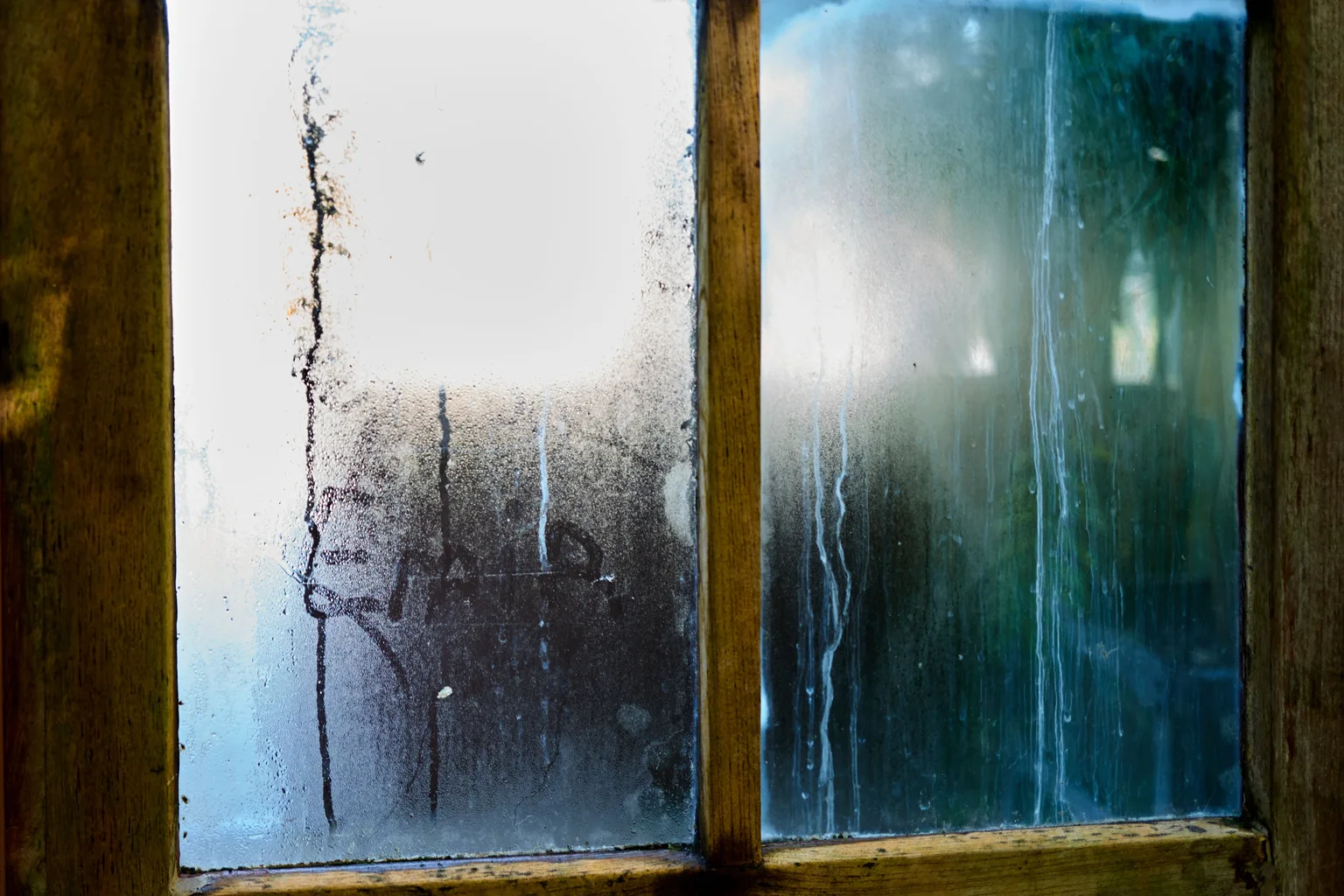
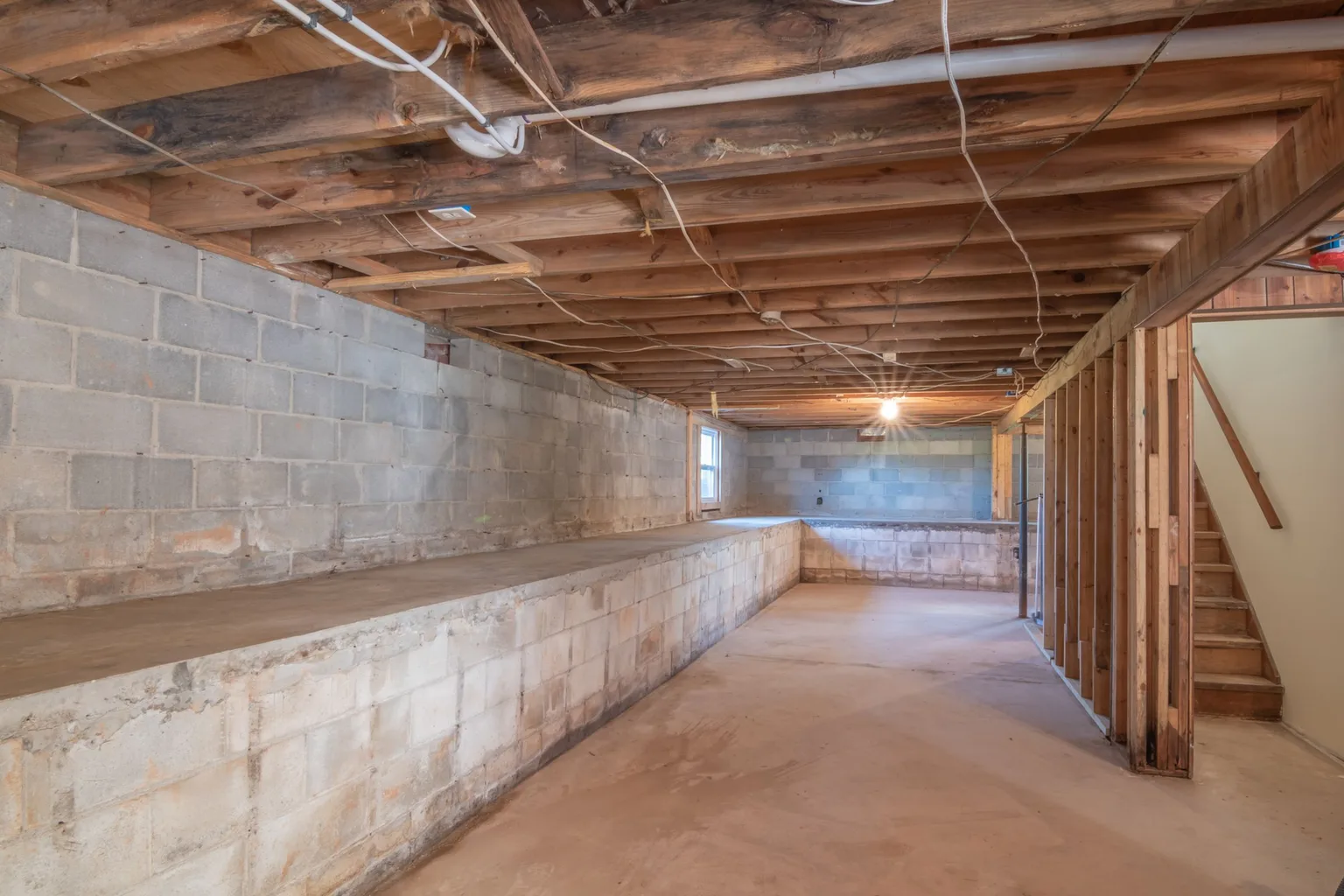
A slab-on-grade basement floor sits in direct contact with the earth, which stays cooler than the surrounding air for most of the year. That temperature difference causes condensation to form on the slab surface — the same physics as a cold glass of water sweating on a humid day — and carpet laid directly over it sits on top of that moisture.
Upper-floor carpet has none of this working against it. It sits over a subfloor with an air gap and no direct earth contact, so moisture from below is essentially not a factor. Basement carpet has moisture pressure from below as a permanent condition of the room, not an occasional event.
Airflow compounds the problem. Basements are frequently the least ventilated room in a house — fewer windows, doors that stay closed, and HVAC returns that may not pull air through as effectively as upper floors. Less airflow means slower drying whenever moisture is present, whether from condensation, a minor leak, or carpet that was recently cleaned.
The Vapor Barrier Question
A vapor barrier — a plastic sheet installed between the slab and the carpet pad — is the single most important decision in whether basement carpet succeeds long-term in this climate, and it is worth confirming before assuming a finished basement has one.
Without a barrier, moisture wicking up through the slab reaches the pad directly, and a foam or fiber pad against a damp slab is close to ideal growing conditions for mold given enough time. With a proper barrier, that moisture is blocked before it ever reaches the carpet system, which is the difference between a basement that carries carpet successfully for a decade and one that develops a musty smell within a couple of years.
If you are not sure whether your basement has one, a corner of carpet can usually be lifted without much disruption to check, and it is worth doing before investing in a cleaning schedule for carpet that has a structural moisture problem underneath it.
Humidity Control Does the Real Work
A standalone dehumidifier running through the humid months — roughly April through October in Hampton Roads — is the single highest-leverage thing a household can do for basement carpet, and it matters more than the cleaning schedule itself.
The target is keeping relative humidity under fifty percent, which is below the threshold where mold and dust mites thrive. A basement without active dehumidification commonly sits well above that during summer, especially one with limited HVAC coverage or a family room that only gets used occasionally, since occupied rooms tend to get more attention to temperature and humidity than rooms that sit empty most of the week.
A cheap hygrometer left in the basement tells you where you actually stand rather than relying on how the room feels, which is a poor gauge — humidity has to be fairly high before it becomes obviously perceptible, by which point carpet and pad have already been sitting in it for a while.
Cleaning Basement Carpet Safely
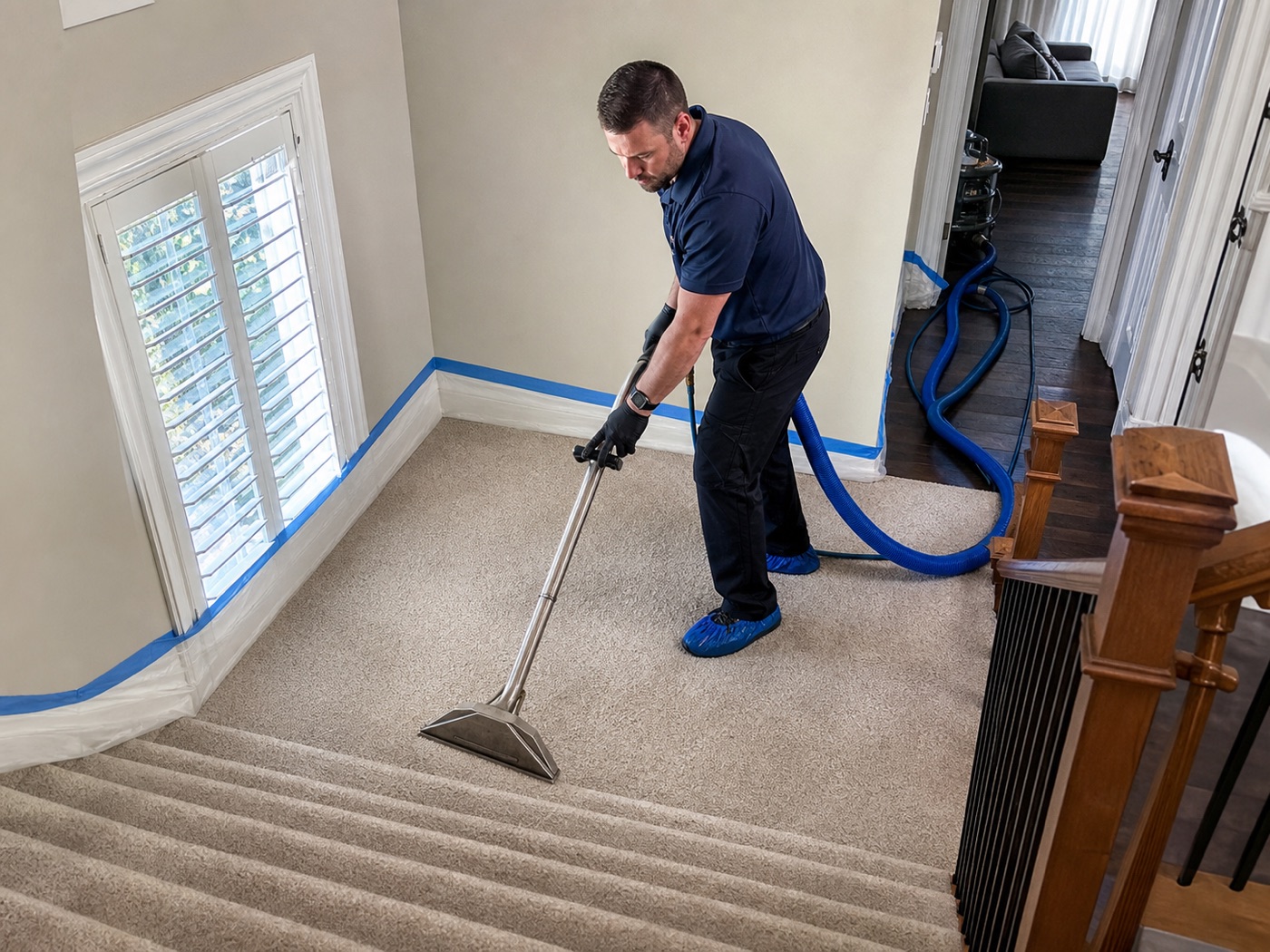
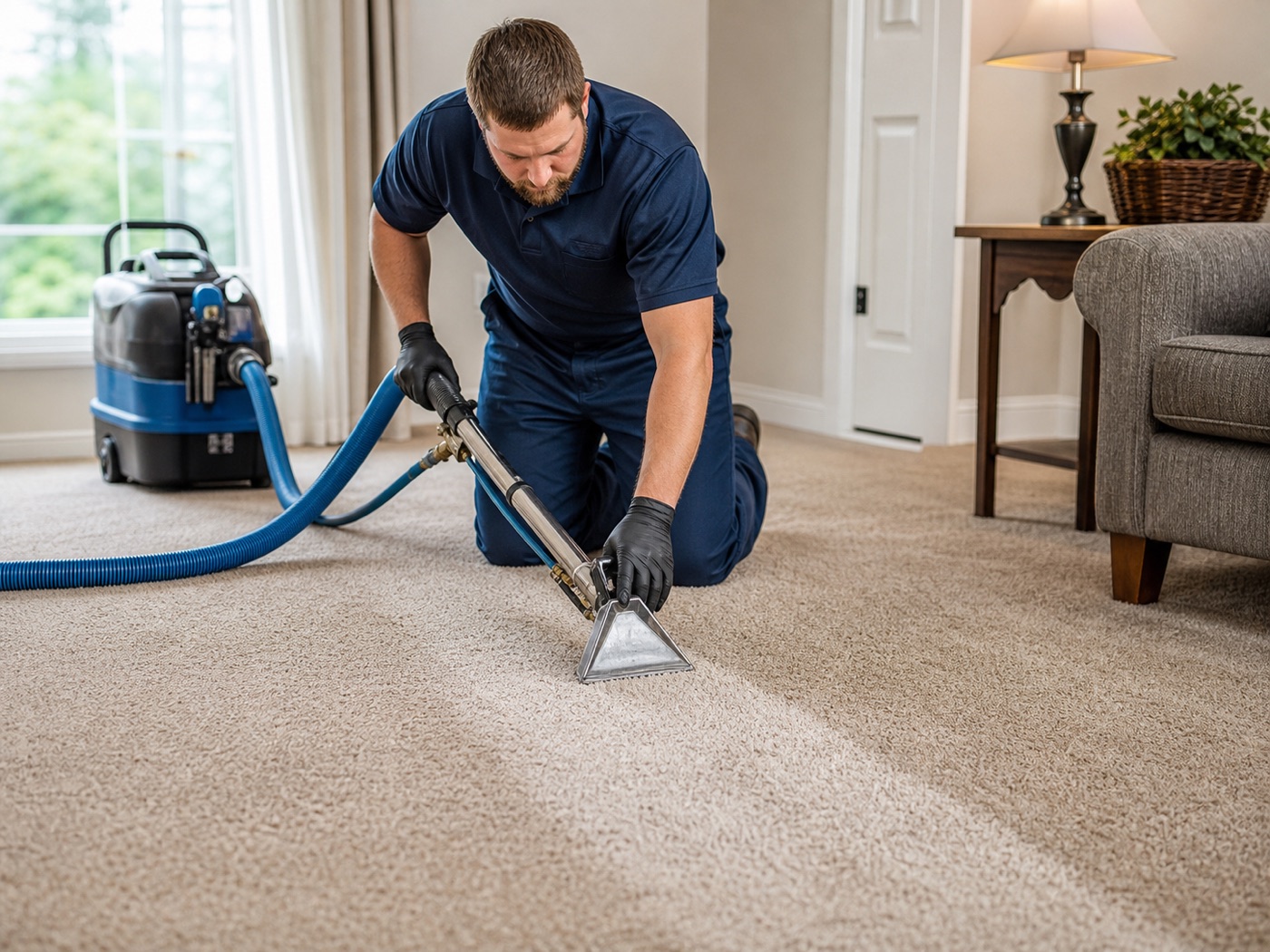
When a basement's moisture management is genuinely under control — working vapor barrier, active dehumidification, decent airflow — cleaning basement carpet is not fundamentally different from cleaning any other room. The caution is around drying time.
Because airflow is naturally lower and the slab underneath runs cooler, basement carpet takes noticeably longer to dry after cleaning than the same square footage upstairs. Air movers and active dehumidification during the drying window are worth treating as standard practice rather than an optional add-on, and scheduling basement cleaning for a stretch when the dehumidifier can run uninterrupted afterward matters more here than anywhere else in the house.
A low-moisture method that minimizes how much water goes into the carpet in the first place is often the more conservative choice for a basement specifically, trading a small amount of cleaning depth for meaningfully faster, safer drying in a room where drying is already the hardest part of the job.
Finished Basements and Material Choices
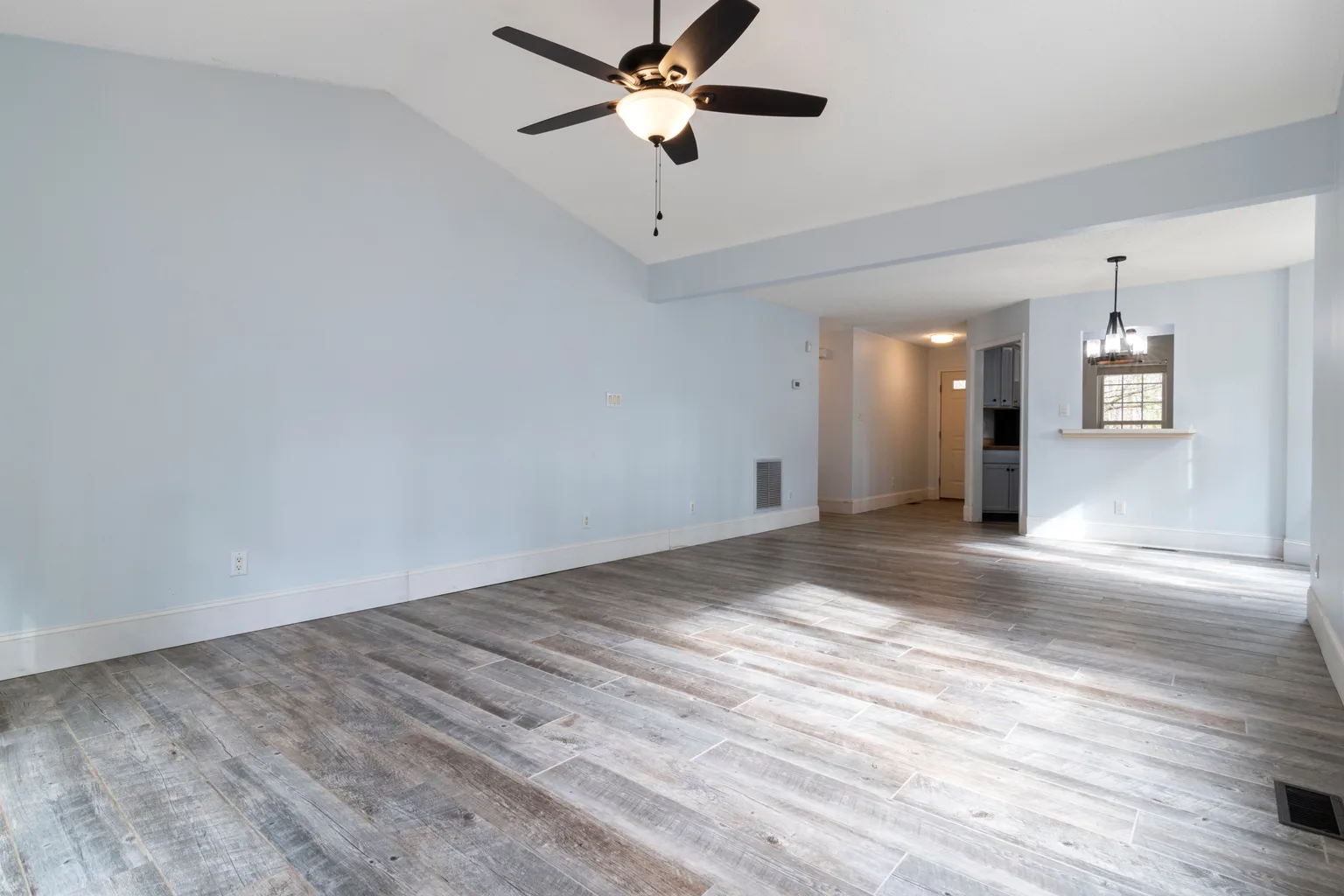
For a basement being finished for the first time, the carpet decision is worth making with the moisture reality in mind rather than choosing purely on look and feel, the way a bedroom upstairs might get chosen.
A carpet tile system, rather than broadloom, is worth considering specifically for basements, because individual tiles can be lifted, inspected, and replaced if one section develops a moisture problem, without redoing the whole room. Synthetic fiber carpet and closed-cell foam padding resist moisture wicking better than natural fiber options, and they are worth the modest cost difference in a room where moisture is a structural fact of life rather than an occasional risk.
It is also worth keeping carpet at least a few inches back from exterior walls where possible, or using a hard-surface transition strip there, since that is where condensation and any minor seepage are most likely to first appear.
Sump Pumps and Drainage Matter as Much as the Carpet
A basement's carpet is only as safe as the drainage system protecting the room, and it is worth treating sump pump maintenance as part of the same conversation as carpet care rather than a separate concern for a different contractor entirely.
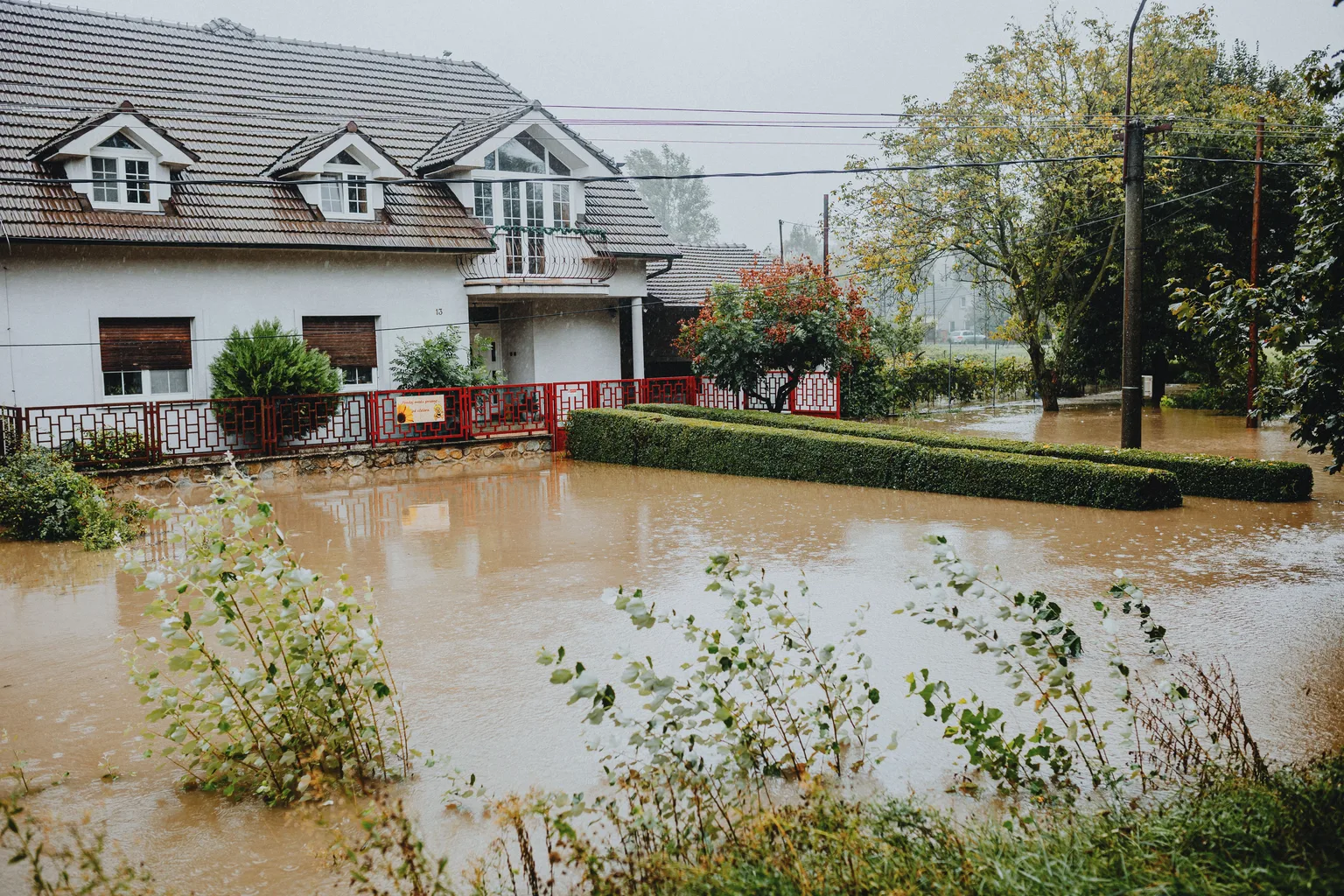
A sump pump that has not been tested in a year, a battery backup that has quietly died, or gutters that dump water against the foundation instead of away from it all raise the odds of the exact water event that turns a routine cleaning conversation into a remediation one. Testing the sump pump before the heaviest rain months and confirming exterior grading slopes away from the foundation are both cheap insurance relative to what a flooded basement costs in carpet, pad, and drywall.
When to Stop and Call a Professional
Standing water from any source — a sump pump failure, a heavy-rain seepage event, a burst supply line — is a different category of problem than routine dirt and traffic, and it needs extraction and drying equipment beyond what a household or a rental machine can provide.
A musty smell that persists despite dehumidification, or visible dark spotting on carpet or baseboards, is worth a professional assessment before it is treated as a routine cleaning. The distinction matters because attempting to clean over an active moisture or mold problem can spread it rather than resolve it.
A general rule that works well for basements specifically: if the source of the moisture cannot be pointed to and explained, treat the situation as unresolved rather than assuming a single cleaning visit will settle it. A basement that dried out after a storm and stayed dry for months is a different situation than one where nobody can say for certain why the corner by the water heater always feels a little damp.
Getting that root cause identified first, even if it means a plumber or a foundation contractor visits before the cleaning crew does, saves everyone time and keeps a genuine structural issue from being masked by carpet that merely looks and smells better for a few weeks before the underlying problem resurfaces, usually at a worse moment than the first time it showed up.
All City Carpet Cleaning And Building Solutions assesses basement moisture conditions before recommending a cleaning approach across Virginia Beach, Norfolk, Chesapeake, Suffolk, Hampton, Portsmouth, and Smithfield, with straightforward pricing published for the standard cases.