For something that has been a household service for decades, carpet cleaning is surprisingly opaque. Most people have no idea what is going to happen, how long it will take, what they should do first, or what a good job looks like compared to a fast one.
So here is the whole thing in order, from the phone call to the last walkthrough.
Before the Appointment
The quote is the first step and it is worth taking seriously, because the questions asked tell you a lot about who you are dealing with.
A useful quote asks which rooms, roughly how large, what the carpet is, what condition it is in, whether there are pets, and whether there are specific spots. A quote that asks only for a square footage number and produces an implausibly low price is quoting a different service than the one you think you are buying.
Our area pricing is published, including the minimum job price and what protector costs per area, which means the phone call is about your house rather than about the number. That is a deliberate choice — a customer who knows the price before anyone arrives is not negotiating on their doorstep.
The other thing to do in advance is decide what you actually need. Cleaning the four rooms that take the traffic usually produces a bigger visible change than a whole-house service at the same price, and we would rather tell you that on the phone than after.
What to Do the Day Before
Preparation takes about twenty minutes and it makes the appointment go considerably better.
- Clear small items off the floor — lamps, plants, baskets, toys, shoes, anything breakable or valuable.
- Take fragile items off any furniture that will be moved, since a sofa gets tipped and slid rather than lifted flat.
- Vacuum if you can. We pre-vacuum as part of the work, but a pass beforehand helps in heavily soiled areas.
- Point out every spot you want addressed, and say what has already been applied to it. Prior products change the chemistry.
- Plan where pets will be. Doors are open, hoses run through them, and a nervous animal does not enjoy any of it.
- Make sure there is parking within hose reach of a door — a truck-mounted unit runs from the vehicle.
- Decide which rooms need drying time and plan around it. Bedrooms in the morning means the beds are usable by evening.
The point about prior products matters more than it sounds. A spot that has had a bleach-based cleaner, an acidic cleaner, and a fragrance spray applied to it is a different job from a fresh stain, and knowing that in advance saves an hour of working out why nothing is behaving normally.
The Walkthrough
A good appointment starts with five or ten minutes of walking the rooms together, and it is the most useful part of the visit.
The technician should identify the carpet fiber, note the areas of concern, look at the spots you flagged and any you did not, and tell you plainly what is likely to come out and what is not. That last part is what separates a professional from a salesperson — some things do not come out, and hearing it at the start is better than discovering it at the end.
It is also the moment to set expectations about worn traffic lanes. If a hallway has lost fiber to abrasion, cleaning will improve it without restoring it, and knowing that in advance turns a disappointment into a reasonable outcome.
The Work Itself
The sequence matters, and most of what determines the result happens before any water touches the carpet.
Dry soil removal comes first. A thorough vacuum pass removes the loose particulate that would otherwise turn to mud on contact with moisture. It is the step most often skipped when a crew is behind schedule, and it is invisible to the customer at the time and obvious three weeks later.
Furniture is moved next — the pieces that can be — and then the pre-spray goes down and is given dwell time to break the oily film that makes traffic lanes grey. Spots get their own chemistry, because a single pre-spray does not handle wine, grease, and ink equally well. Then comes agitation with a brush or rotary tool to loosen bonded soil from the base of the pile.
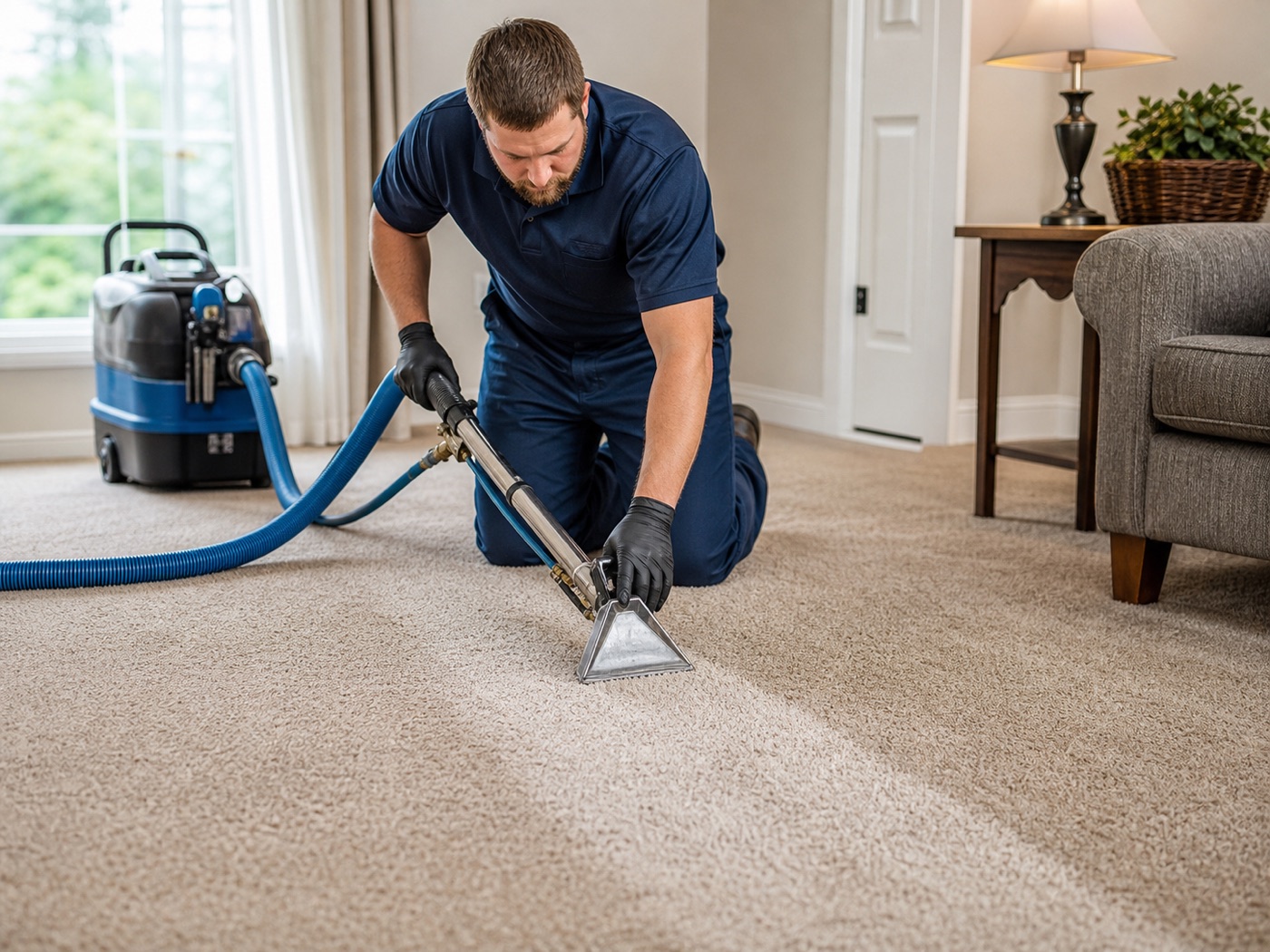
Extraction follows: heated solution injected under pressure and vacuumed straight back out in the same pass, working in overlapping passes with dry strokes to pull as much moisture back as possible. This is the loud part, and the truck outside is where the heat and vacuum come from.
Finally the pile gets groomed so it dries standing up rather than matted, furniture goes back on protective blocks or tabs, and air movers go down if the conditions call for them.
After the Crew Leaves
The job is not over when the truck pulls away, and what happens over the next several hours affects the result.
Run the air conditioning, because it dehumidifies as well as cools and that is what carries moisture out of a closed house. Put fans on the rooms if you have them, and leave interior doors open so air moves. In a humid Hampton Roads stretch this is the difference between five hours and most of a day.
Walk carefully in clean socks or shoe covers until the carpet is dry, and keep shoes off it entirely. Leave the protective blocks under furniture legs until the carpet is fully dry — wood and metal legs can transfer stain into damp carpet within hours, and that mark is permanent.
If a spot reappears a few days later, call. It is usually wicking — a contaminant in the backing travelling upward as the carpet dried — and it is a routine thing to correct rather than a sign the cleaning failed.
The Questions People Are Too Polite to Ask
A few things come up constantly in conversation and almost never on the phone beforehand.
Does it smell? It should smell like very little. A faint clean note during the work that is gone by the time the carpet dries is normal. A strong perfume smell that lingers for days is a deodorizer, and we do not use them unless someone specifically asks, because fragrance masks conditions rather than resolving them.
Is it loud? Yes, moderately. The truck-mounted unit runs outside for the duration and the wand is audible in the room being worked on. Most households find they can work in another part of the house without difficulty, and a scheduled morning is usually easier than a mid-afternoon slot if there are naps involved.
Does the door have to stay open? A hose runs from the truck through a door, so one door stays propped for the length of the visit. In summer that means the air conditioning is fighting an open door for a couple of hours, which is worth planning around but is not usually a problem.
And what about the cost changing? It should not, unless something is found that was not described — a pet spot that needs sub-surface treatment, or a room significantly larger than discussed. When that happens the right thing is a conversation before the work rather than a surprise on the invoice, and published area pricing makes that conversation short.
What a Good Job Looks Like
The honest measure is not how it looks the hour the crew leaves. Any method makes carpet look better while it is damp.
The measure is three weeks later. Carpet that was thoroughly rinsed stays clean, because there is no detergent residue holding new soil. Carpet that was cleaned quickly and rinsed poorly looks excellent on day one and noticeably worse than it started by week four. That delay is why the difference between a good crew and a fast one is invisible at the time.
The other marker is what you were told. A company that explained what would not come out, pointed at the worn lane before cleaning it, and declined to sell you protector for the guest room is a company giving advice rather than running a sales call. That is the relationship worth keeping.
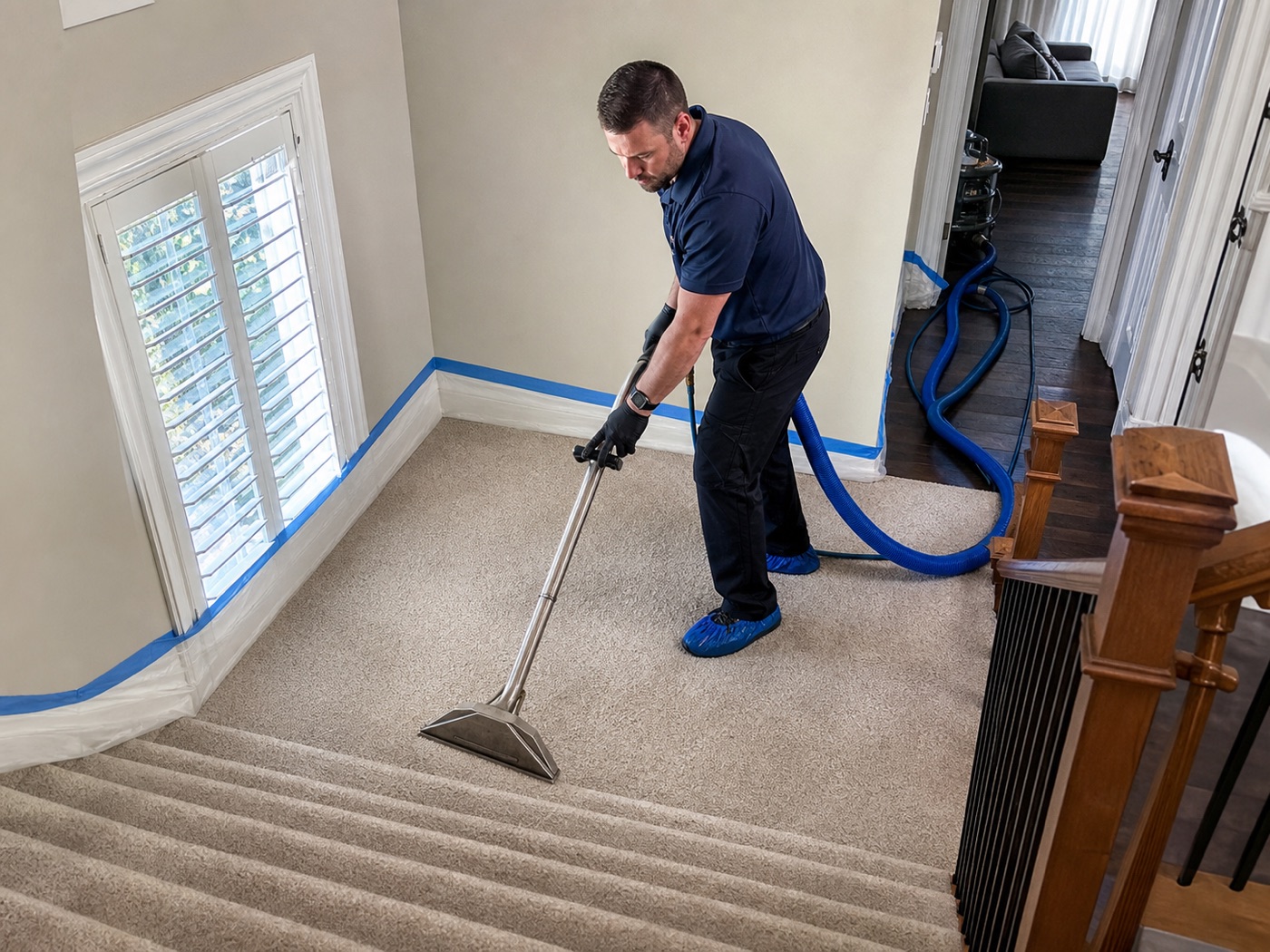
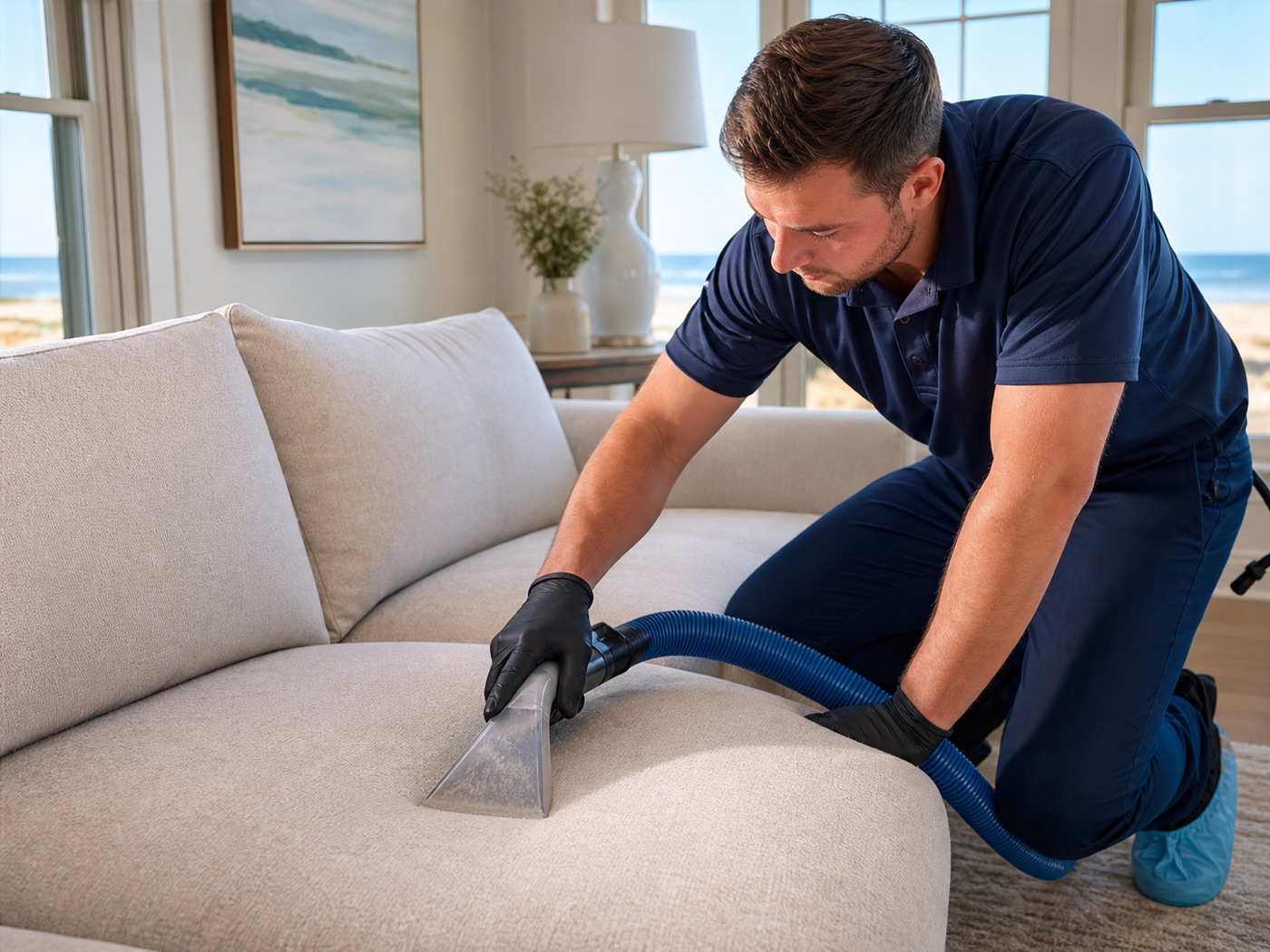
And if you want to add upholstery or the stairs, the efficient moment is the same visit rather than a second appointment, since it avoids a trip charge and gets the whole room back in service together.
All City Carpet Cleaning And Building Solutions has been doing this in Virginia Beach, Norfolk, Chesapeake, Suffolk, Hampton, Portsmouth, and Smithfield for seventeen years. Same process every time, and the pricing is on the website.