
Every household with tile floors has a version of the same seasonal problem, whether they think about it directly or not: the kitchen and bathroom floors that looked fine all summer start looking noticeably worse right around the time company starts showing up for the holidays. The tile itself usually is not the issue. The grout between the tiles is.
Grout takes the brunt of holiday entertaining season in a way that most homeowners do not plan for until they are staring at discolored grout lines the week before a dinner party, at which point there is not much time to do anything but a rushed DIY scrub that only partially helps.
Why Grout Stains Differently Than Tile
Tile, whether ceramic, porcelain, or natural stone with a factory sealant, has a relatively nonporous surface that resists absorbing spills. Grout is a different material entirely — a cement-based mixture that is inherently porous, which means it soaks up liquid, grease, and fine dirt into its structure rather than letting it sit on the surface where a paper towel can catch it in time.
This is why a kitchen floor can look clean at a glance while the grout lines running through it have gradually darkened over months of cooking grease, dropped food, and everyday foot traffic tracking in dirt from outside. The staining is cumulative and largely invisible day to day until it reaches a point where it is obvious, usually right when you need the floor to look its best for guests.
Bathrooms follow a similar pattern for a different reason. Shower and tub surrounds deal with soap scum and mineral deposits from water rather than grease, and bathroom floor grout picks up everyday grime from bare feet and cleaning products that, over time, builds up the same way kitchen grout does. Both rooms benefit from a professional cleaning method than a handheld brush and store-bought spray can realistically reach on grout lines that have gone unattended for a year or more.
Why Holiday Season Hits Grout Hardest of All
Thanksgiving through New Year compresses the heaviest kitchen and entryway activity of the entire year into roughly six weeks. More cooking means more grease in the air and on the floor. More guests means more foot traffic tracking in whatever is on the ground outside, which in Hampton Roads in late fall often means damp leaves, mud, and the first cold-weather grit before winter salt season even starts.
Wine and sauce spills near dining and kitchen areas are their own specific problem for grout, since red wine and tomato-based sauces are both strong colorants that set into porous grout quickly if not caught immediately, and during a busy holiday gathering, immediate cleanup of every spill is not realistic.
None of this is unique to any one household — it is a predictable seasonal pattern that hits kitchens and entryways across the region at the same time every year, which is exactly why planning around it ahead of time works better than reacting to it after the fact.
Cleaning and Sealing Are Two Different Steps
A lot of homeowners think of grout sealing as an optional upgrade, but cleaning and sealing actually address two different problems and work best done together in the right order. Cleaning removes what has already soaked into the grout — the accumulated grease, dirt, and staining sitting in the porous surface. Sealing then closes that porous surface off from future absorption.
Sealant applied over dirty or stained grout locks in the existing discoloration rather than protecting against new staining, which is why the order matters — grout needs to be professionally cleaned first, then sealed once it is genuinely clean, not the other way around.
Once sealed properly, grout resists absorbing spills during the window before they get wiped up, which is exactly the scenario that plays out repeatedly during a busy holiday gathering. It is not a permanent shield — sealant wears down with traffic and cleaning over time and needs reapplication on a cycle — but for the specific stretch of heavy holiday use, sealed grout genuinely performs better than unsealed grout.
Why Timing It Before the Season Matters More Than People Think
The instinct for a lot of households is to deal with tile and grout after the holidays, once the mess from hosting is visible and undeniable. That approach means living through the entire season with grout that is actively absorbing damage the whole time, and cleaning after the fact has to work harder to remove staining that has had weeks to set in.
Doing it before the season starts — late October is a realistic deadline given that Thanksgiving prep and hosting typically ramps up through November — means grout goes into the heaviest traffic window already clean and, if sealed, already protected. It is the same logic behind getting a broader fall deep clean done ahead of holiday guests rather than after them.
It also spreads the cleaning workload out more sensibly. Scheduling tile and grout care in late October avoids competing with the busiest booking weeks right before major holidays, when cleaning companies across the region tend to see the heaviest demand and the least flexible availability.
Entryways and Mudrooms Deserve Attention Too
Kitchens get most of the attention in this conversation, but tile entryways and mudrooms take a version of the same seasonal hit, just from a different source. Instead of grease and cooking residue, entryway grout absorbs mud, damp leaf debris, and the first rounds of cold-weather grit that guests and family members track in on shoes throughout the fall and into the holiday season.
A tile entryway that has not been cleaned since summer often shows the most visible grout discoloration in the whole house by the time guests start arriving, simply because it is the first surface every single visitor crosses. Treating it as part of the same pre-holiday cleaning pass as the kitchen, rather than an afterthought, keeps the very first impression a guest gets of the house from being a stained floor.
Households with an attached garage entry often overlook that transition tile entirely, since it is not a space guests typically see, but it is frequently the dirtiest tile in the house by late fall given how much outdoor debris passes through it daily. Including it in a pre-holiday cleaning pass, even though it is out of sight, keeps grease and grit from migrating into the kitchen on foot traffic during the busiest weeks of the season.
What to Expect From Professional Grout Cleaning
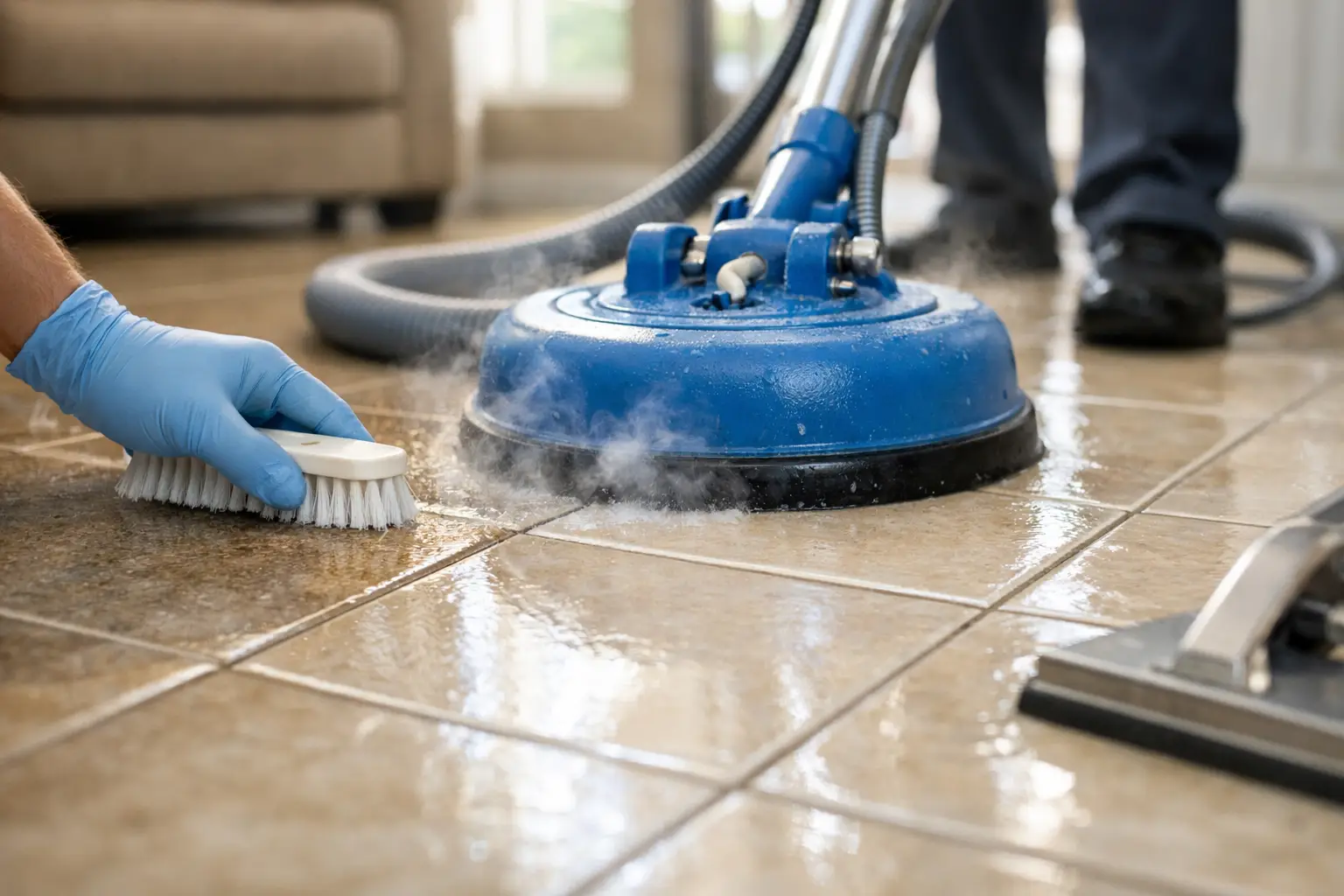
Professional grout cleaning typically uses hot water extraction with a specialized tool designed to work into grout lines specifically, rather than relying on surface mopping that mostly moves dirt around without lifting what has soaked into the porous material below.
The process usually starts with an assessment of grout color and condition, since heavily discolored grout sometimes needs more than one pass to reach its original color, and setting realistic expectations upfront avoids disappointment when a single cleaning does not fully restore grout that has gone years without attention. Most homeowners are surprised by how much lighter grout looks once the accumulated buildup is actually removed with proper equipment rather than just surface-wiped.
Homeowners scheduling this kind of appointment for the first time sometimes assume it will disrupt the whole kitchen for a day or more, but a typical residential kitchen and adjoining entryway can usually be completed in a few hours, with drying time factored in before the space is back to full use, which makes it realistic to schedule even with a busy November calendar already filling up.
- Pre-treatment to loosen embedded grease and staining in the grout lines
- Hot water extraction to lift soil out of the porous grout rather than just the tile surface
- Full drying before sealant is applied, since sealant over damp grout does not bond properly
- A protective sealant coat once the grout is confirmed clean and dry
All City Carpet Cleaning And Building Solutions provides tile and grout cleaning and sealing across Virginia Beach, Norfolk, Chesapeake, Suffolk, Hampton, Portsmouth, and Smithfield, with upfront pricing so you know the cost before the holiday season books up.