
Every spring, the same thing happens across Hampton Roads. A yellow-green film settles onto every car in Virginia Beach, Norfolk, and Chesapeake, someone posts a photo of it, and everyone agrees it is the worst it has ever been. Then people start noticing they feel worse indoors than outdoors, which does not seem to make sense.
It makes sense once you know two things. First, the yellow dust everyone photographs is mostly not what is causing symptoms. Second, indoor pollen does not go away on its own — it accumulates in soft surfaces, and carpet is the largest soft surface in most homes.
What Actually Blooms Here, and When
Tree pollen season in coastal Virginia starts earlier than most people expect — cedar and maple can begin releasing in late February — and runs into June. The heaviest weeks fall in April and May, when oak, pine, hickory, birch, cedar, and walnut are all producing at once.
Pine is the one you see. Pine pollen grains are comparatively large, which is exactly why they are visible as a coating on cars and porch railings, and also why they cause fewer symptoms — they are generally too big to travel deep into the respiratory tract. The pollen that drives most reactions comes from oak, maple, birch, and cedar, and it is small enough to stay airborne, drift indoors through an open door, and settle onto floors without ever being visible.
The region's climate makes both worse. Hampton Roads is humid and mild, the growing season is long, and mature hardwoods are everywhere from Ghent to Great Bridge. Coastal humidity also supports mold, so spring here typically means pollen and mold spores at the same time rather than one at a time.
How Pollen Gets Into Carpet — and Stays There
Pollen enters a home four ways: through open doors and windows, on clothing and shoes, on pets, and through the HVAC system when filtration is inadequate. Once inside, gravity does the rest. Fine particles settle out of the air onto horizontal surfaces, and the largest horizontal surface in the house is the floor.
On a hard floor, that settled material stays on top, where a damp mop removes it. In carpet, it works down between the fibers. This is where carpet gets an unfair reputation: it is genuinely good at capturing particles and holding them out of the breathing zone, which is a benefit — but only if the reservoir is periodically emptied. If it is not, every footstep across that carpet acts as a small bellows, pushing captured material back into the air.
That is why some households feel worse indoors during the spring than they do on a walk. The outdoor air is being diluted by a great deal of atmosphere. The indoor air is being re-dosed from the floor, in a closed room, with the air conditioning recirculating it.
| Reservoir | Why it holds pollen | What clears it |
|---|---|---|
| Carpet and rugs | Largest surface area in the home; fibers trap fine particles | Slow vacuuming with a sealed HEPA unit, plus periodic hot water extraction |
| Upholstered seating | Fabric and cushion fill capture and hold particulate | Dry soil removal followed by fabric-appropriate cleaning |
| Bedding and window treatments | Close to the breathing zone during sleep | Regular hot washing; curtains laundered or cleaned seasonally |
| HVAC filters and returns | Recirculates whatever it does not capture | Filter changes on schedule through the season |
| Pet coats | Carries outdoor pollen directly to floors and furniture | Wiping down after time outside |
What to Do During the Season
The goal in April and May is to slow accumulation. You are not going to eliminate pollen from a house in Hampton Roads in the spring, and any product promising that is overselling.
- Keep windows closed during the highest-release hours — typically mid-morning through early afternoon on dry, breezy days.
- Change HVAC filters more often than the package suggests. A filter loaded with spring pollen stops helping well before its rated interval.
- Vacuum entries and main traffic paths two or three times a week, slowly, with a sealed vacuum that has real filtration. A leaky vacuum redistributes what it picks up.
- Wipe down pets after they come in, especially long-coated dogs that spend time in the yard.
- Keep shoes at the door. It is the single highest-return habit in a pollen-heavy region.
Slow vacuuming matters more than most people believe. Fine particles settle to the base of the pile, and a fast pass moves the machine over them without ever generating enough airflow at that depth to lift them. Two slow passes beat six fast ones. This is the same principle that makes deep cleaning without damaging the carpet a technique question rather than an equipment question.
When Professional Cleaning Makes the Most Difference
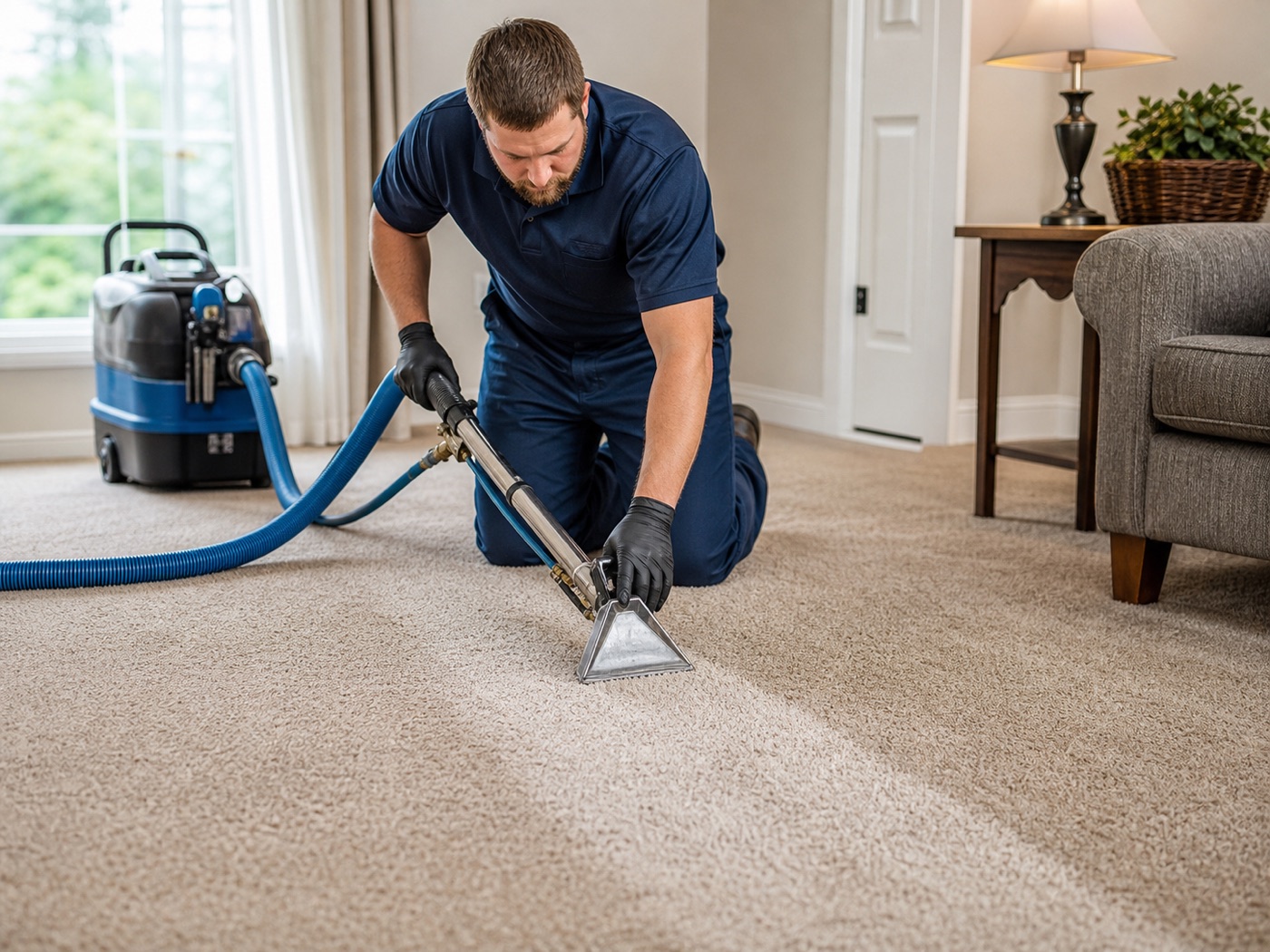
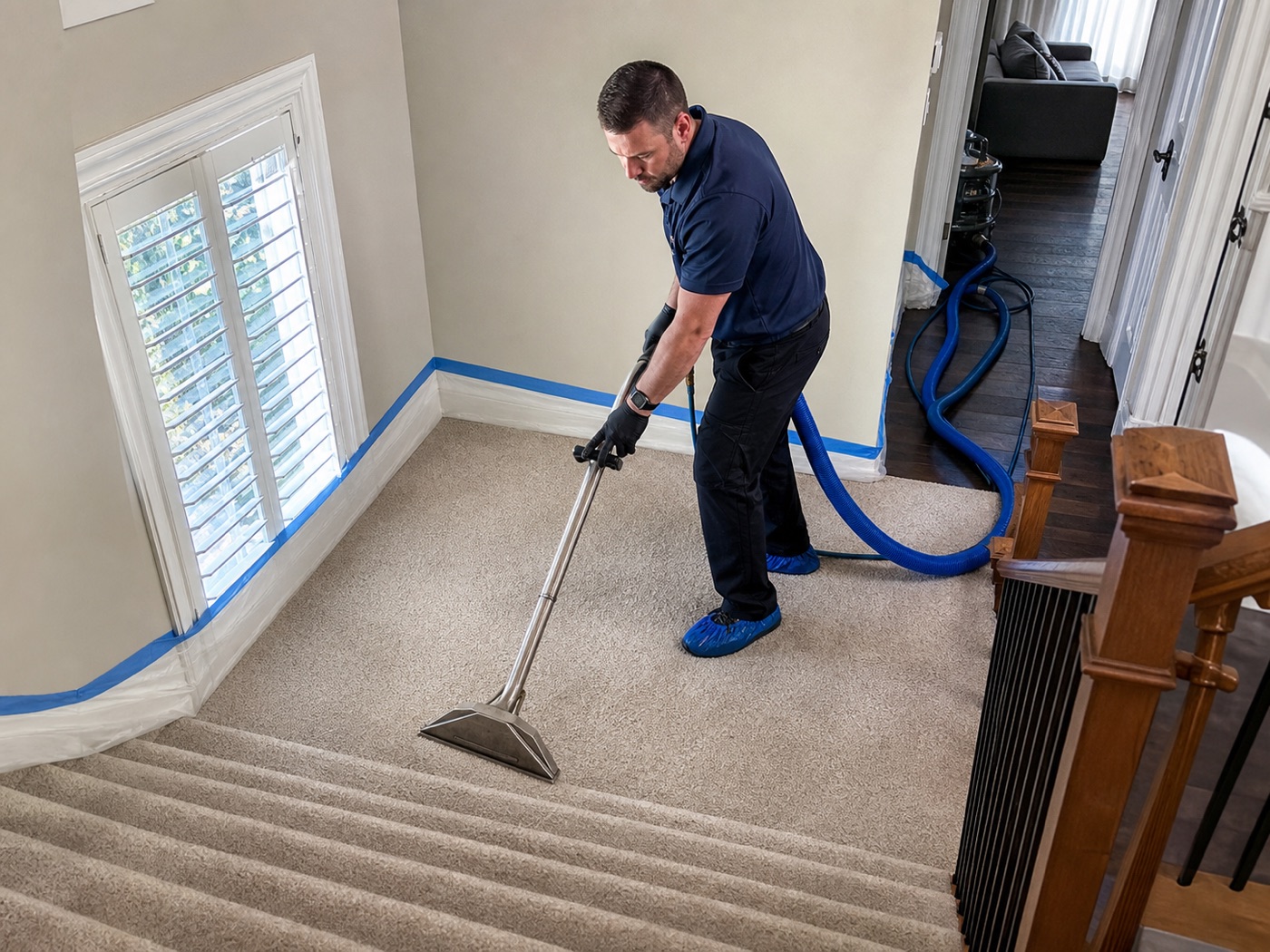
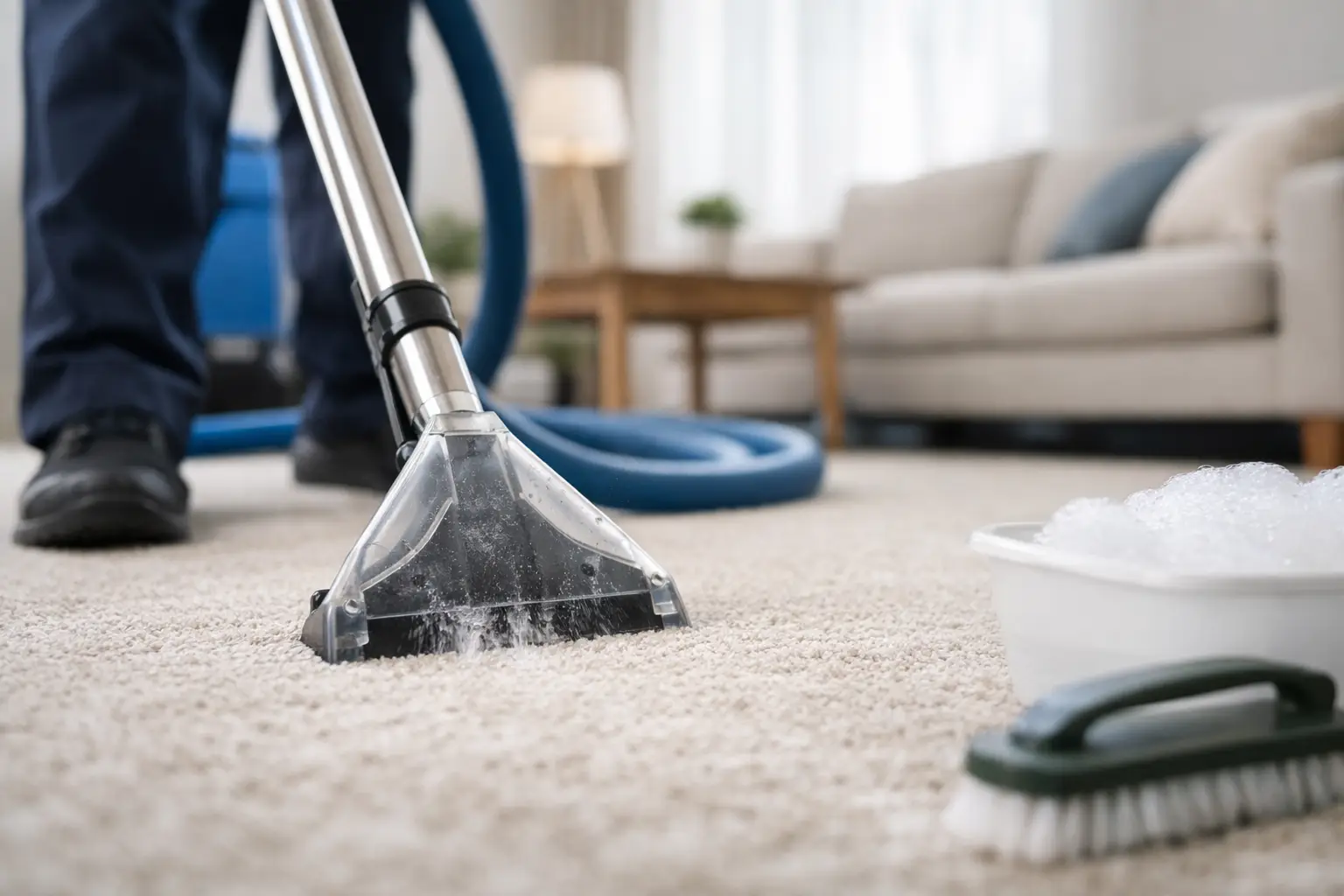
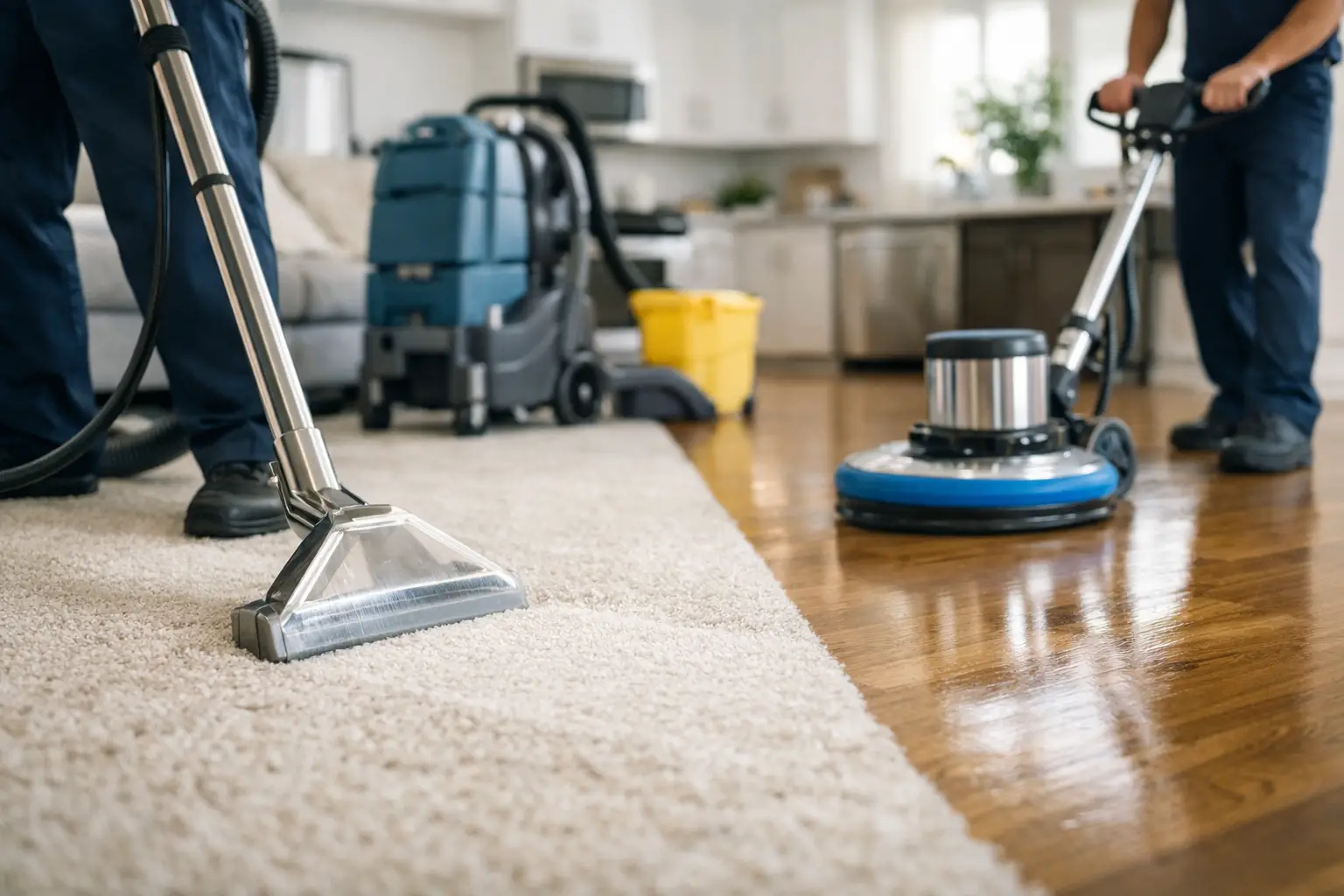
Vacuuming manages the surface. It does not empty the reservoir. Fine particulate that has worked down to the base of the yarn, bound with body oils and ordinary household soil, needs a flushing process to come out — which is what hot water extraction does. Heated solution releases the bond, agitation frees the material, and vacuum recovery removes it along with the water.
Timing is the part worth thinking about. Cleaning during the first week of peak season gets you a clean carpet that is being reloaded immediately. Cleaning as the curve falls — typically late May into June for tree pollen here — clears an entire season's accumulation and gives you a genuinely lower baseline heading into summer. For households where allergies are a real concern, a residential cleaning at that point in the year is more valuable than the same service in February.
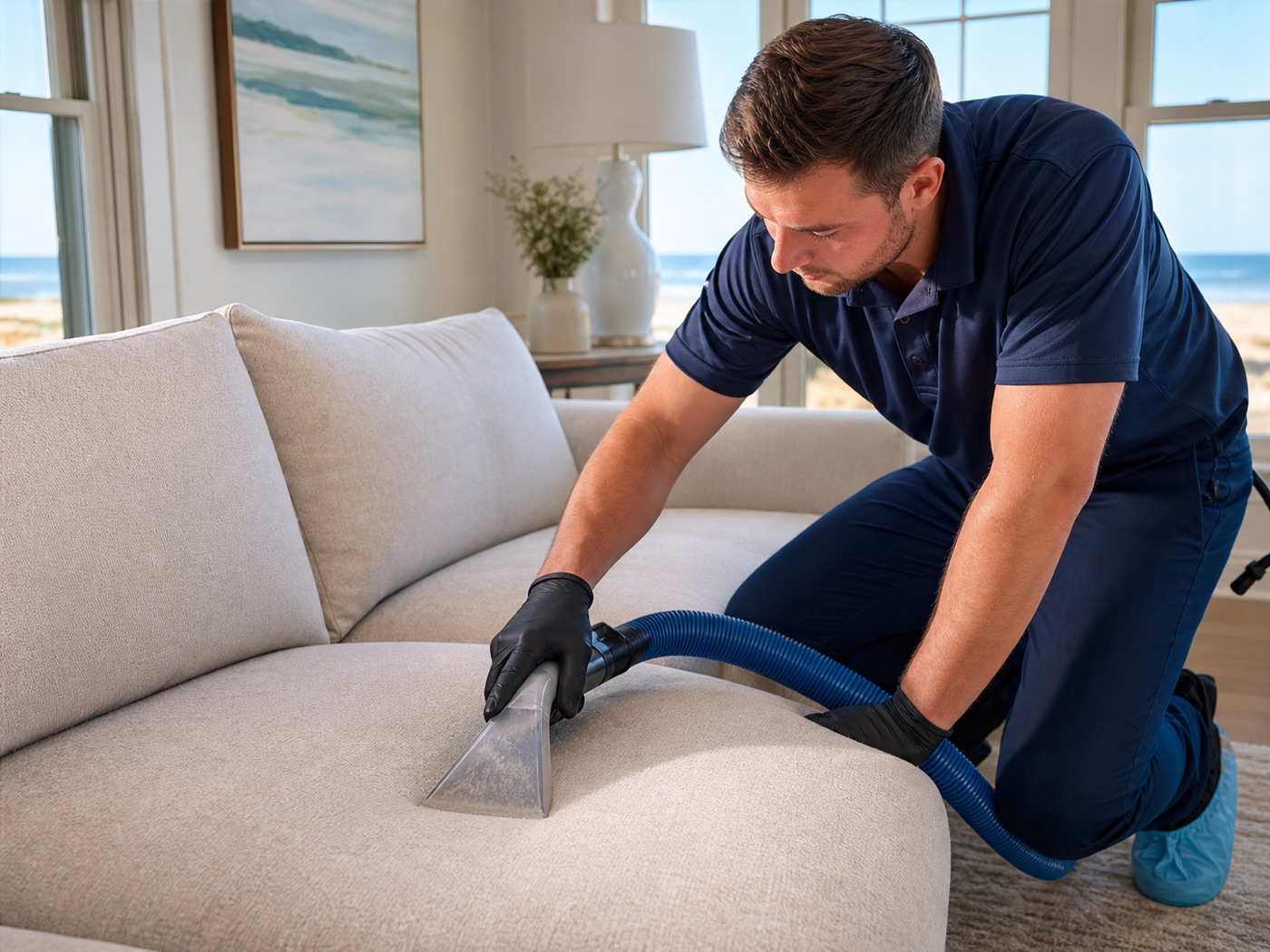
Upholstery deserves attention in the same visit. Sofas and chairs sit at breathing height, hold fine particulate in the cushion fill, and rarely get cleaned on any schedule at all. If one household member reacts noticeably in the living room specifically, the seating is often the reason rather than the floor.
Setting Expectations Honestly
Cleaning carpet will not cure anyone's allergies, and nobody in this trade should suggest otherwise. What it does is reduce one significant indoor reservoir. Households that combine that with filter discipline, a shoes-off habit, and attention to bedding usually report a real difference. Households that clean the carpet and change nothing else usually report a smaller one.
It is also worth being clear about products. There is no treatment that permanently prevents pollen from entering a house, and a heavily fragranced deodorizer masks air rather than improving it. The distinction between covering a smell and removing its source is the same one that governs odor work generally, and it applies just as much to seasonal allergens as it does to smoke or pets. The honest version of this service is thorough removal, proper drying, and clear guidance about what to do between visits.
One more piece of context worth having: pollen rarely arrives alone in this region. Coastal humidity keeps mold spore counts elevated through much of the same window, and the two together are why so many Hampton Roads households describe spring as worse here than wherever they lived before. If symptoms persist well past June, mold rather than pollen is often the better explanation, and that changes what is worth doing about the floor.
The Short Version
Spring in Hampton Roads produces a heavy, long pollen season, and the particles that matter most are the ones nobody can see. Carpet captures them, which is useful right up until the reservoir is full. Emptying it near the end of the season — rather than in the middle, and rather than not at all — is the version of this that actually pays off.
If someone in your house has a rough April and May every year, the floor is worth ruling in or out. All City Carpet Cleaning And Building Solutions serves Virginia Beach, Norfolk, Chesapeake, Portsmouth, and the surrounding communities, and we are glad to talk through what would and would not help before anyone schedules anything.