Most people's first instinct when carpet gets stained is to grab whatever is under the sink and start working on it immediately, which is generally the right impulse — speed matters with stains — but a handful of very common DIY habits actually make the outcome worse rather than better, and they show up in almost every household at some point.
None of these mistakes come from carelessness. They come from reasonable-sounding logic that turns out to be wrong once you understand what is actually happening at the fiber level during a spill. Here are the ones that come up most often.
Scrubbing Instead of Blotting
Scrubbing a fresh stain feels productive — you can see the cloth moving, you can feel resistance, it seems like work is being done. What is actually happening is the stain spreading outward across a wider area of fiber than the original spill covered, while the scrubbing motion also frays and damages the pile itself over repeated passes.
Blotting, by contrast, works from the outside edge of the stain inward, pressing down and lifting straight up rather than rubbing side to side. This lifts the spill up and out of the fiber instead of pushing it sideways into fiber that was not originally affected. It takes more patience than scrubbing and feels less immediately satisfying, but it is the correct technique for essentially every fresh spill.
Over-Wetting the Spot
A common reaction to a stubborn stain is to keep adding more water or cleaning solution, on the theory that more liquid will dilute and flush out more of the problem. In practice, oversaturating a spot pushes the spill down through the fiber into the pad underneath, where it becomes a much harder problem to fully address.
Once liquid reaches the pad, it does not evaporate or get absorbed by a towel the way surface moisture does. It sits there, and depending on what was spilled, it can become a slow-developing odor source or, in the right humidity conditions, a mold risk that has nothing to do with the original visible stain anymore. What started as a spot on the fiber becomes a structural moisture issue in the padding below.
The better approach is applying cleaning solution sparingly and blotting frequently, rather than saturating the area and letting it sit. If a stain genuinely needs more aggressive treatment than light application allows, that is usually a sign it needs professional extraction equipment rather than more liquid from a spray bottle.
Using Hot Water on the Wrong Stains
Hot water is a reasonable default for a lot of general cleaning, but it is actively the wrong choice for protein-based stains — blood, dairy, egg, and similar spills. Heat causes proteins to denature and bond to fiber, which is the same reaction that makes an egg go from liquid to solid when it hits a hot pan.
A protein stain treated with hot water early on can go from something cold water would have released cleanly to something that is essentially cooked into the carpet fiber, at which point even professional treatment has a much harder job. Cold water is the correct starting point for any stain you cannot immediately identify, and it is always the right call for anything you suspect is protein-based.
This is one of the more counterintuitive DIY mistakes because hot water genuinely does work better for a lot of other stain types, like grease or oil-based spots, which makes it easy to reach for reflexively without stopping to consider what actually caused the specific stain in front of you.
Mixing Cleaning Chemicals
When one product does not fully lift a stain, the instinct is often to try a second product on top of the first, sometimes without much thought about whether the two are compatible. This is a genuine safety risk in some combinations — certain common household cleaners produce dangerous fumes when combined — and even when it is not dangerous, mixing products can chemically react with the stain in ways that set it rather than remove it.
The safer approach is fully rinsing and drying an area before trying a different product, rather than layering products on top of each other while the area is still wet. If a first attempt does not work, that is more often a sign the stain needs a different method or professional equipment than a sign it needs a second chemical stacked on the first.
Rental Machine Over-Shampooing and Leftover Residue
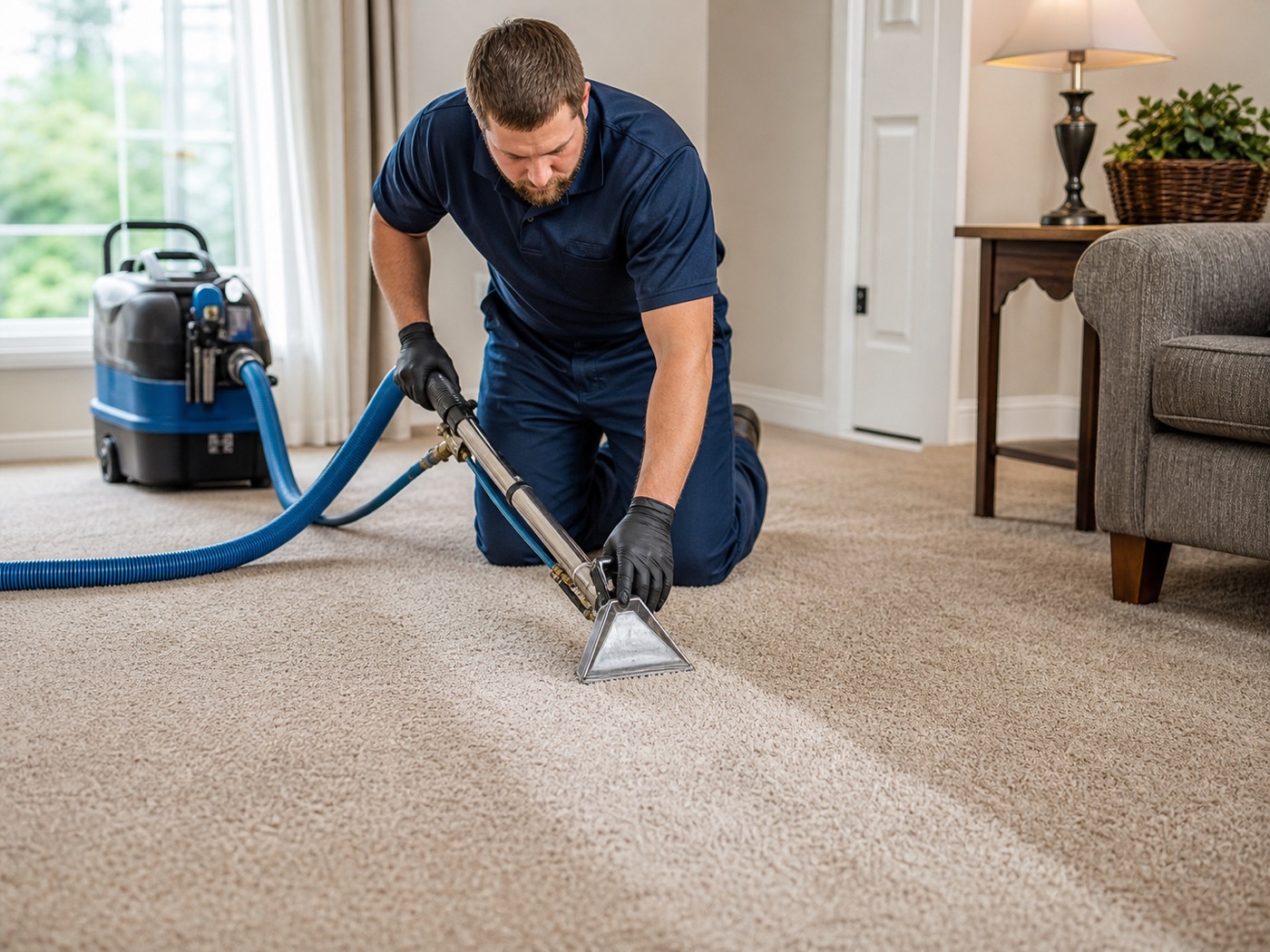
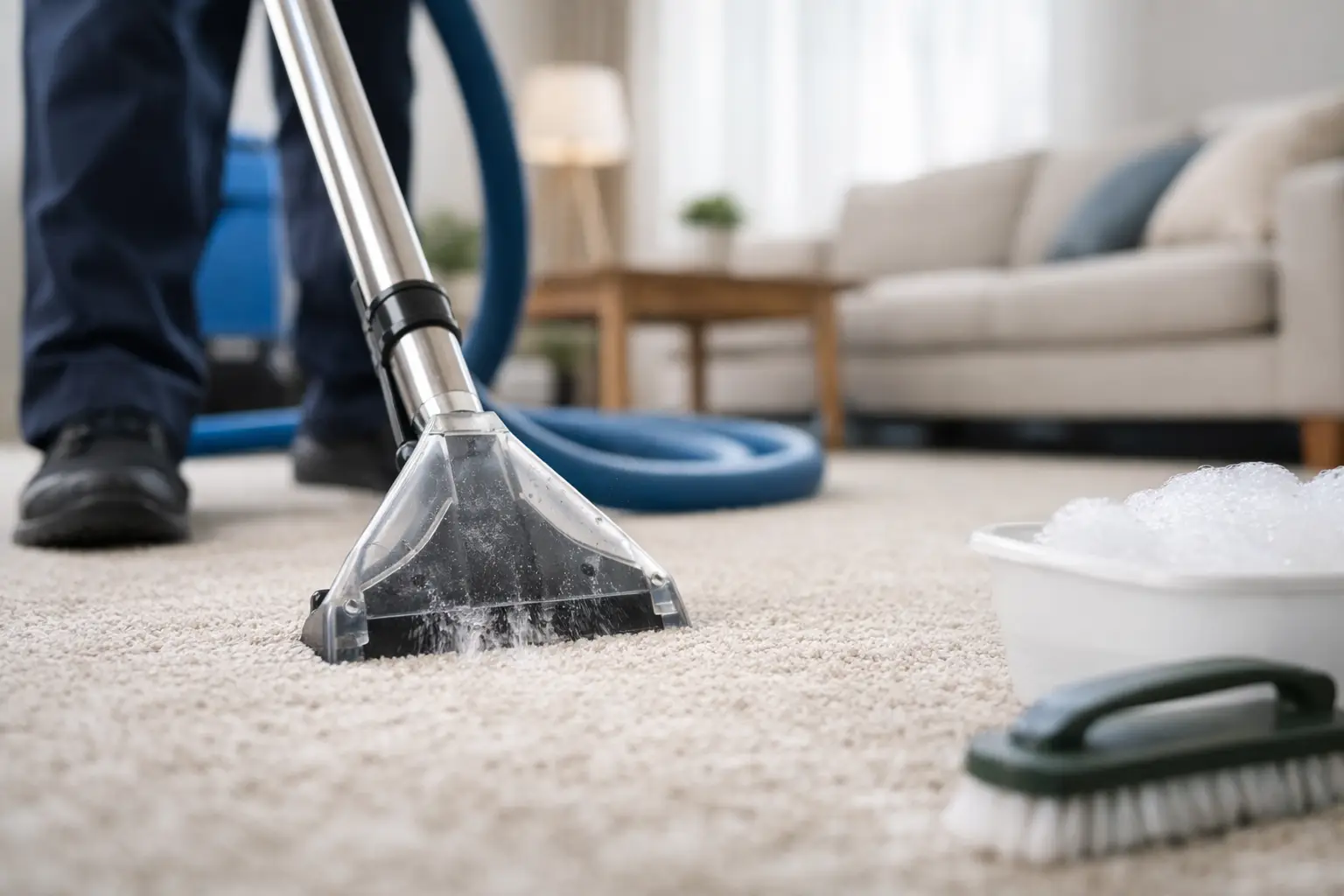
Rental carpet cleaning machines are a reasonable option for light, routine maintenance, but they are meaningfully less powerful than professional equipment when it comes to rinsing and extracting cleaning solution back out of the carpet. That gap matters more than most people expect.
A rental machine that applies cleaning solution but does not fully extract it leaves a soapy residue behind in the fiber. That residue is sticky at a microscopic level and acts like a magnet for new dirt, which is why carpet cleaned with an underpowered machine sometimes looks dirtier again within weeks — not because the original cleaning failed outright, but because it left something behind that attracts new soil faster than untreated carpet would.
This is also frequently compounded by over-shampooing — running the machine over the same area repeatedly in an attempt to get a stubborn spot fully clean, which just means more solution going into the carpet without the extraction power to remove it all afterward. Knowing how to deep clean carpet without damaging it in the process means respecting both the fiber and the pad, not just chasing a visibly cleaner surface with repeated passes.
Upholstery Carries the Same Risks
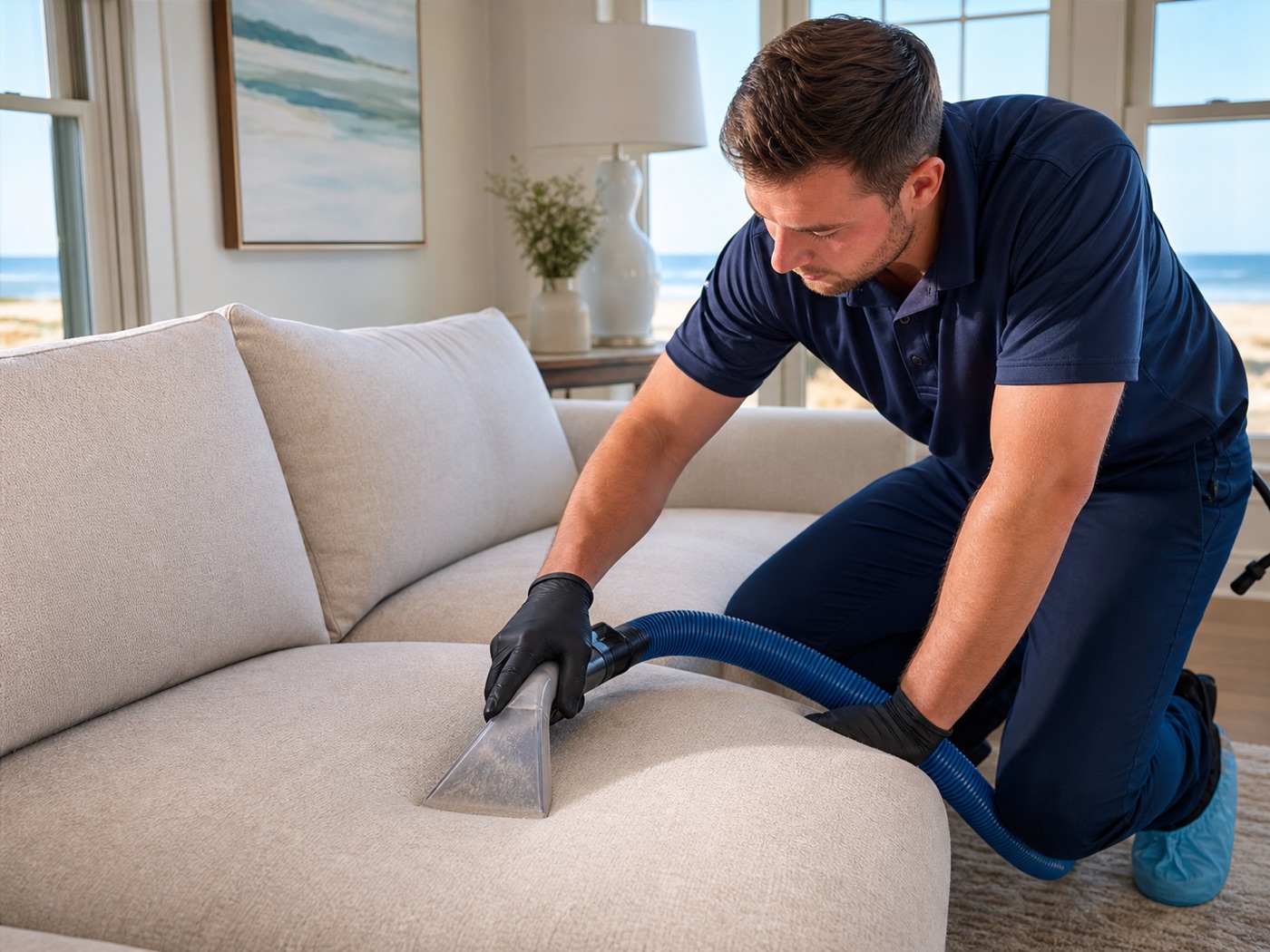
Everything covered so far applies to upholstery as much as it does to carpet, and in some ways the stakes are higher, since upholstery fabric is often more delicate and more visible in daily life than a floor. Scrubbing a couch cushion spreads a stain across the fabric weave just as readily as scrubbing carpet spreads it across fiber, and over-wetting upholstery risks the same deeper moisture problem, compounded by the fact that upholstery padding often dries even more slowly than carpet padding does.
Fabric-specific cleaning codes matter here in a way carpet does not usually require thinking about — some upholstery fabrics can only be cleaned with a water-based solution, others require a solvent-based approach, and using the wrong one can permanently discolor or damage the fabric rather than clean it. Checking that code before attempting any DIY treatment on upholstery is a step worth taking seriously, since a mistake there is often far more visible and expensive to fix than a carpet mistake would be.
When to Call a Professional Instead of Trying Again
A reasonable rule of thumb: if a stain has not responded to two careful, correctly executed attempts at blotting and light treatment, further DIY attempts are more likely to make it harder to remove than to finally solve it. That is the point to call in professional extraction equipment rather than reaching for a third product or a hotter setting.
Waiting too long to make that call has its own cost, separate from the stain itself. Every day a stain sits partially treated, with residual moisture or cleaning solution still in the fiber, gives it more time to set further and gives any residue left behind more time to attract new soil, which compounds the very problem the DIY attempt was trying to solve in the first place.
- Blot, do not scrub, working from the outside of the stain inward
- Apply cleaning solution sparingly rather than saturating the spot
- Use cold water on any stain you suspect is protein-based
- Never mix cleaning products, and fully dry between different treatment attempts
All City Carpet Cleaning And Building Solutions handles stubborn and set-in stains across Virginia Beach, Norfolk, Chesapeake, Suffolk, Hampton, Portsmouth, and Smithfield with professional-grade extraction equipment, and pricing is published upfront so you know the cost before booking.