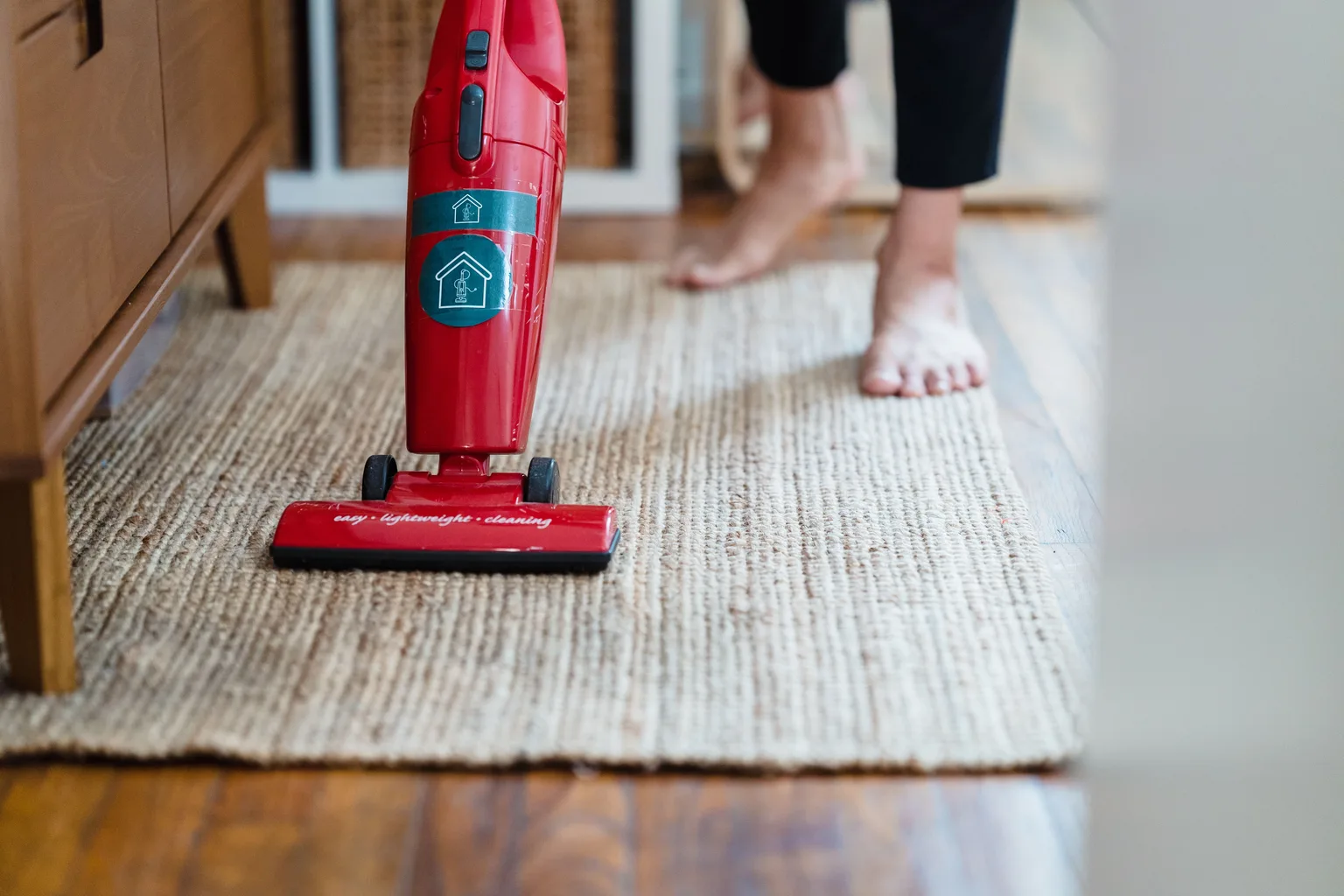
People tend to think of an area rug as a small piece of carpet. It is a reasonable assumption and it is wrong often enough to be expensive. A wall-to-wall carpet is almost always nylon or polyester, machine-made, glued to a synthetic backing, and dyed with stable chemistry. An area rug might be any of a dozen fibers, hand-knotted or tufted or woven, with dyes that may or may not stay where they were put.
The first job with any rug is identification. Everything else follows from it.
Start With the Fiber
Four broad categories cover nearly everything that shows up in Hampton Roads homes, and they behave very differently.
| Fiber | Behavior | Cleaning approach |
|---|---|---|
| Wool | Durable, resilient, absorbs readily | Neutral pH, controlled moisture, no high alkalinity |
| Silk | Delicate, water-spots, dye-sensitive | Specialist immersion or dry methods only |
| Viscose / art silk | Weak when wet, yellows, crushes | Minimal moisture, specialist handling |
| Nylon / polyester / olefin | Stable, tolerant, easy to clean | Standard hot water extraction |
| Cotton flatweave | Shrinks, dye bleeds readily | Cold, controlled, tested first |
| Jute / sisal / seagrass | Browns and stains with water | Dry compound methods |
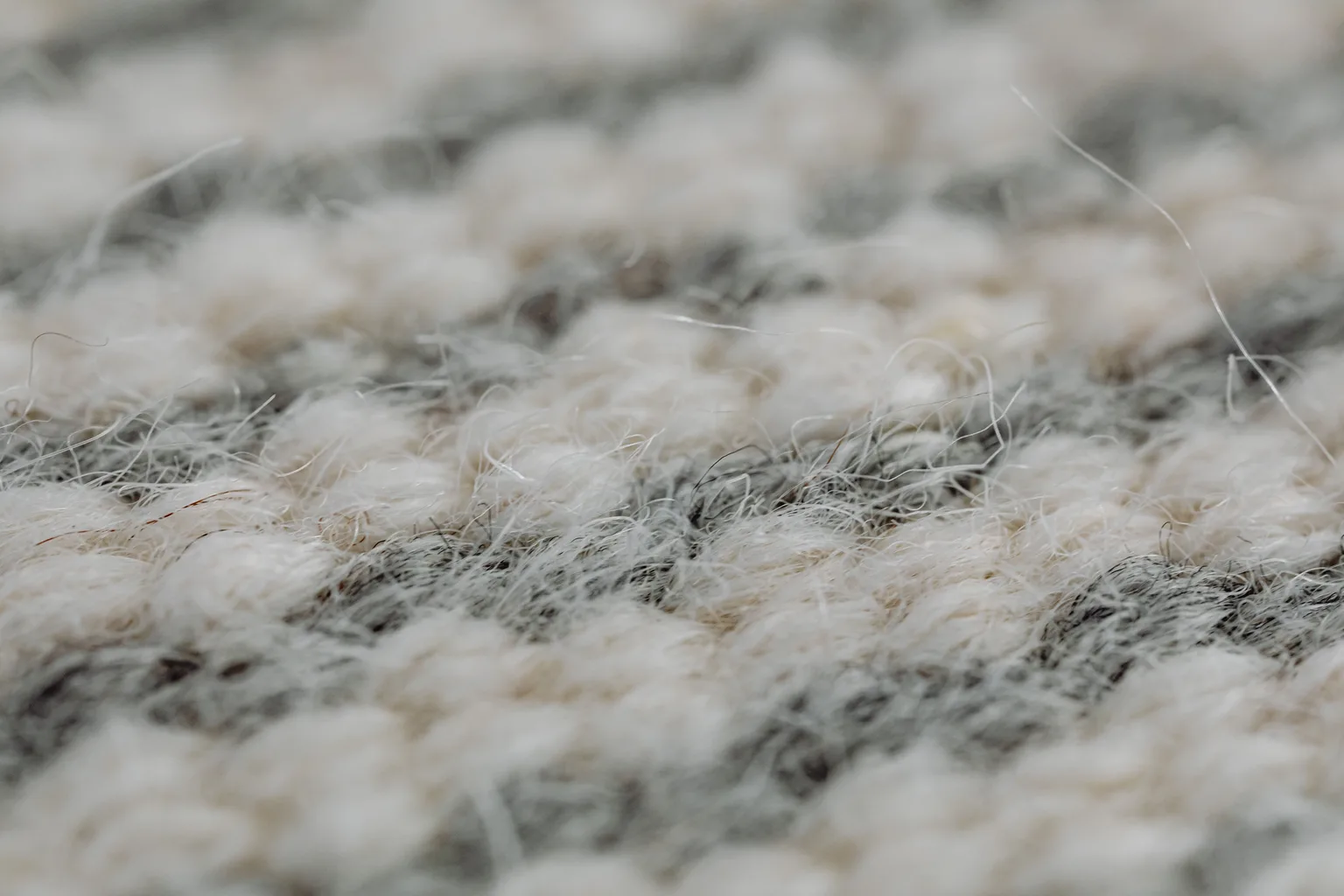
Wool deserves a note because it is both the most common natural fiber in quality rugs and the most commonly mishandled. It is genuinely durable — the crimp in the fiber gives it resilience that synthetics imitate but do not match — but it is a protein fiber and high-alkaline detergent damages it. The same strong cleaner that works fine on nylon will strip lanolin from wool, leave it harsh, and dull the color permanently.
Viscose is the one that surprises people. It is sold as art silk or bamboo silk, it has convincing sheen, and it is in a great many affordable rugs. It also has close to no wet strength. Water leaves yellow marks, foot traffic crushes the pile flat, and neither is reversible. If you own one and it is in a traffic lane, the honest advice is to move it.
The Bleed Test That Takes Two Minutes
Dye migration is the failure mode that ruins rugs outright, and it is almost entirely preventable.
Press a damp white cloth firmly against each distinct color in the rug, especially reds, deep blues, and any hand-dyed area. Hold it for thirty seconds and look. Any color transfer at all means the dye is unstable, and cleaning that rug with ordinary methods risks a red border migrating into a cream field.
Older hand-made rugs, anything from a region using traditional dyes, and inexpensive imports all bleed more often than people expect. A rug that has bled once will bleed again, and the fix — acid rinses, controlled drying, sometimes color correction — belongs to a specialist rather than a Saturday afternoon.
In-Home Versus Off-Site
There are two legitimate ways to clean a rug and they suit different pieces.
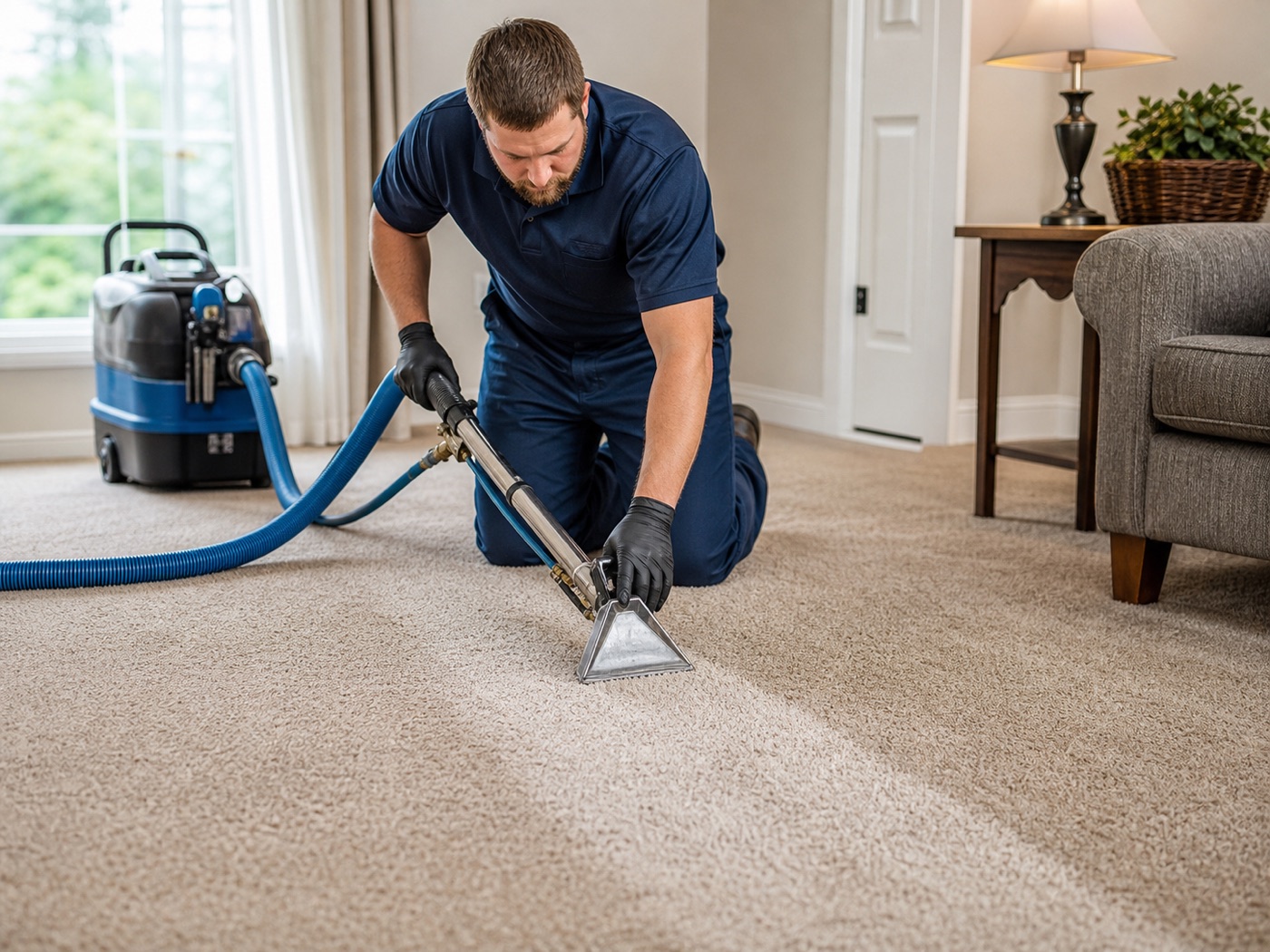
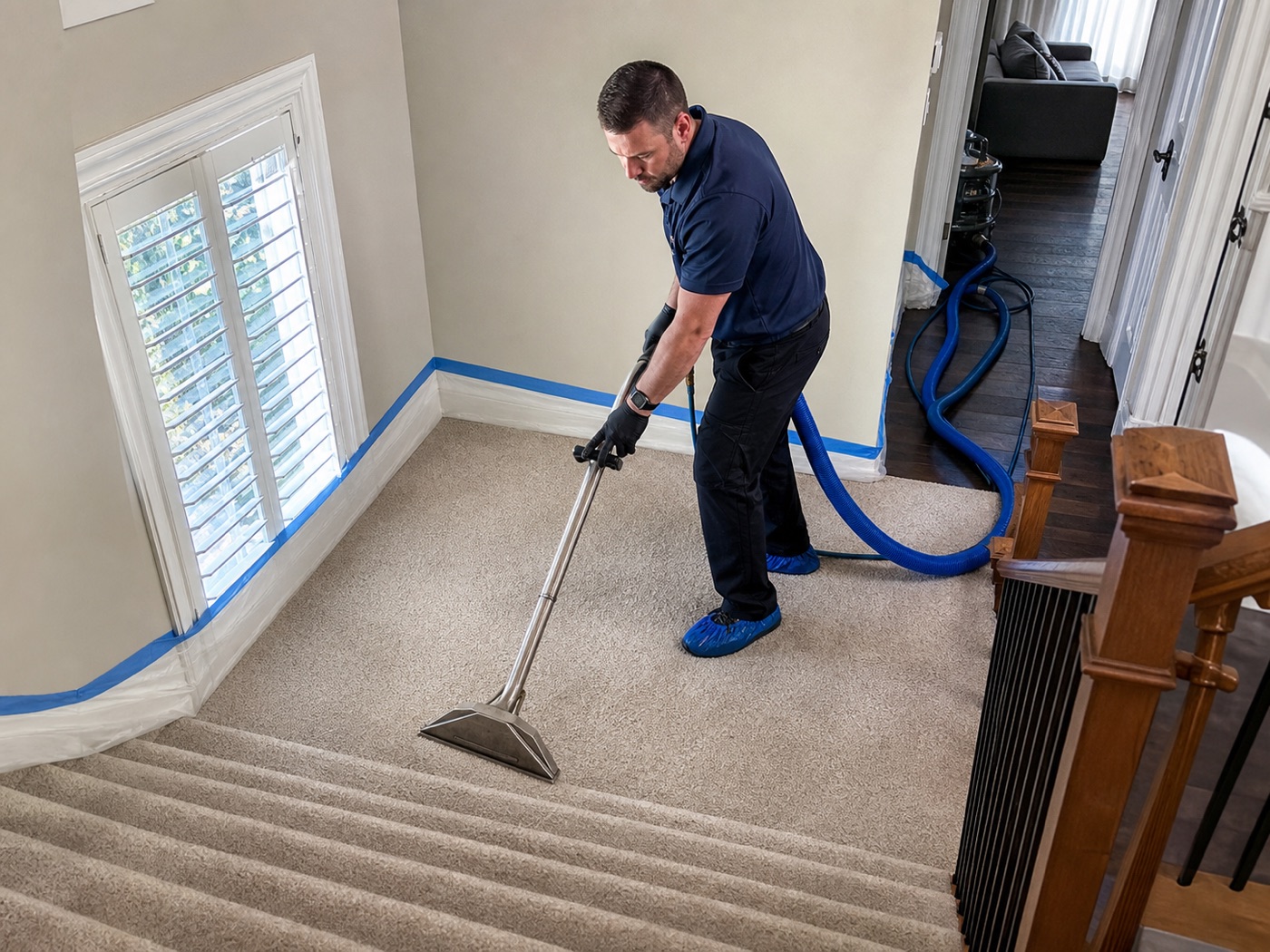
In-home cleaning means the rug stays where it is, gets protected underneath, and is cleaned much like wall-to-wall carpet. For a synthetic tufted rug of moderate value with stable dyes, this is efficient and perfectly appropriate. It is also the right answer when the rug is enormous, when it is under furniture nobody wants to move, or when a household needs it back the same day.
Off-site immersion means the rug goes to a plant, gets dusted to remove dry soil from the foundation, gets washed through, rinsed, groomed, and dried flat under controlled conditions. For wool, for anything hand-knotted, for anything with unstable dye, and for any rug that has taken a pet accident, this is the better outcome by a wide margin.
The dusting stage is the part people never see and the part that does the most work. A wool rug can hold several pounds of dry soil deep in its foundation — grit that no vacuum will reach and that no amount of surface washing addresses. Removing it before any water is introduced is the single biggest difference between a rug that comes back clean and one that comes back merely wet. It is the same abrasive grit problem that kills wall-to-wall carpet in this region, concentrated into a smaller object.
The Floor Underneath
Every rug conversation in a coastal climate has to include what is beneath it, because the two interact more than people realize.
A rug over hardwood restricts airflow to the finish under it. In a house that runs humid for eight months a year, that can mean the boards under the rug behave differently from the boards around it — different moisture content, sometimes a visible difference in color where sunlight reached the exposed floor and not the covered one. Hardwood in this climate has enough to contend with already.
Rug pads matter more than their price suggests. A solid rubber-backed pad can trap moisture against a finish and, over years, mark it. A felt-and-rubber pad breathes, grips properly, adds cushion that extends the life of the rug, and costs very little relative to what it protects. If your rug has no pad at all, that is the cheapest upgrade available.
Rotate rugs a couple of times a year as well. Sun fades one end, traffic wears one path, and a rotation spreads both evenly instead of concentrating them. In older homes with large windows — Ghent and Larchmont are full of them — fading is the faster of the two problems.
Between Professional Cleanings
Maintenance for rugs is slightly different from maintenance for carpet, mostly around edges and fringe.
- Vacuum the face regularly, but turn the beater bar off for wool and shut it off entirely for anything delicate. Aggressive brushing pulls fiber out of a hand-knotted foundation.
- Never run a vacuum over fringe. It catches, pulls, and tears the knots that hold the rug together. Shake fringe out by hand or use an attachment.
- Vacuum the back of the rug once or twice a year. It loosens embedded soil so the next pass on the face actually collects something.
- Blot spills immediately with plain water and a white towel — and on wool, resist the urge to add product, because wool releases most fresh spills on its own.
- Keep viscose and silk out of traffic lanes and away from doors. These fibers cannot be made to survive what a hallway does.
- Address pet accidents the same day. A rug foundation holds urine the way a carpet pad does, and the timeline for easy removal is short.
That last item is worth emphasizing. On a rug there is no pad to absorb the deposit, so it goes into the foundation and often through to the floor underneath, which means you may have two problems rather than one.
What It Is Worth Spending
A reasonable rule: the cleaning approach should be proportional to what the rug is worth and what it would cost to replace.
A synthetic rug from a big-box store is a consumable. Clean it in place, do not agonize, and replace it when it stops looking right. A hand-knotted wool rug, an inherited piece, or anything with real age is a different proposition — it will outlive several carpets if it is treated properly, and specialist cleaning every two to four years is genuinely maintenance rather than expense.
Where we can help directly is with synthetic and machine-made rugs cleaned in place, and with the wall-to-wall carpet and hard floors around them. Where a rug needs plant immersion, we will say so rather than take the job — plenty of rugs in this region deserve that and we would rather point you to it than guess. Our published pricing covers the in-home work so you can see the numbers up front.
All City Carpet Cleaning And Building Solutions serves Virginia Beach, Norfolk, Chesapeake, Suffolk, Hampton, Portsmouth, and Smithfield with carpet, upholstery, and hard floor care.